Key facts
- Delayed orders from senior commanders, lack of basic equipment, and confusion hampered the Venezuelan military's response to recent earthquakes.
- Civilians led the initial rescue efforts in the crucial first days after the quakes.
- Military personnel stated they volunteered for tasks rather than being directly ordered to deploy.
- Sources cited a weak chain of command and overlapping authority as reasons for the delayed and confused response.
- Years of economic crisis have reportedly reduced the military's operational readiness and equipment maintenance.
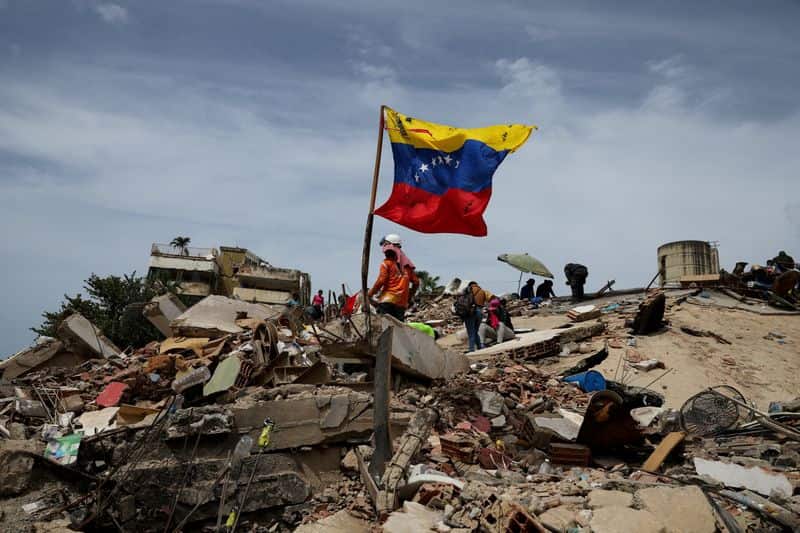
Delayed orders from senior military commanders, a lack of basic equipment, and overall confusion hindered the deployment of Venezuelan troops in the crucial first days after two devastating earthquakes struck the country's coast last month, eight sources familiar with the response told Reuters. The 7.2 and 7.5 magnitude quakes killed about 5,000 people, according to the government, though experts predict a higher toll. The disaster was particularly devastating in La Guaira state.
Acting President Delcy Rodriguez defended the government's response amid criticism that military personnel and other officials arrived late. While Rodriguez stated 4,000 officials were deployed immediately, residents and witnesses reported a scarce presence of security forces in the initial hours. Civilians spearheaded much of the response, especially during the first two days, bringing aid and using rudimentary tools to rescue survivors and the deceased.
Sources, including active and retired military officers and those in the diplomatic community, cited delays in deployment orders, uncertainty over coordination responsibilities, and a lack of relevant equipment as key issues. An active-duty officer explained that military units cannot act without direct orders, and there was no specific plan for disaster response, unlike national defense plans. Some units traveled to affected areas after receiving orders, but others lacked necessary equipment like vehicles, hammers, pickaxes, and helicopters with night vision.
Confusion also affected the deployment of international rescuers, wasting critical time. Sources described a situation where personnel waited for orders rather than acting proactively to avoid reprimand. The Marine Infantry Brigade was reportedly ready to deploy but never received instructions. The vice minister in charge of disaster response arrived in La Guaira without essential communications equipment.
Rodriguez has vociferously defended the government's actions, attributing perceptions of chaos to 'media laboratories' and taking responsibility for the armed forces' deployment. She named National Guard commander Juan Sulbaran Quintero as the 'single authority' and granted powers to Interior Minister Diosdado Cabello. However, overlapping authority created further confusion over who was directing military and police operations.
Sources indicated that years of economic crisis have reduced the military's operational readiness, with budgets prioritizing payroll over maintenance and equipment. The earthquakes struck on Army Day, a national holiday, when many military personnel were off duty, and a crucial order for personnel recall never came, according to one source. An active-duty officer lamented the lack of a plan, stating the military should have been present with equipment to assist survivors.