Key facts
- Over 900 U.S. military personnel are deployed in Venezuela for earthquake relief.
- An additional 800 U.S. personnel are based in Puerto Rico and Curacao.
- U.S. forces have engaged in search-and-rescue operations and airport support.
- MQ-9 Reaper drones are being used to enhance intelligence for Venezuelan authorities.
- The U.S. military's involvement marks a significant shift in relations with Venezuela.
- Venezuelan authorities are described as struggling with damaged national infrastructure.
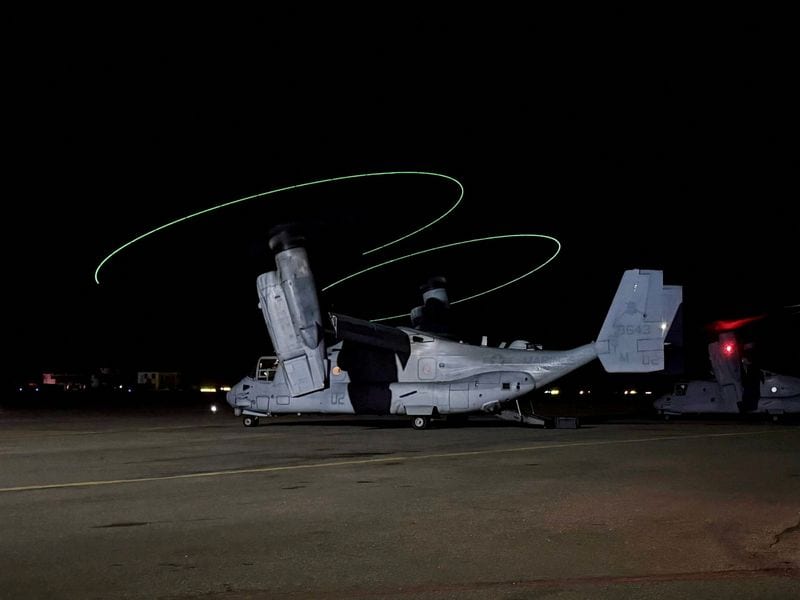
The U.S. military has deployed over 900 personnel to Venezuela to support earthquake relief operations, a significant shift given recent tensions between the two nations. General Francis Donovan, commander of U.S. Southern Command, stated that U.S. forces are involved in search-and-rescue efforts, helping to restore airport functionality, and mobilizing air and naval assets to facilitate the arrival of humanitarian aid.
Donovan also noted the deployment of at least four to five MQ-9 Reaper drones, which, along with a fusion cell in Miami, are enhancing the intelligence picture for Venezuelan authorities. He highlighted the use of assets typically employed for tracking hemispheric threats to ensure roadways are open and damaged buildings are identified.
This deployment follows a raid by U.S. forces on January 3 to apprehend Venezuelan President Nicolas Maduro and a recent strike coordinated with Venezuelan authorities that killed the leader of the Tren de Aragua prison gang. Donovan remarked on the transition in the relationship between the U.S. military and Venezuela.
Venezuela was struck by two powerful earthquakes, magnitudes 7.2 and 7.5, last Wednesday, causing widespread building collapses and trapping thousands. As of Tuesday, only one survivor, a 3-year-old child, had been rescued, though efforts continue. U.S. Marines were among the first responders, assisting in digging through rubble. The operation is heavily focused on logistics to prevent aid from accumulating at entry points and ensuring it reaches affected areas.
Venezuelan authorities have faced criticism for a slow response, with residents initially relying on their own efforts. Heavy construction equipment was seen by Saturday, and foreign rescue teams assisted in pulling out bodies. Donovan acknowledged that Caracas is dealing with the aftermath of decades of poor leadership that has damaged the nation's infrastructure, potentially compounding shortages of medicine and hospital staff.
Donovan deferred to the State Department regarding the mission's duration, stating the military was not preparing for an enduring presence and would leave once their relief efforts were complete. He expressed hope that these operations could foster a stronger military-to-military relationship with Venezuela.