HomeEverythingEducation
Equities & FundsCrypto & Digital AssetsAI & TechnologyBusiness & CorporateUS Politics & PolicyGeopolitics & Global RiskMacro, Rates & FXCommodities & EnergyEuropean Politics & MarketsAsia-PacificReal Estate & Property
← All Stories

US-Iran Cease-fire Tested by New Strikes in Strait of Hormuz

Created at 7 Jul · 6:51 AM1 source↑ Market-relevant
IN SHORT

Weeks after a U.S.-Iran ceasefire agreement, both nations are trading military strikes, raising fears the fragile truce is unraveling. Iran attacked a Singapore-flagged container ship, prompting U.S. retaliatory strikes on Iranian military sites. Tensions escalated further with additional U.S. strikes and Iranian missile and drone launches.

✉Newsletter

PiQ Daily

Pick your topics. Get only what matters, on your cadence.

Key Numbers

2commercial ships struck by Iran
8infrastructure targets at U.S. military bases in Kuwait and Bahrain

Who's Involved

Donald Trump
U.S. President issuing warnings and ordering strikes
U.S. Central Command
Confirmed U.S. strikes and Iranian drone activity
Islamic Revolutionary Guard Corps
Confirmed Iranian missile and drone launches
Bahrain
Condemned Iranian drone attack on its territory
US-Iran Cease-fire Tested by New Strikes in Strait of Hormuz

↳ Why This Matters

The renewed military exchanges between the U.S. and Iran threaten to derail a recent ceasefire agreement, potentially reigniting broader conflict in the Strait of Hormuz and the Middle East, impacting global shipping and regional stability.

Key facts

  • Iran attacked a Singapore-flagged container ship near the Strait of Hormuz.
  • The U.S. conducted retaliatory strikes on Iranian missile and drone storage sites and radar installations.
  • President Donald Trump issued a strong warning to Iran, threatening military action.
  • Iran launched ballistic missiles and drones at U.S. military bases in Kuwait and Bahrain.
  • Bahrain reported an Iranian drone attack on its territory.

Weeks after a U.S.-Iran ceasefire agreement aimed at restoring stability in the Strait of Hormuz, both nations are trading military strikes, raising fears the fragile truce is unraveling. The latest escalation began Thursday when Iran attacked a Singapore-flagged container ship, an incident U.S. President Donald Trump described as a "foolish violation" of the agreement.

In response, the United States launched retaliatory strikes on Friday against Iranian missile and drone storage sites and coastal radar installations, stating the targets were linked to attacks on international shipping. Trump announced further U.S. strikes on Saturday, accusing Tehran of violating the ceasefire again and warning that the U.S. might be forced to "militarily complete the job that we very successfully started," implying the end of the Islamic Republic of Iran.

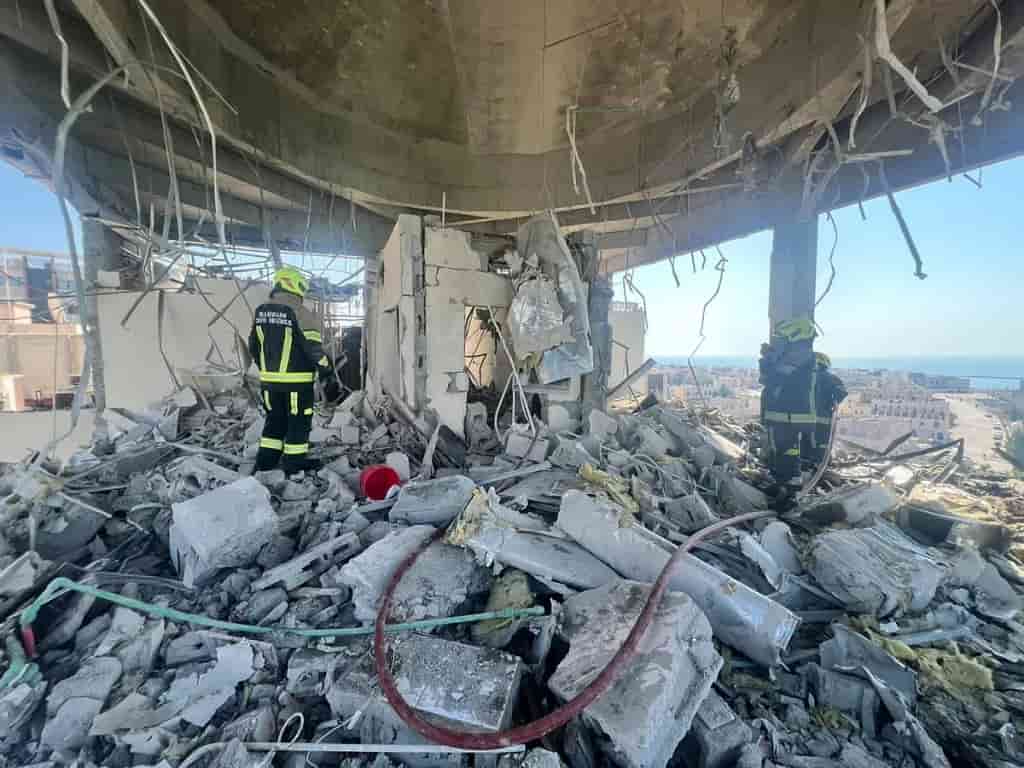
Iran confirmed it launched ballistic missiles and drones at eight infrastructure targets at U.S. military bases in Kuwait and Bahrain. A U.S. official stated a small number of drones were detected but failed to reach their intended targets, with no American casualties or major damage reported. U.S. Central Command confirmed additional strikes against Iranian military positions, describing them as a direct response to continued Iranian aggression. Bahrain condemned an Iranian drone attack on its territory, calling it a violation of sovereignty and a threat to its citizens.

The renewed violence also raises concerns about the Lebanon front, with Israeli airstrikes hitting a southern town. The U.S.-Iran agreement, intended to restore commercial shipping and create space for wider negotiations, now faces its most serious test.

Frequently asked questions

Iran attacked a Singapore-flagged container ship near the Strait of Hormuz, which the U.S. deemed a violation of a recent ceasefire agreement.

The U.S. launched retaliatory strikes on Iranian missile and drone storage sites, coastal radar installations, and military bases in Kuwait and Bahrain.

Yes, Iran confirmed launching ballistic missiles and drones at U.S. military bases in Kuwait and Bahrain.

It is a vital international trade corridor, crucial for global commerce and energy shipments.

What Happens Next

01Further diplomatic efforts to de-escalate tensions.
02Monitoring for additional military actions from either side.
03Assessing the impact on global oil prices and shipping routes.

Get the newsletter.

Pick the topics you actually care about. We'll email when there's news worth your time, on the cadence you choose. Cancel any time from your account.

Cadence

How It Developed

Iran attacked a Singapore-flagged container ship near the Strait of Hormuz.
U.S. President Donald Trump described the attack as a violation of the agreement.
The United States responded with strikes on Iranian missile and drone storage sites and coastal radar installations.
Trump announced further U.S. strikes after accusing Iran of violating the ceasefire again.
Trump issued a strong warning to Iran, stating the Islamic Republic might cease to exist if actions continued.
Iran launched missiles and drones toward American military facilities in Kuwait and Bahrain.
A U.S. official confirmed drones were detected but failed to reach targets, with no American casualties or major damage.
U.S. Central Command confirmed additional strikes against Iranian military positions.

Sources

T1
New Strikes on Ships in Strait of Hormuz Test U.S.-Iran Cease-FireThe New York Times
T2
U.S. launches additional Iran strikes as tensions flare up over Hormuznbcnews.com
T2
US-Iran Truce on the Brink: Fresh Strikes, Rising Tensions and What's ...gulfnews.com

Related Stories

Saudi Arabia Ships 34 Million Barrels Through Hormuz Amid Iran's Route Warnings
6 Jul · 4:50 PM
Iran fires missiles at commercial ships near Oman coast
6 Jul · 11:55 PM
Iran slams Germany, France over Strait of Hormuz mine claims
7 Jul · 2:25 AM
Israeli drone strike kills four in southern Lebanon amid ceasefire violations
6 Jul · 10:40 AM
US in talks on Europe missile co-production amid depleted stockpiles
7 Jul · 4:11 AM