Key facts
- U.S. Ambassador Jared Novelly identified securing Cook Islands seabed minerals as a top priority.
- Novelly warned Pacific island nations about potential risks in their dealings with China.
- The U.S. seeks critical minerals to reduce reliance on China's supply chains.
- The Cook Islands has signed a framework agreement on critical minerals research with the U.S. and an exploration agreement with China.
- Novelly plans to facilitate U.S. companies' involvement in mineral extraction in the Cook Islands.
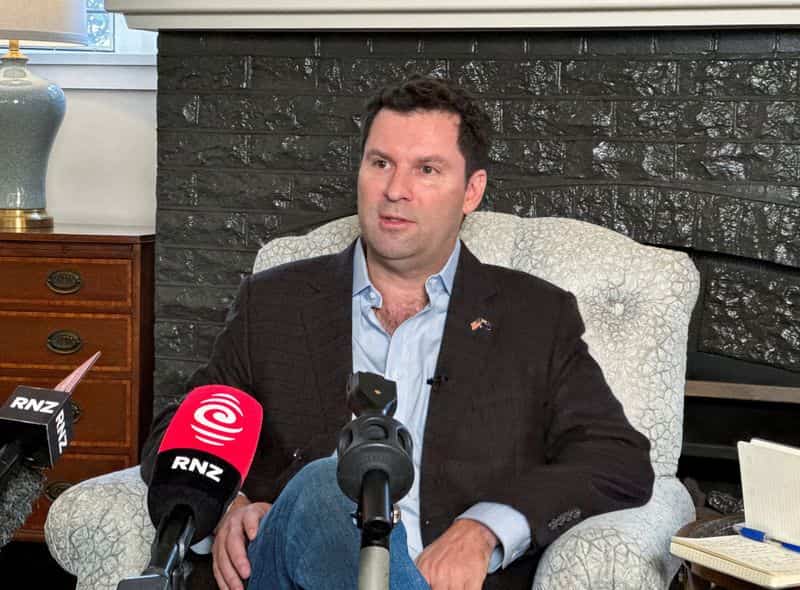
The new U.S. ambassador to New Zealand and several Pacific island nations, Jared Novelly, has declared that securing seabed minerals in the Cook Islands is a top priority for the United States. Novelly stated that critical minerals have rapidly ascended his agenda, moving from a lesser item to a primary focus within the last year.
Washington's strategic emphasis on critical minerals stems from its desire to lessen dependence on China-dominated supply chains and bolster its defense and clean-energy sectors. The Cook Islands' waters are known to contain polymetallic nodules, which are valuable for batteries and other technologies. While the Cook Islands government permits exploration, commercial extraction has not yet been authorized. In February, the U.S. and the Cook Islands entered into a non-binding framework for critical minerals research and supply-chain security, specifically including deep-sea minerals. Concurrently, the Cook Islands has also signed an exploration and research agreement with China.
Novelly, who is also the inaugural U.S. ambassador to the Cook Islands, indicated his intention to spend time in the country and introduce U.S. companies that could aid in mineral extraction. He also expressed a belief that Pacific countries should exercise caution in their dealings with Beijing, warning about potential "debt trap" scenarios and "strings attached" to Chinese engagement. China has significantly increased its presence in the region, investing in development finance, infrastructure, and seeking greater roles in military, policing, and digital connectivity.
Beyond aid, Novelly is exploring other avenues to support Pacific economies, such as reducing remittance costs. He also addressed his recent arrival in New Zealand, presenting his credentials and hosting an Independence Day event. While acknowledging New Zealand's role in the South Pacific, Novelly suggested that partners need to increase their defense spending. He noted a recent survey indicating a shift in New Zealanders' perception, with more viewing the U.S. as a threat than China, though he personally experienced friendly interactions. Novelly also commented on New Zealand's nuclear-free policy, stating that any changes are Wellington's decision but expressing a personal wish to see a U.S. aircraft carrier visit Auckland.