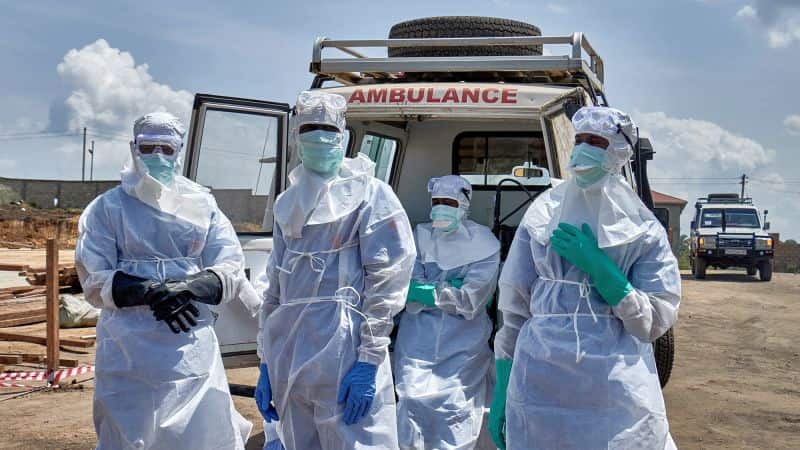
Key facts
- A U.S. citizen working for a humanitarian organization in the Democratic Republic of the Congo has tested positive for the Bundibugyo Ebola virus.
- The Centers for Disease Control and Prevention is working with partners to prevent further transmission and identify high-risk contacts.
- The current outbreak in Congo is the fastest-growing on record, with 1,830 confirmed cases and 648 deaths.
- Cases have also been confirmed in neighboring Uganda.
- The Bundibugyo virus strain has no approved vaccine or treatment.
- Efforts to contain the virus are challenged by funding gaps, attacks on health centers, and ongoing conflict.
A U.S. citizen working for a humanitarian organization in the Democratic Republic of the Congo has tested positive for the Bundibugyo strain of the Ebola virus, the U.S. Centers for Disease Control and Prevention (CDC) confirmed.
The CDC is collaborating with the patient's employer, other federal agencies, and partners in the DRC to prevent further transmission and identify close contacts. No further details about the patient have been released.
This outbreak is reportedly the fastest-growing Ebola outbreak ever recorded on the continent, with 1,830 confirmed cases in Congo, including 648 deaths, according to government data. Cases have also been confirmed in neighboring Uganda.
The Bundibugyo virus strain lacks an approved vaccine or treatment, and containment efforts have been hindered by a funding gap, attacks on health centers, and ongoing conflict in eastern Congo.
Earlier in the outbreak, an American doctor tested positive and was transferred to Germany for treatment. In a separate incident, an American Christian missionary physician, Dr. Peter Stafford, also tested positive and was evacuated to Berlin. The first case of Ebola outside Africa was reported in France, involving a humanitarian worker returning from the DRC.
The risk to the American public and travelers remains low, as the outbreak is confined to remote areas of the DRC and Uganda.