Key facts
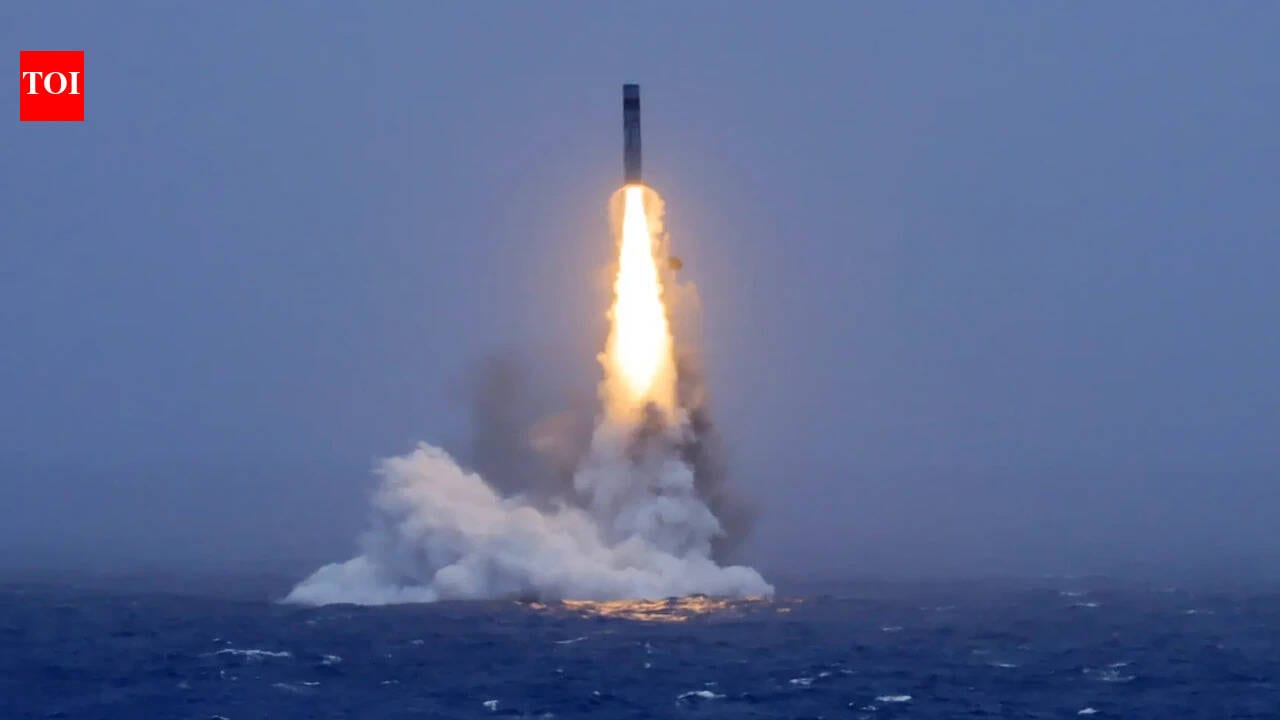
- China test-fired a long-range ballistic missile from a nuclear-powered submarine into the Pacific Ocean.
- The US criticized China's nuclear weapons buildup, stating Beijing is doing the opposite of preventing nuclear proliferation.
- The Philippines, Taiwan, Australia, and New Zealand condemned the launch as provocative and destabilizing.
- Solomon Islands lodged a formal protest against the missile test.
- Analysts suggest the test signifies China's advancing sea-based nuclear deterrent capabilities.
China's test-firing of a long-range ballistic missile from a nuclear-powered submarine into the Pacific has drawn sharp criticism from the United States and several Indo-Pacific nations. Washington accused Beijing of rapidly expanding its nuclear arsenal, with US State Department spokesperson Tommy Pigott stating, "At a time when the United States is working harder than ever to prevent nuclear proliferation, China is doing the opposite." He further expressed concern over Beijing's "rapid and opaque nuclear weapons buildup."
Regional countries reacted strongly to the launch. The Philippines described it as a "reckless display of military power" and a "calculated act of taunting and provocation." Taiwan's National Security Council secretary-general Joseph Wu identified the missile as a JL-2 and stated it flew over the Philippines before landing in the Pacific, calling China "a bully on the block." Australia deemed the launch "destabilising to the region," while Japan expressed "serious concerns" over China's expanding military activities.
New Zealand noted it received advance notification only a few hours before the launch, and the missile was fired into the South Pacific Nuclear Free Zone. Solomon Islands Prime Minister Matthew Wale lodged a "strong protest" with Chinese diplomats on behalf of Pacific nations concerned about the test, stating, "We don’t want anyone testing their ICBMs in the Pacific region."
Russia, however, defended Beijing, with Kremlin spokesperson Dmitry Peskov stating that missile testing is China's "sovereign right" and that "China is not threatening anyone in the world."
Analysts view the launch as a significant milestone in China's military modernization, demonstrating the growing capability of its submarine-based nuclear deterrent. Experts suggest this test is the first publicly acknowledged long-range ballistic missile launch from one of China's nuclear-powered ballistic missile submarines into the Pacific, indicating that Beijing's nuclear deterrence is no longer solely reliant on land-based missiles. Lyle Morris, a senior fellow at the Asia Society Policy Institute, noted that the test shows China is moving towards a "significantly more survivable and longer-range sea-based nuclear deterrent capability," capable of targeting the continental United States from near Chinese waters. The Pentagon estimates China possesses around 600 nuclear warheads and is on track to exceed 1,000 by 2030.