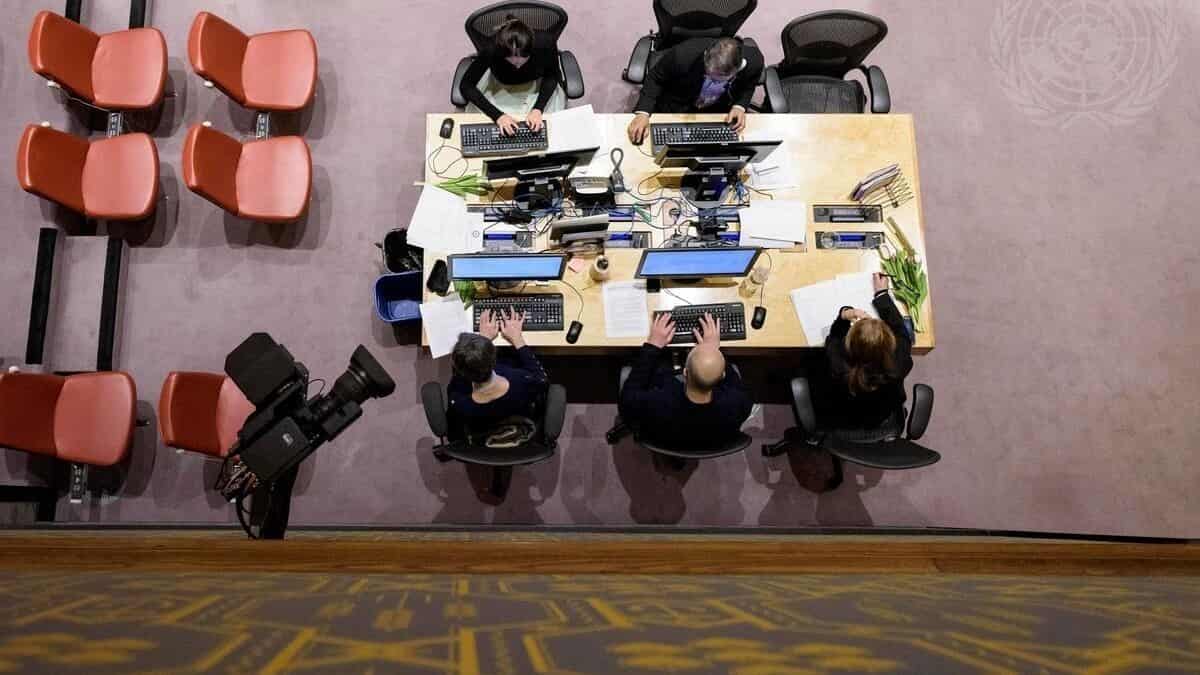
Key facts
- The UN Security Council held a session on Iran's nuclear file without reaching a resolution.
- Russia and China insisted on a procedural vote regarding the agenda, which passed.
- Western allies voiced concerns over Iran's nuclear and defense capabilities.
- The meeting was requested by Bahrain and five European Council members.
- Disagreements persist among permanent members regarding the status of UN sanctions on Iran and Resolution 2231.
The UN Security Council convened for a session concerning Iran's nuclear program, but the meeting concluded without any resolution due to procedural objections raised by Russia and China. This marks the third such session since Resolution 2231 technically expired in October 2025, with Russia and China consistently forcing procedural votes before substantive discussions could begin.
The meeting, requested by Bahrain and the Council's five European members (Denmark, France, Greece, Latvia, and the UK), was held under the 'Non-Proliferation' agenda item. Russia, supported by China, called for a procedural vote on whether to include the agenda item, which passed with 11 votes in favor, two against (China and Russia), and two abstentions (Pakistan and Somalia). This outcome mirrored previous sessions in March and June.
China and Russia maintain that Resolution 2231 expired on October 18, 2025, at which point the Council's consideration of the Iranian nuclear file was meant to cease. They argue the item should be removed from the agenda, a position shared by Iran. Conversely, the US and its Western allies reiterated allegations concerning Iran's nuclear program and defense capabilities.
Amid escalating regional tensions, including military strikes between Iran, Israel, and the United States, divisions among the permanent Security Council members remain stark. The debate centers on the status of UN sanctions related to Iran's nuclear program and the interpretation of the 'snapback' mechanism within Resolution 2231. France, the UK, and the US assert that sanctions have been reinstated following the triggering of the snapback mechanism, while Russia and China dispute this, arguing the mechanism was not activated. Liberia, an elected member, proposed a Secretariat-led temporary reporting mechanism to address an oversight gap.
The 2015 Iran nuclear deal, the Joint Comprehensive Plan of Action (JCPOA), was endorsed by Resolution 2231, which lifted UN sanctions in exchange for Iran accepting limits and monitoring on its nuclear program. The resolution included a provision for the reimposition of previous sanctions, known as snapback, for the first ten years. The E3 (France, Germany, UK) initiated the snapback process in August 2025, citing Iran's alleged non-performance, but the Council failed to adopt a resolution to continue sanctions relief, leading to the reinstatement of previously lifted UN sanctions on September 27, 2025, according to the UN Secretariat.