Key facts
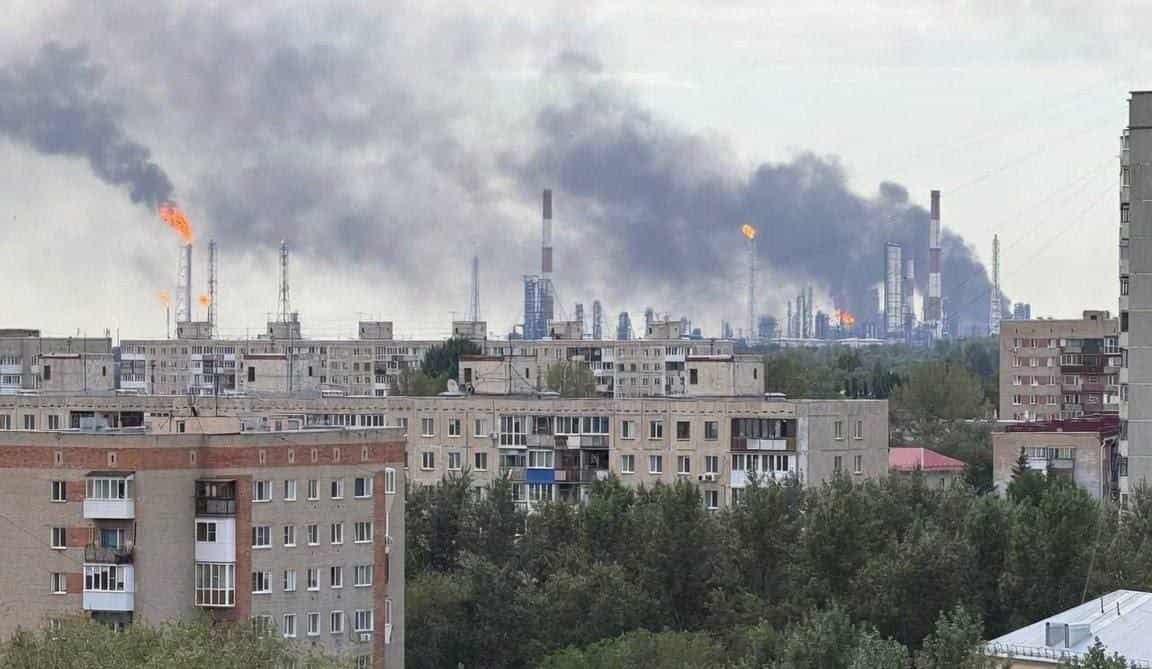
- Ukraine struck Russia's largest oil refinery in Omsk, over 2,500 km from its border.
- The Omsk refinery's ELOU-AVT-11 primary oil refining unit was reportedly hit, with a design capacity of 8.4 million metric tons per year.
- The refinery processes over 21 million metric tons of crude oil annually and has a refining depth of around 99%.
- Other Russian energy facilities, including refineries in Yaroslavl and Kaluga, and an oil terminal in Vysotsk, were also targeted.
- Two fuel tankers bound for Crimea were struck in the Sea of Azov.
- Ukrainian drones also targeted military and energy infrastructure in occupied Crimea.
Ukrainian forces launched a significant overnight strike on Russia's largest oil refinery in Omsk, located approximately 2,500 kilometers from the Ukrainian border. The General Staff reported that the strike caused a fire at the facility, with preliminary information indicating the ELOU-AVT-11 primary oil refining unit, which has a capacity of 8.4 million metric tons of crude oil per year, was hit. The Omsk refinery processes over 21 million metric tons of crude oil annually and is noted for its high refining depth of around 99%. This attack marks the last of Russia's 11 largest gasoline producers to be targeted by Ukrainian forces.
In addition to the Omsk refinery, Ukraine's Security Service (SBU) confirmed a series of coordinated strikes against other Russian energy infrastructure. Drones targeted the Yaroslavl oil refinery and a pumping station, as well as an oil terminal at the port of Vysotsk, disabling loading arms and hitting storage tanks. The First Plant oil refinery in Kaluga Oblast also experienced explosions and a fire.
Furthermore, Ukraine targeted Russian fuel supplies destined for occupied Crimea, which is facing severe shortages. The Unmanned Systems Forces struck two 'shadow fleet' tankers in the Sea of Azov carrying a combined 7,000 metric tons of fuel. The SBU also reported separate operations in Crimea, hitting aircraft hangars, an air defense system, and an oil depot. Commander Robert "Madyar" Brovdi stated that between July 1 and 5, drones struck 37 energy nodes across occupied Crimea and southern Ukraine.
SBU chief Yevhenii Khmara vowed that Russia's military and fuel infrastructure would continue to suffer significant losses in retaliation for its actions. These strikes occurred as Russia launched a large-scale assault on Kyiv.