Key facts
- Settler violence in the occupied West Bank has reached its highest level since UN monitoring began in 2006.
- Ireland's parliament has approved legislation to ban some trade with Israeli settlements.
- The UK government has advised British companies against economic activity in illegal settlements.
- The UK trade minister indicated the government is working on a full ban on trade with settlements.
- The article argues that states have an obligation under international law to end support for Israel's occupation of the West Bank.
Settler violence in the occupied West Bank has escalated to its highest level since UN monitoring began in 2006, with an average of six attacks per day. These attacks include violence against individuals, destruction of property, and sexual assault, often occurring with impunity. The article argues that these actions are directed and funded by the Israeli state as part of a settlement expansion project aimed at territorial gain through illegal land annexation and ethnic cleansing.
Despite the UK government acknowledging that Israeli settlements are illegal under international law, trade continues to sustain them. Israeli settlements control over 42% of West Bank territory and its water resources, with recent approvals for new settlements and funding for infrastructure. The International Court of Justice has stated that states must take concrete steps to end support for the occupation.
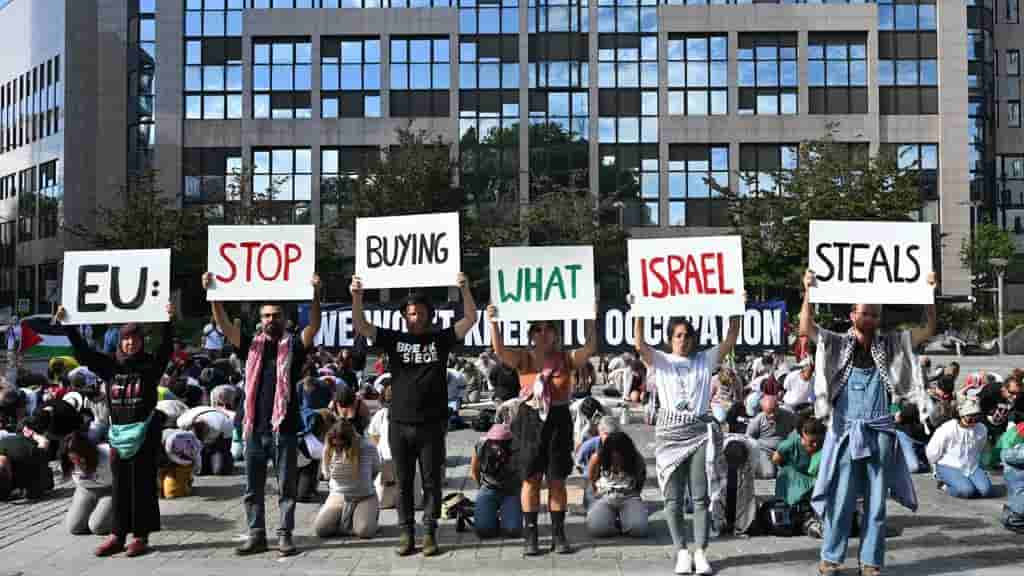
Products such as dates, grapefruits, and avocados grown on stolen Palestinian land can be found on UK supermarket shelves. Trade in services, which constitutes a larger portion of trade between Israel and the UK, also financially benefits and legitimizes settlements. Palestinians in the West Bank face a system of occupation, with movement restrictions and a separate legal system from Israeli settlers.
Ireland's parliament recently approved legislation to ban some trade with settlements, following Spain's lead. However, the Irish bill is criticized for not fully complying with international law by allowing services trade to continue. A coalition of groups is pushing for a total ban. The UK has an opportunity to implement a more comprehensive ban, with significant parliamentary support and reported consideration by EU foreign ministers.
While the UK has advised companies against economic activity in settlements, the article stresses that voluntary compliance is insufficient. The UK trade minister has indicated progress towards a full ban on goods and services trade with settlements, a development the article urges the next government to prioritize. The author contends that robust measures with clear economic consequences are necessary to hold Israel accountable and end complicity in the illegal occupation.