Key facts
- Typhoon Noul made landfall in Guangdong, China, on Sunday.
- Ten people died in flash floods in Gansu province due to heavy rainfall.
- Over 700 flights were grounded in Guangzhou and Shenzhen.
- More than 410 flights and 150 high-speed train services were cancelled in Hong Kong.
- A Level-IV national disaster relief emergency response was activated for Guangdong.
- 100 million yuan (approximately USD 14.7 million) was allocated for post-disaster recovery in Guangdong.
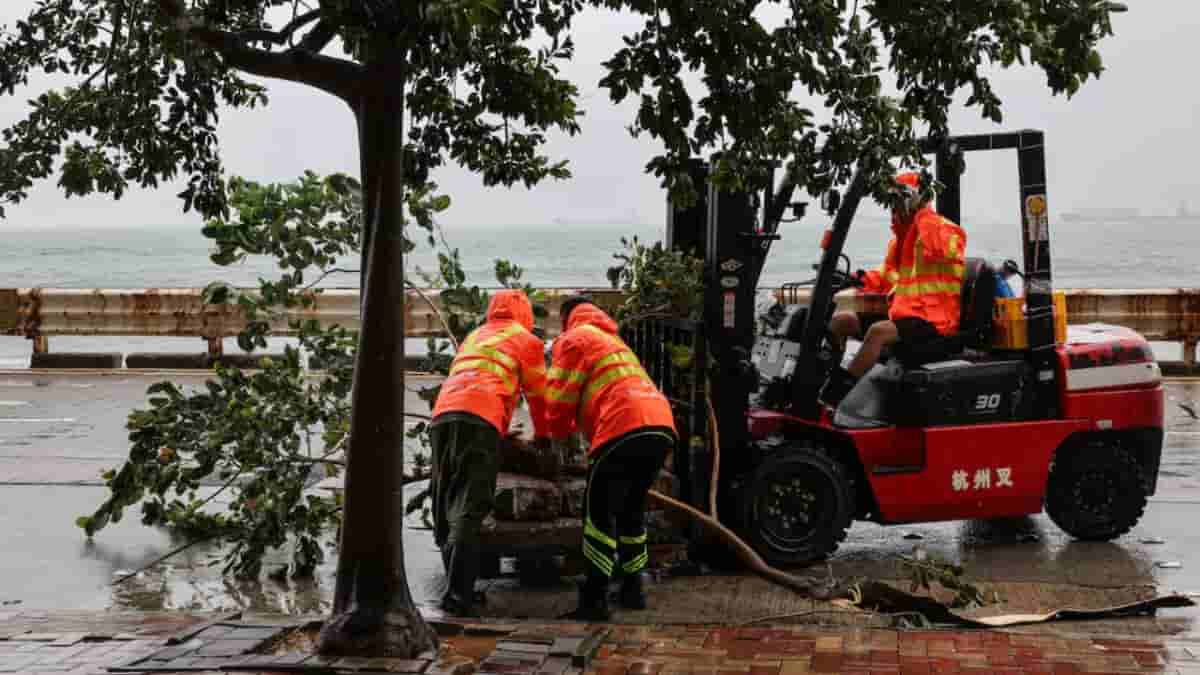
Typhoon Noul made landfall in China's southern Guangdong province early Sunday, bringing strong winds and heavy rainfall that triggered flash floods in Gansu province, killing at least 10 people. The storm, described as the strongest to hit China this year, caused significant transport disruptions, leading to the cancellation of hundreds of flights and high-speed train services in Hong Kong, Guangzhou, and Shenzhen.
State-run Xinhua news agency reported that the 10 deaths occurred in a scenic area in Gansu due to flash floods. Local authorities stated that some tourists were camping and were trapped by the sudden floodwaters. Rescue operations involving hundreds of personnel and vehicles were underway.
In Guangdong, where the typhoon made landfall with winds up to 162 kilometers per hour, emergency measures were activated, including the evacuation of over 715,000 people. China's National Commission for Disaster Prevention, Reduction and Relief initiated a Level-IV national disaster relief emergency response, the least severe tier in the country's four-tier system. The National Meteorological Centre had issued a red alert, the highest warning level, before downgrading it as the typhoon weakened.
Emergency measures were also implemented in several other provinces, including Fujian, Jiangxi, Henan, Hubei, Hunan, and Guangxi. The National Development and Reform Commission allocated 100 million yuan (approximately USD 14.7 million) from the central budget to support post-disaster recovery in Guangdong, focusing on restoring damaged infrastructure such as roads, water conservancy facilities, schools, and hospitals.
Typhoon Noul is the 12th typhoon to impact China this year and surpassed previous typhoons in strength. The Hong Kong-based South China Morning Post noted its winds were slightly stronger than Typhoon Bavi, which struck two weeks prior. Authorities are working to relocate and resettle affected residents and ensure their basic needs are met.