Key facts
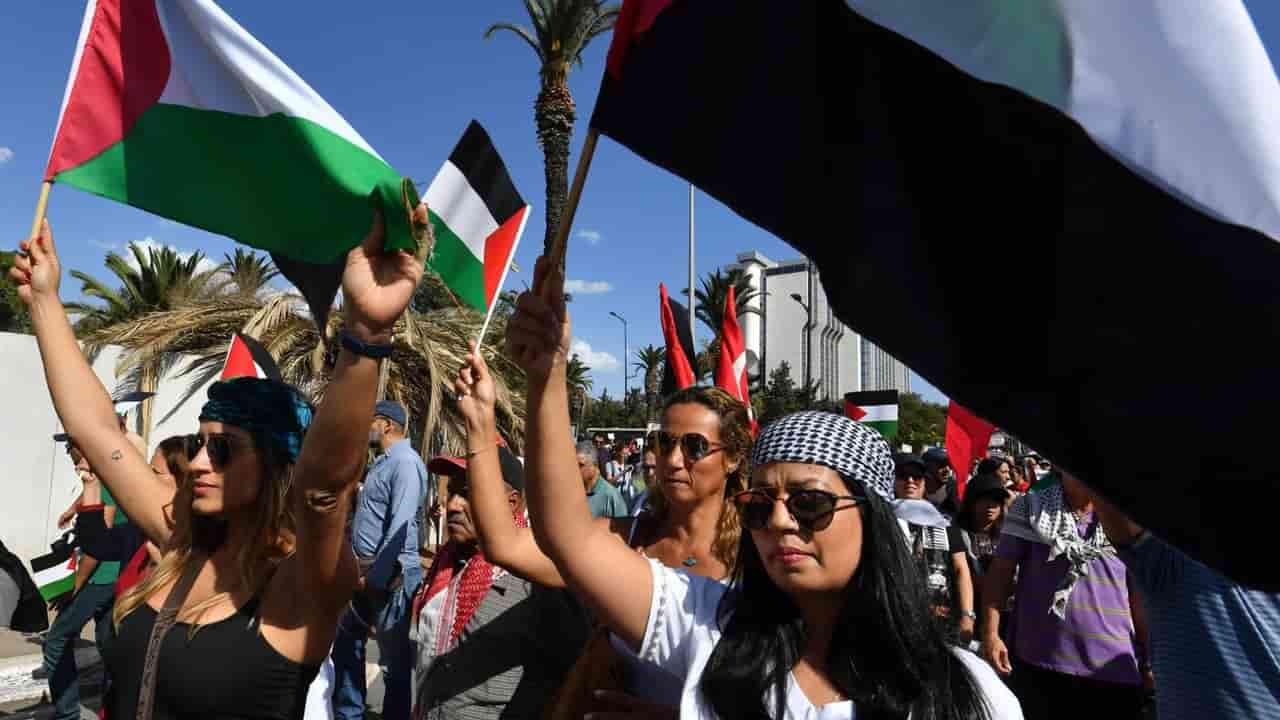
- Tunisians in Sidi Bouzid, the cradle of the Arab Spring, are finding their political voice again due to the war in Gaza.
- Residents link solidarity with Palestinians to their own frustrations over deepening poverty and a perceived powerless political system.
- Many feel President Kais Saied's government has offered only rhetoric, not meaningful diplomatic action or regional leadership regarding the conflict.
- Authorities have arrested pro-Palestinian activists, leading to accusations of suppressing independent mobilization.
- The war has reopened public political conversations that had largely fallen silent since President Saied's 2021 power consolidation.
Fifteen years after Mohamed Bouazizi's self-immolation in Sidi Bouzid ignited the Arab Spring, the Tunisian city is experiencing a resurgence of public political discourse, largely driven by solidarity with Gaza. Despite persistent economic hardship and political apathy following President Kais Saied's consolidation of power in 2021, many residents say Israel's war on Gaza has given them a reason to speak out again.
Traders and residents in Sidi Bouzid express deep frustration with their government's response to the conflict, viewing it as largely rhetorical and lacking substantive diplomatic or legal action. They contrast Tunisia's statements of support for Palestine with the concrete steps taken by other nations, such as South Africa's case at the International Court of Justice. This perceived gap between official rhetoric and action mirrors their own disillusionment with domestic politics and deepening economic struggles, including high unemployment and inflation.
Adding to the frustration, authorities have cracked down on pro-Palestinian activists, leading to accusations that the government is attempting to monopolize solidarity and views independent mobilization as a political threat. Activists argue that the regime is overly sensitive to any public gathering, even those supporting officially endorsed causes, fearing the capacity of young activists and civil society to influence public opinion. The war in Gaza has thus become a significant political flashpoint, reopening conversations that had largely been silenced.