Key facts
- US President Donald Trump has threatened to attack Pickaxe Mountain, a fortified underground facility in Iran.
- Israel claims Iran moved enriched uranium and advanced centrifuges to the site after previous attacks.
- Tehran warns that bombing its nuclear infrastructure would further expand the US-Israeli war.
- Pickaxe Mountain is located near the Natanz uranium enrichment complex and is built approximately 100 meters below the surface.
- Construction began in 2020, and the facility is intended to manufacture centrifuges for uranium enrichment.
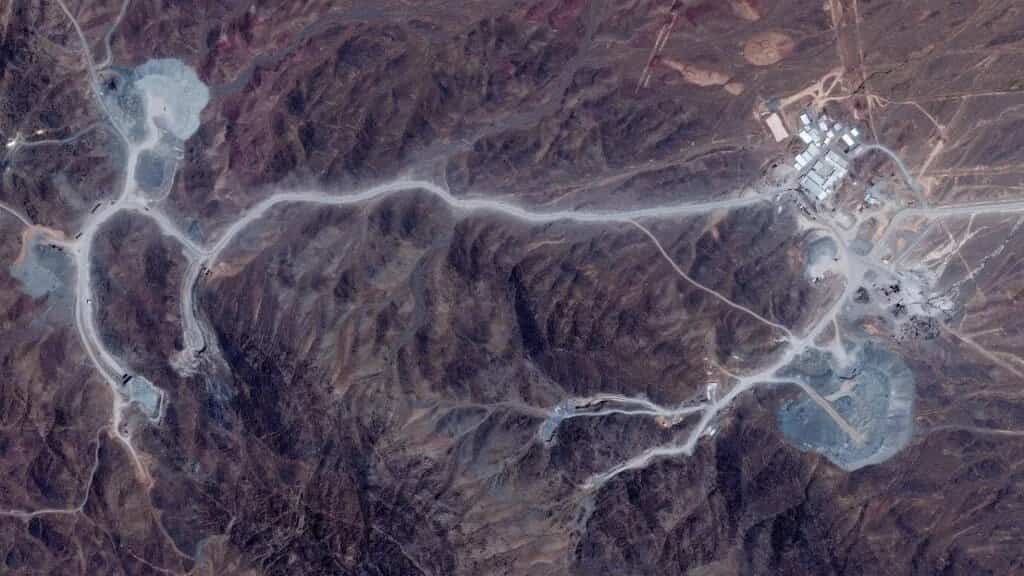
- Satellite imagery indicates reinforced entrances and tunnel systems designed to withstand air attacks.
US President Donald Trump has threatened to attack Pickaxe Mountain, a fortified underground facility in Iran that Israel claims is central to Tehran's nuclear program. Trump stated on Tuesday that the US would likely strike the area soon, despite Iran's warnings that such an action would broaden the ongoing regional war.
Israel alleges that Iran transferred enriched uranium and advanced centrifuges to Pickaxe Mountain following damage to other nuclear sites from previous US and Israeli attacks. However, Israel has not provided evidence for these claims, and Trump acknowledged that Washington could not confirm the assertion.
Pickaxe Mountain, also known as Kuh-e Kolang Gaz La, is located about 1.6 kilometers south of the Natanz uranium enrichment complex in Iran's Isfahan province. Construction of the facility began in 2020, reportedly after an explosion damaged a centrifuge assembly workshop at Natanz. Iran informed the International Atomic Energy Agency (IAEA) that the site would be used for manufacturing centrifuges for uranium enrichment. The facility is situated at least 100 meters below the surface within a mountain, making it difficult to destroy from the air or seize in a ground operation. Satellite imagery shows extensive tunnel systems and entrances reinforced with concrete to withstand aerial assaults.
Nuclear experts have expressed skepticism about the effectiveness of conventional weapons against such a deeply buried facility, with one analyst noting a tension between "maximalist promises to 'take out' the mountain and more uncertain efforts that conventional weapons can achieve." They also warned that an attack could further undermine international oversight of Iran's nuclear program and risk wider regional escalation.