Key facts
- The US launched new strikes on Iran after oil tankers were attacked in the Strait of Hormuz.
- President Trump indicated a potential escalation of conflict with Iran.
- Trump's statements on the situation have been conflicting, ranging from bellicose to dismissive of full-scale war.
- The recent hostilities have caused significant turbulence in energy markets, with oil prices rising.
The United States conducted a second consecutive night of strikes against Iran on Wednesday, following attacks on oil tankers in the Strait of Hormuz. U.S. Central Command announced the strikes, stating they were aimed at degrading Iran's ability to threaten maritime navigation and holding Tehran accountable for aggression.
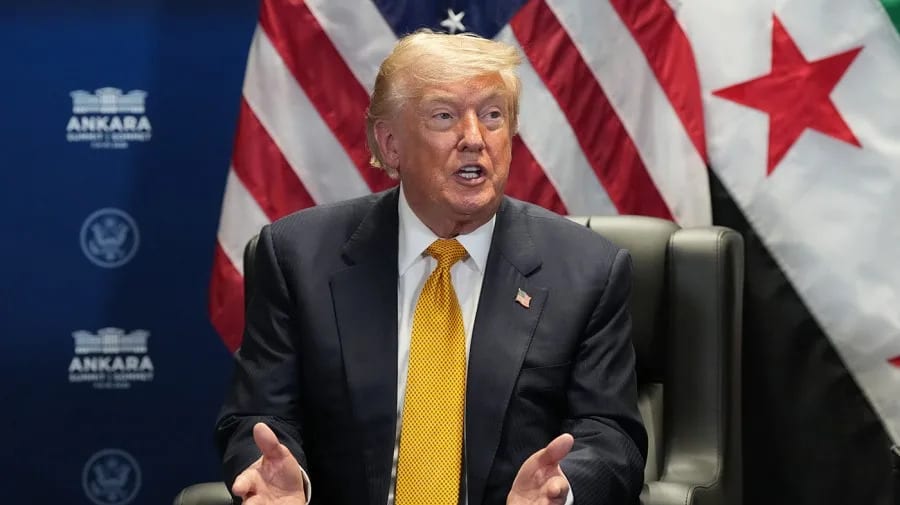
President Trump had previously indicated that such actions would be taken, telling reporters he would "probably" order strikes. His rhetoric has sent conflicting signals regarding the potential for a return to full-blown war. At a NATO summit in Ankara, Turkey, Trump suggested that Iran's actions had effectively ended a recent memorandum of understanding, calling Iran's leadership "scum" and "cuckoo."
Trump implied that Iran had exploited an informal agreement not to target leaders during the funeral ceremonies for the former Supreme Leader Ali Khamenei, who was killed in a U.S.-Israeli airstrike. His son, Mojtaba Khamenei, has reportedly been injured and has not been seen publicly.
However, Trump also appeared to downplay the prospect of all-out war, stating, "I don't think it's going to start again... Anything that happens is going to be over very quickly and will only make it safer — including for oil." He also seemed to support further talks involving emissaries like Steve Witkoff and Jared Kushner.
The escalating tensions have caused significant turbulence in energy markets, with West Texas Intermediate crude oil prices rising more than 6 percent. The previous conflict over Iran's actions in the Strait of Hormuz had previously sent oil prices spiraling, impacting prices at the pump. Domestically, the war on Iran was unpopular, with polling showing disapproval of Trump's handling of the conflict, and his Republican colleagues in Congress are reportedly hesitant to re-center the conflict before the midterm elections.