Key facts
- Shippers face heightened risks in the Strait of Hormuz due to escalating U.S.-Iran tensions.
- U.S. strikes targeted approximately 90 Iranian military sites.
- Iran responded with attacks on U.S. facilities in Bahrain, Kuwait, and Qatar.
- Iran is prepared for further military escalation to maintain control over commercial traffic.
- Traffic through the Strait of Hormuz dropped sharply, with only six vessels crossing on the night of July 9-10.
- Vessels are increasingly using 'dark transits', turning off transponders to hide their locations.
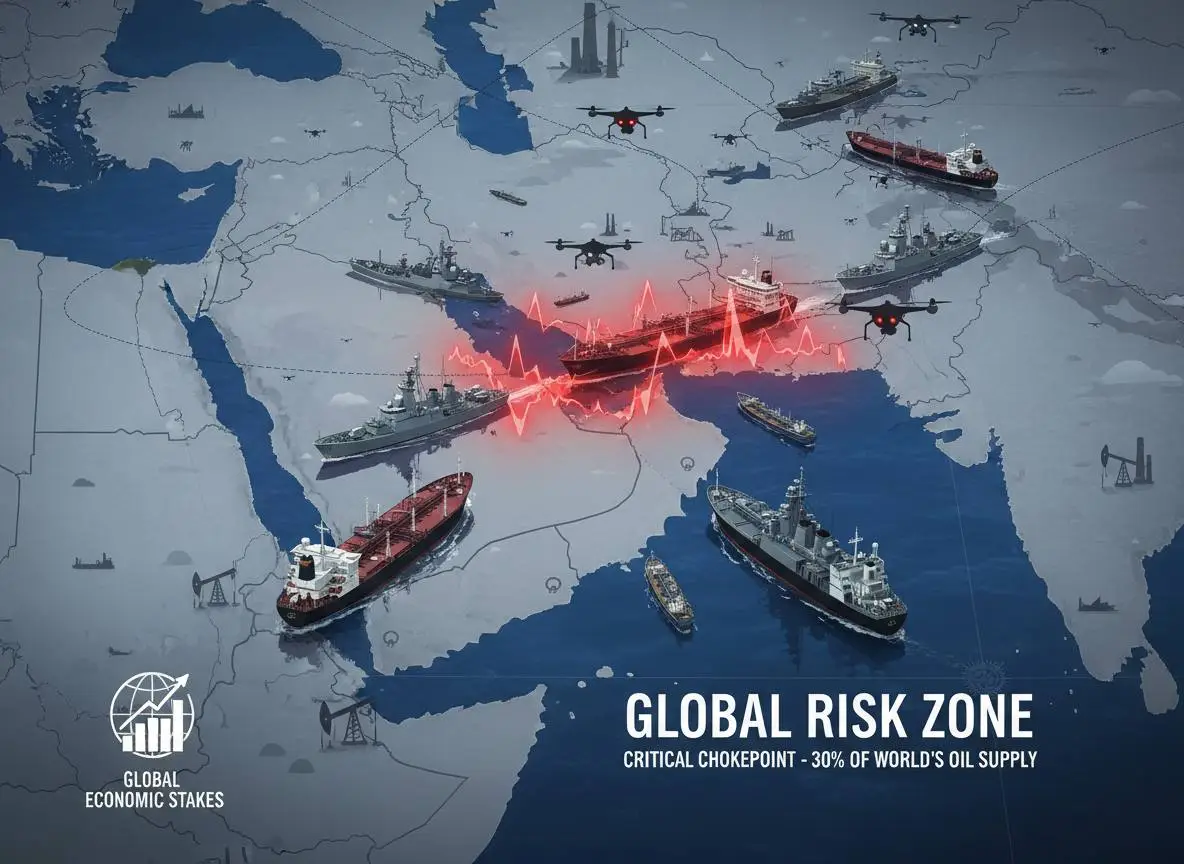
Shippers face a deepening dilemma as escalating tensions between the United States and Iran heighten risks in the Strait of Hormuz. Despite a significant round of U.S. strikes targeting around 90 Iranian military sites, Iran has responded with attacks on U.S. facilities in Bahrain, Kuwait, and Qatar. Tehran insists it will continue to enforce its own navigation regime through the critical waterway, indicating a readiness for further military escalation rather than relinquishing control over commercial traffic.
Western intelligence assessments suggest Iran is prepared to accept renewed conflict to maintain its strategic objective of controlling Hormuz. Commercial vessels that do not adhere to Tehran's designated transit routes are reportedly under attack. The U.S. military pressure has not altered Iran's stance. Meanwhile, Iran is actively regrouping and restoring capabilities, with U.S. officials assessing that Tehran has replaced damaged radar networks, repaired hundreds of missiles and launchers, and regained access to over half of its pre-war missile inventory.
The Strait of Hormuz, at its narrowest point two nautical miles wide, is a vital chokepoint for global energy markets, handling approximately 20.5 million barrels of oil per day and 20% of global liquefied natural gas. A conflict or blockade would severely impact global trade, with alternative routes unable to compensate for the volume. Insurers are advising owners to secure "Blocking and Trapping" coverage, anticipating potential disruptions lasting over a year. The U.S. has responded to the heightened tensions by deploying two carrier strike groups, the USS Abraham Lincoln and USS Gerald R. Ford, to the Arabian Sea.
Ship-tracking firm Windward reported that only six vessels crossed the Strait of Hormuz on the night of July 9-10, a sharp decrease from the usual 18 to 22 vessels. This marks the third consecutive night of reduced traffic. Outbound sailings have nearly ceased, with only one vessel recorded compared to 15-21 earlier in July. Windward also noted a significant increase in 'dark transits,' where vessels turn off their transponders, now accounting for nearly 40 percent of traffic.