Key facts
- Saudi and UAE media officials released coordinated social media posts affirming bilateral ties.
- The statements followed months of public disagreements on oil, Yemen, and regional security.
- Tensions included a Saudi strike on UAE equipment in Yemen and UAE banning Saudi media.
- Reports indicated Saudi Arabia had delayed or blocked money transfers to UAE accounts.
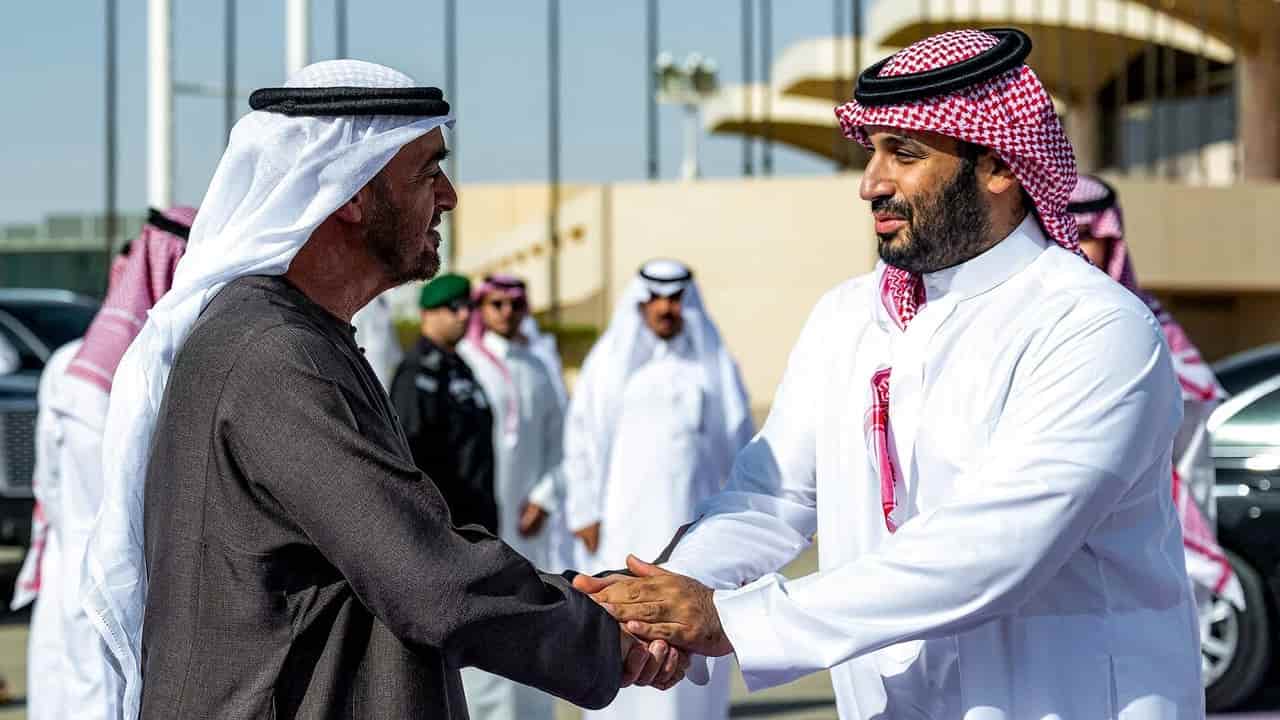
- A photo of Saudi and UAE defense/security leaders embracing was shared.
- The posts aimed to counter misleading narratives and emphasize unity.
Senior officials from Saudi Arabia and the United Arab Emirates issued simultaneous social media statements on Tuesday, emphasizing their deep fraternal ties and "wise leadership" in an apparent effort to mend relations after months of public strain.
Saudi Minister of Media Salman al-Dosary and Abdulla bin Mohamed Alhamed, chairman of the UAE National Media Authority, both published posts at 7:00 pm Riyadh time. Dosary stated that the relationship between the two kingdoms is "between two peoples united by a shared history and heritage," and stressed the importance of accuracy in reporting on their relations.
Alhamed echoed this sentiment, describing Saudi Arabia and the UAE as united by a "single destiny" and working through "close coordination and a clear vision toward a future that brings prosperity to our peoples and our region." Both officials reiterated that media should focus solely on positive aspects of the Saudi-UAE relationship.
These public displays of unity come after a period of significant tension between the two Gulf nations. Disagreements have surfaced over oil policy, the conflict in Yemen, and regional security dynamics. Specific points of friction included a Saudi air strike on UAE military equipment destined for a Yemeni faction aligned with Abu Dhabi, the UAE's ban on Saudi TV Al-Arabiya's X accounts, and diverging approaches to regional conflicts, particularly concerning Iran.
The UAE's exit from OPEC in May, followed by a significant boost in its oil production, marked a notable divergence. Reports also emerged in July and August of Saudi Arabia delaying or blocking money transfers to UAE-based accounts, raising concerns about trade disruptions, though the Saudi central bank denied imposing specific country restrictions.
Amidst these bilateral tensions, regional security concerns have prompted calls for unified action. The secretary general of the Gulf Cooperation Council, along with senior diplomats, urged collective responses to mounting Iranian attacks and Houthi threats to maritime trade. The Saudi-led coalition in Yemen vowed to use force against Houthi threats, and the UAE condemned Houthi attacks on vessels in the Red Sea, calling for international adherence to UN Security Council resolutions.
Shortly before the media officials' posts, Turki Alalshikh, an advisor to the Saudi Royal Court, shared a photograph on X showing Saudi Defence Minister Khalid bin-Salman and UAE Vice President Sheikh Mansour bin Zayed al-Nahyan embracing. Alalshikh captioned the image, "Saudi Arabia and the UAE: a story of brotherly relations and a deeply rooted partnership." Anwar Gargash, diplomatic advisor to the UAE president, reposted the image with a proverb emphasizing unity.