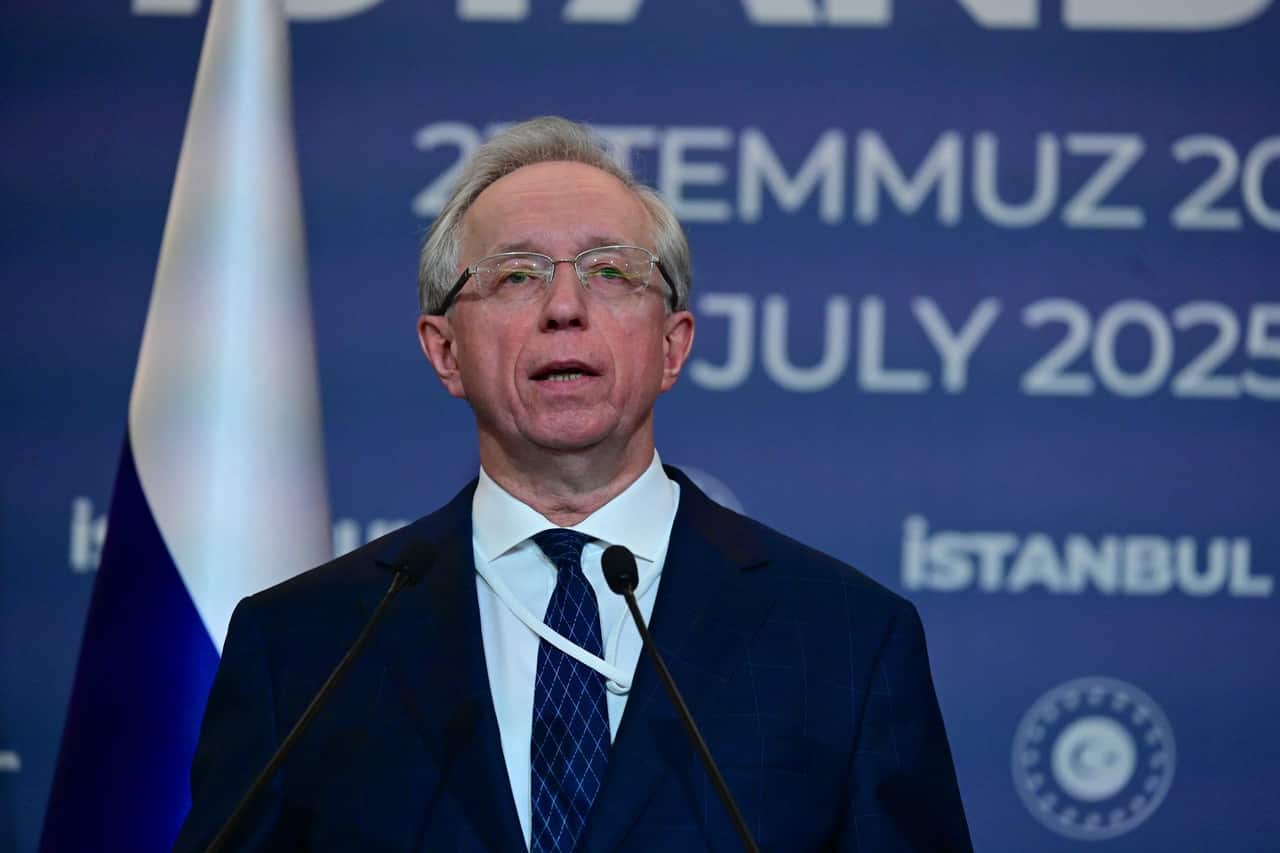
Russia rules out ceasefire without addressing 'root causes' of Ukraine conflict
1 source↑ Market-relevant
IN SHORT
Russia will not agree to freeze its war in Ukraine without addressing the conflict's root causes, according to Deputy Foreign Minister Mikhail Galuzin. The comments come as U.S. envoys prepare to visit Kyiv and Moscow to revive stalled peace efforts.
✉Newsletter
PiQ Daily
Pick your topics. Get only what matters, on your cadence.
Key Numbers
2 minread time
Who's Involved
Mikhail Galuzin
Russian Deputy Foreign Minister
Vladimir Putin
Russian President
Volodymyr Zelensky
President of Ukraine
Steve Witkoff
U.S. envoy
Jared Kushner
U.S. envoy
Sergey Lavrov
Russian Foreign Minister
↳ Why This Matters
Russia's firm stance against a ceasefire without addressing its perceived root causes complicates U.S. efforts to mediate peace and suggests continued fighting, impacting global stability and energy markets.
Key facts
Russia will not agree to a ceasefire without addressing the conflict's root causes, according to Deputy Foreign Minister Mikhail Galuzin.
Galuzin stated that Ukrainian President Zelensky has lost touch with reality and is trying to escalate the conflict.
The U.S. is considering reviving peace efforts, with envoys Steve Witkoff and Jared Kushner expected to visit Kyiv and Moscow.
Kyiv proposes freezing the current front line for a ceasefire, while Russia demands Ukrainian withdrawal from parts of Donbas.
Russia views battlefield developments as more critical than negotiations, according to Foreign Minister Sergey Lavrov.
Russia has indicated it will not agree to a ceasefire in Ukraine without addressing the fundamental causes of the conflict, as stated by Deputy Foreign Minister Mikhail Galuzin. These remarks come amid U.S. efforts to restart peace negotiations, with U.S. envoys Steve Witkoff and Jared Kushner reportedly planning visits to Kyiv and Moscow. Galuzin criticized ongoing U.S. military and intelligence support for Ukraine, deeming it incompatible with a commitment to peace. He also accused Ukrainian President Volodymyr Zelensky of escalating the conflict and losing touch with reality. Kyiv has advocated for freezing the current front lines as a basis for a ceasefire, a proposal that Russia rejects, instead demanding Ukrainian forces withdraw from parts of the Donbas region. Meanwhile, Ukraine has intensified attacks on Russian military infrastructure, while Russia has continued its missile and drone strikes on Ukrainian cities. A U.S. official suggested that both Moscow and Kyiv might be open to considering an air ceasefire. Previously, Russian Foreign Minister Sergey Lavrov emphasized that the war's outcome depends on actions on the front lines rather than negotiations.
Frequently asked questions
Russia states it will not agree to a ceasefire without addressing the 'root causes' of the crisis, which includes demanding Ukrainian forces withdraw from parts of Donbas.
Kyiv argues that freezing the current front line would provide the most realistic basis for a ceasefire, a proposal Russia has rejected.
The U.S. is considering reviving stalled peace efforts and is expected to present new proposals during visits by envoys Steve Witkoff and Jared Kushner to Kyiv and Moscow.
What Happens Next
01U.S. envoys Steve Witkoff and Jared Kushner are expected to present new proposals during their visits to Kyiv and Moscow.
Get the newsletter.
Pick the topics you actually care about. We'll email when there's news worth your time, on the cadence you choose. Cancel any time from your account.
Cadence
How It Developed
Russia stated it will not agree to a ceasefire without addressing the conflict's root causes.
Deputy Foreign Minister Mikhail Galuzin criticized U.S. assistance to Ukraine as incompatible with peace.
U.S. envoys Steve Witkoff and Jared Kushner are expected to visit Kyiv and Moscow with new proposals.
Kyiv favors freezing the current front line as a basis for a ceasefire, a stance Russia rejects.
Russia demands Ukrainian forces withdraw from parts of Donbas as a condition for an agreement.
Ukraine has intensified attacks on Russian military infrastructure.
Russia has increased missile and drone attacks on Ukrainian cities.
A U.S. official indicated the White House believes both sides may consider an air ceasefire.