HomeEverythingEducation
Equities & FundsCrypto & Digital AssetsAI & TechnologyBusiness & CorporateUS Politics & PolicyGeopolitics & Global RiskMacro, Rates & FXCommodities & EnergyEuropean Politics & MarketsAsia-PacificReal Estate & Property
← All Stories

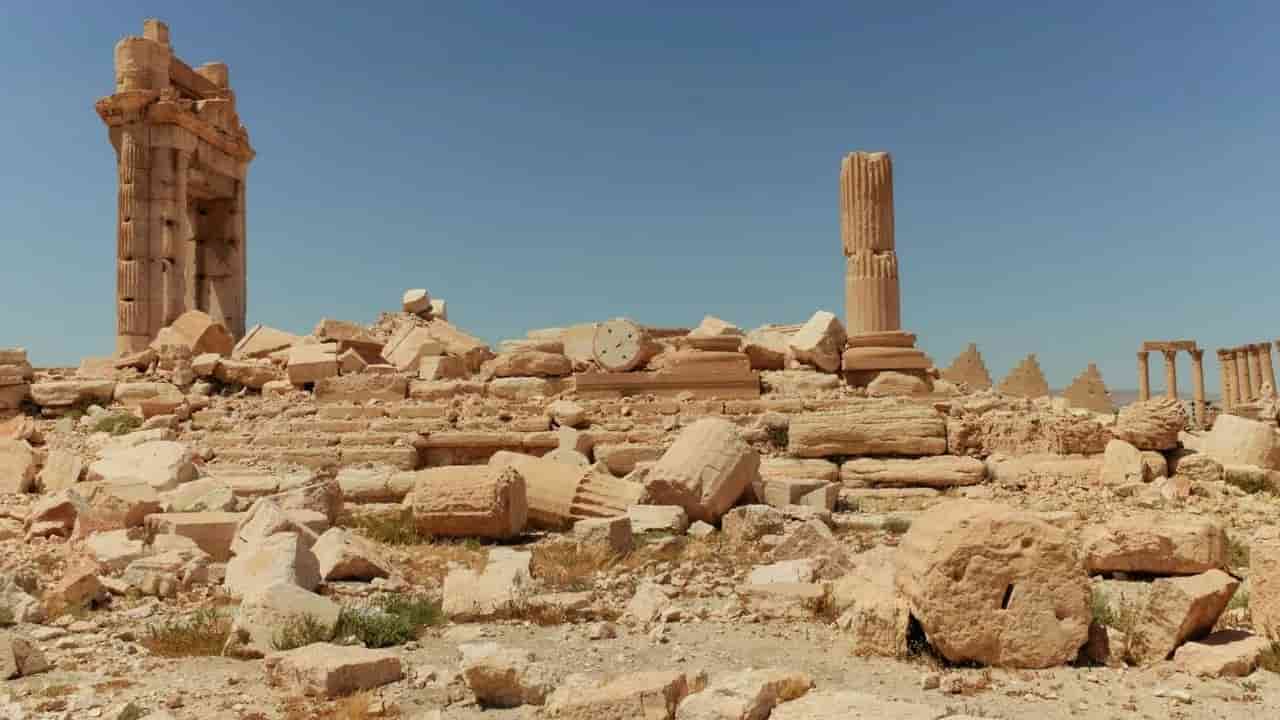
Palmyra seeks revival after conflict, focusing on tourism and local livelihoods

Created at 6 Jul · 8:55 AM1 source↑ Market-relevant
IN SHORT

Palmyra, a Syrian city with ancient heritage, is striving for economic and cultural revival after years of conflict and destruction by groups like the Islamic State. Efforts focus on rebuilding tourism infrastructure and supporting local businesses to restore livelihoods.

✉Newsletter

PiQ Daily

Pick your topics. Get only what matters, on your cadence.

Key Numbers

20men publicly executed by IS in Roman Amphitheatre
2,000-year-oldmummies burnt by IS
7days bodies were displayed in streets
70local women trained in handicrafts

Who's Involved

Islamic State (IS)
Militant group that captured Palmyra in 2015 and caused significant destruction
Assad government
Syrian government forces that controlled Palmyra at various times
Khalid
Palmyra tour guide who witnessed IS occupation
Ahmad
Palmyran who worked with tourists from a young age
Saleh family
Residents whose home was mined and looted by regime forces
Unesco
Organization developing a recovery roadmap for Palmyra
Rami Nawaya
Founder of Syrian Guides, promoting Palmyra as an icon of Syria
Radwan Abdullatif
Owner of Silk Road Lodge, advocating for local rebuilding efforts
Zahir al-Salim
Deputy director of Palmyra, highlighting tourism's economic impact
Caravan Foundation
Organization helping residents rebuild livelihoods sustainably
Khaldoun
Local resident who learned languages through guiding tourists
Palmyra seeks revival after conflict, focusing on tourism and local livelihoods

↳ Why This Matters

The revival of Palmyra is crucial for preserving Syria's rich cultural heritage and restoring the livelihoods of its residents who have endured immense hardship and destruction.

Key facts

  • Palmyra, a UNESCO heritage site, suffered significant destruction and looting by the Islamic State and during military campaigns.
  • Efforts are underway to revive the city's economy, primarily through tourism, to restore livelihoods.
  • Reconstruction plans exist, but visible support remains limited, with residents leading rebuilding efforts.
  • New tourist facilities are opening, and local initiatives aim to support women through handicraft production.
  • The city's revival is hampered by regional instability affecting travel and momentum.

Palmyra, a city renowned for its ancient heritage and cultural diversity, is striving for a post-conflict revival after enduring years of civil war, occupation by the Islamic State (IS), and successive military campaigns. The IS group's brutal occupation in 2015 saw public executions in the Roman Amphitheatre and the destruction of iconic ancient landmarks like the Arch of Triumph and the Temple of Bel, driven by an iconoclastic ideology and to generate revenue through artifact trafficking. The modern city also suffered extensive damage, looting, and destruction during military operations.

While Unesco has developed a recovery roadmap for Palmyra, including conservation and livelihood initiatives, residents and officials report a significant gap between these plans and tangible support on the ground. The reconstruction is largely being driven by the returnees themselves, who see tourism as the primary engine for economic recovery and restoring livelihoods that were devastated by the war. Before 2011, tourism constituted about half of the city's economy.

Signs of regeneration are emerging, with new tourist facilities like the Silk Road Lodge opening and initiatives like the Noor al-Badia women's cooperative training local women in handicrafts. However, the city's momentum is frequently disrupted by renewed regional instability, which affects travel and flights. For the people of Palmyra, attracting visitors is paramount, viewing tourism not just as a means to rebuild infrastructure like hotels and restaurants, but as an essential lifeline to bring money back into the city and support thousands of local businesses.

Frequently asked questions

The Islamic State publicly executed men in the Roman Amphitheatre, destroyed landmarks like the Arch of Triumph and Temple of Bel, and looted artifacts.

Unesco is developing a recovery roadmap, and local residents and organizations are focused on rebuilding tourism infrastructure and supporting local businesses and women's cooperatives.

Limited visible international support, a gap between plans and reality, and disruptions from regional instability hindering travel and momentum.

Tourism was a major part of Palmyra's economy before the war, and it is seen as the most viable industry to bring money back into the city and restore thousands of livelihoods.

What Happens Next

01Continued efforts to reopen hotels, restaurants, and guesthouses.
02Further development of visitor infrastructure and services.
03Expansion of local handicraft production and sales.
04Monitoring of regional stability's impact on tourism momentum.

Get the newsletter.

Pick the topics you actually care about. We'll email when there's news worth your time, on the cadence you choose. Cancel any time from your account.

Cadence

How It Developed

Palmyra experienced successive control by IS and the Assad government, with Russian military intervention.
The Islamic State staged public executions in the Roman Amphitheatre and destroyed ancient landmarks.
Militants looted and trafficked artifacts from Palmyra's ruins to generate revenue.
The modern city of Palmyra also suffered destruction and looting by successive military campaigns.
Unesco has developed a recovery roadmap for Palmyra, including conservation and livelihood opportunities.
Residents and officials note a gap between recovery plans and visible support.
Reconstruction efforts are largely in the hands of returning residents.
Tourism is seen as crucial for Palmyra's economic revival and restoring livelihoods.

Sources

T1
After the frontlines: Palmyra’s fight for cultural and economic revivalMiddle East Eye

Related Stories

Macron to Host Syria's Al-Sharaa in Europe
5 Jul · 12:01 PM
Lebanese mayor rejects Netanyahu's claim of Christian annexation request
5 Jul · 8:40 PM
UK lawmakers urge sanctions on Netanyahu over alleged Palestinian torture
6 Jul · 10:05 AM
Lebanon reports 4,304 killed in Israeli attacks since March
5 Jul · 6:10 PM
Ukraine's midrange drones disrupt Russian supply lines
6 Jul · 5:15 AM