All NewsEducationTV
Equities & FundsCrypto & Digital AssetsAI & TechnologyBusiness & CorporateUS Politics & PolicyGeopolitics & Global RiskMacro, Rates & FXCommodities & EnergyEuropean Politics & MarketsAsia-PacificReal Estate & Property
Story archiveAll categories
← All Stories

Nagasaki warns of increased nuclear war risk on anniversary

Created at 9 Aug · 3:41 AM1 source↑ Market-relevant
IN SHORT

Nagasaki marked the 81st anniversary of the U.S. atomic bombing by warning nuclear powers of the heightened risk of nuclear war, citing conflicts in Ukraine and the Middle East. Mayor Shiro Suzuki emphasized that nuclear weapons are an 'absolute evil' and cannot coexist with humanity.

✉Newsletter

PiQ Daily

Pick your topics. Get only what matters, on your cadence.

Key Numbers

81stanniversary of Nagasaki atomic bombing
11:02 a.m.time of Nagasaki atomic bombing
12,000+nuclear warheads in existence
three daysprior to Nagasaki bombing, Hiroshima was bombed
August 9, 1945date of Nagasaki atomic bombing
74,000estimated deaths in Nagasaki by year-end 1945
August 15, 1945date of Japan's surrender
86+average age of atomic bomb survivors

Who's Involved

Shiro Suzuki
Mayor of Nagasaki, delivered Peace Declaration
Sanae Takaichi
Prime Minister of Japan, spoke at ceremony
Antonio Guterres
U.N. Secretary General, warned of nuclear risk
Nagasaki warns of increased nuclear war risk on anniversary

↳ Why This Matters

The anniversary serves as a critical reminder of the devastating consequences of nuclear warfare and highlights growing global concerns about the potential for nuclear conflict amidst ongoing geopolitical tensions.

Key facts

  • Nagasaki marked the 81st anniversary of the U.S. atomic bombing on Sunday.
  • Mayor Shiro Suzuki warned of an increased risk of nuclear war.
  • Suzuki stated nuclear weapons are an 'absolute evil' and cannot coexist with humanity.
  • Prime Minister Sanae Takaichi reaffirmed Japan's three nonnuclear principles.
  • U.N. Secretary General Antonio Guterres warned of rising risks of miscalculation and conflict.

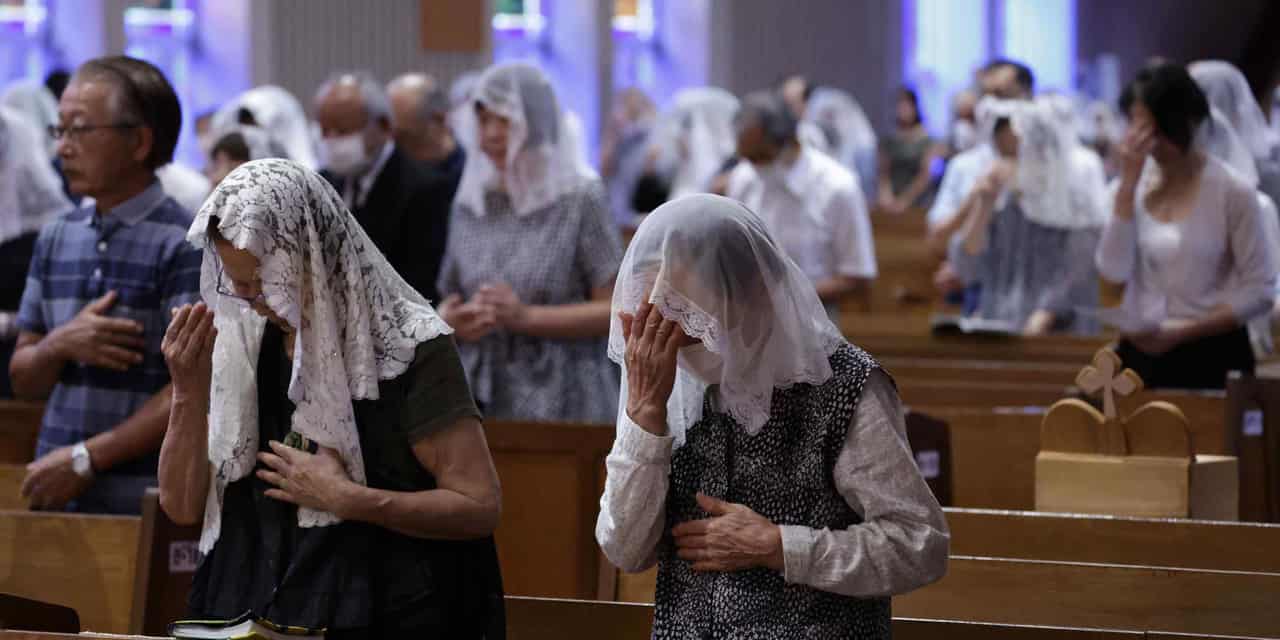
Nagasaki marked the 81st anniversary of the U.S. atomic bombing on Sunday, with Mayor Shiro Suzuki issuing a stark warning about the increased risk of nuclear war. During the annual memorial ceremony, Suzuki declared that nuclear weapons are an 'absolute evil' and cannot coexist with humanity, urging nuclear powers and those relying on nuclear deterrence to prevent such a tragedy.

A moment of silence was observed at 11:02 a.m., the exact time the U.S. dropped the plutonium bomb codenamed 'Fat Man' on the city in 1945, which remains the last instance of a nuclear attack. Despite the existence of over 12,000 nuclear warheads, Suzuki expressed concern over the unpredictability of conflicts in Ukraine and the Middle East, where nuclear states are involved.

Prime Minister Sanae Takaichi reiterated Japan's commitment to its three nonnuclear principles—not producing, possessing, or allowing nuclear weapons on its territory. She emphasized Japan's mission, as the only country to have experienced nuclear devastation in war, to promote "realistic and practical" efforts toward a world free of such weapons. Takaichi also highlighted the growing importance of accurately conveying the realities of the atomic bombings globally.

Mayor Suzuki criticized the failure of the recent Nuclear Non-Proliferation Treaty review conference to adopt a final document, noting that the modernization of nuclear weapons fuels distrust and confrontation. U.N. Secretary General Antonio Guterres echoed these concerns, warning of escalating risks of miscalculation and conflict, and calling the situation 'unacceptable.' He stressed the interdependence of global security and how nuclear weapons increase uncertainty.

Suzuki urged the Japanese government to uphold the peace ethos of its constitution and the Three Non-Nuclear Principles. He also called on the government to attend the upcoming review conference of the Treaty on the Prohibition of Nuclear Weapons in November. The attack on Nagasaki is believed to have killed around 74,000 people by the end of 1945. Survivors, known as hibakusha, are racing against time to pass on their memories, with the average age of recognized survivors now exceeding 86.

Frequently asked questions

The U.S. dropped an atomic bomb on Nagasaki on August 9, 1945.

Japan's three nonnuclear principles are not to produce, possess, or allow nuclear weapons on its territory.

The plutonium device dropped on Nagasaki was codenamed 'Fat Man'.

The average age of officially recognized survivors of the atomic bombings of Hiroshima and Nagasaki exceeds 86.

What Happens Next

01The Treaty on the Prohibition of Nuclear Weapons review conference is scheduled for November.

Get the newsletter.

Pick the topics you actually care about. We'll email when there's news worth your time, on the cadence you choose. Cancel any time from your account.

Cadence

How It Developed

Nagasaki marked the 81st anniversary of the U.S. atomic bombing.
Mayor Shiro Suzuki warned of increased risk of nuclear war.
Suzuki called nuclear weapons an 'absolute evil' that cannot coexist with humanity.
A moment of silence was observed at 11:02 a.m., the time of the bombing.
Prime Minister Sanae Takaichi reiterated Japan's commitment to its three nonnuclear principles.
Takaichi stated Japan will promote efforts toward a world free of nuclear weapons.
Suzuki noted the failure of the Nuclear Non-Proliferation Treaty review conference to adopt a final document.
U.N. Secretary General Antonio Guterres warned of rising risks of miscalculation and conflict.

Sources

T1
Nagasaki warns of risk of nuclear war on 81st A-bomb anniversaryNikkei Asia

Related Stories

Nagasaki marks 81st A-bomb anniversary amid deterrence debate
9 Aug · 1:16 AM
UN warns Yemen at greatest risk of renewed major conflict since 2022 truce
8 Aug · 7:16 AM
Pakistan defence minister calls for united military front against Israel
9 Aug · 4:05 AM
Turkey urges Russia, Ukraine to halt Black Sea vessel attacks
9 Aug · 1:11 AM
Unknown projectile strikes vessel near Oman, UKMTO reports
8 Aug · 2:36 PM