Key facts
- A security deal between Israel and Lebanon links Israeli withdrawal from southern Lebanon to Hezbollah's disarmament.
- Analysts and politicians deem Hezbollah's disarmament an unattainable condition.
- The deal could allow Israel to maintain an open-ended military presence in southern Lebanon.
- The framework agreement is seen as placing all the burden on Lebanon without reciprocal guarantees.
- Hezbollah has rejected the deal, calling it 'null and void' and a 'surrender'.
- Some experts fear the deal could lead to internal conflict in Lebanon.
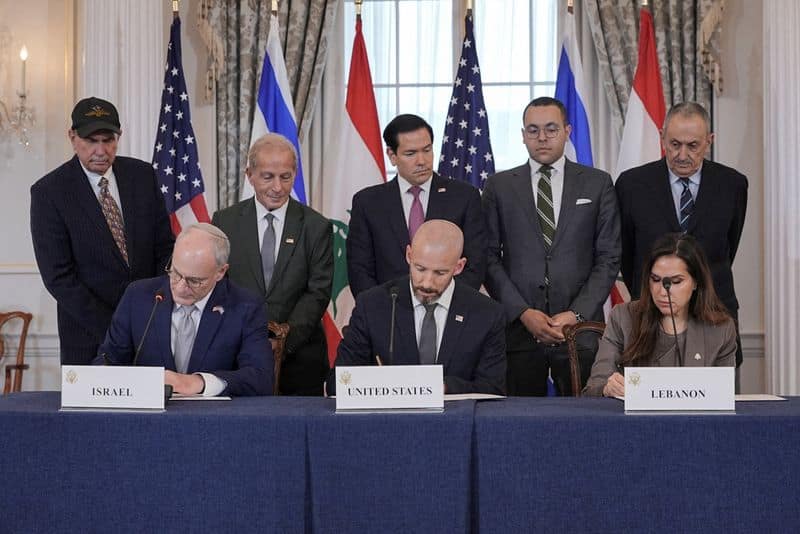
A security deal between Israel and Lebanon, brokered in Washington, is facing skepticism from analysts who believe it is structurally flawed and unlikely to resolve the underlying conflict. The core of the agreement hinges on Hezbollah disarming, a condition widely considered unattainable given the group's power and Lebanon's political realities. Analysts suggest this makes it difficult for Israel to withdraw, potentially leading to an extended military presence in southern Lebanon.
The framework agreement stipulates that Lebanese army authority in the south is contingent on the verified disarmament of non-state armed groups, including Hezbollah. Israeli Prime Minister Benjamin Netanyahu has stated that Israeli troops will remain in a security zone until Hezbollah is disarmed and no further threat is posed from Lebanon. However, Lebanese officials and analysts have criticized the deal, with some calling it an 'imposed settlement' that places all the burden on Lebanon and offers no reciprocal guarantee of Israeli withdrawal.
Hezbollah has outright rejected the deal, labeling it 'null and void' and a 'surrender,' and has vowed to continue fighting. There are concerns that attempts to forcibly disarm Hezbollah could deepen sectarian tensions and lead to internal conflict within Lebanon. Analysts like Danny Citrinowicz believe the deal effectively legitimizes an open-ended Israeli military presence, stating that neither Israel nor Hezbollah is likely to change its current stance.