Key facts
- Japan, the UK, and Italy have agreed to extend their contract for the joint development of a next-generation fighter jet through the end of 2027.
- The extension was facilitated by the UK's release of its defense spending plan.
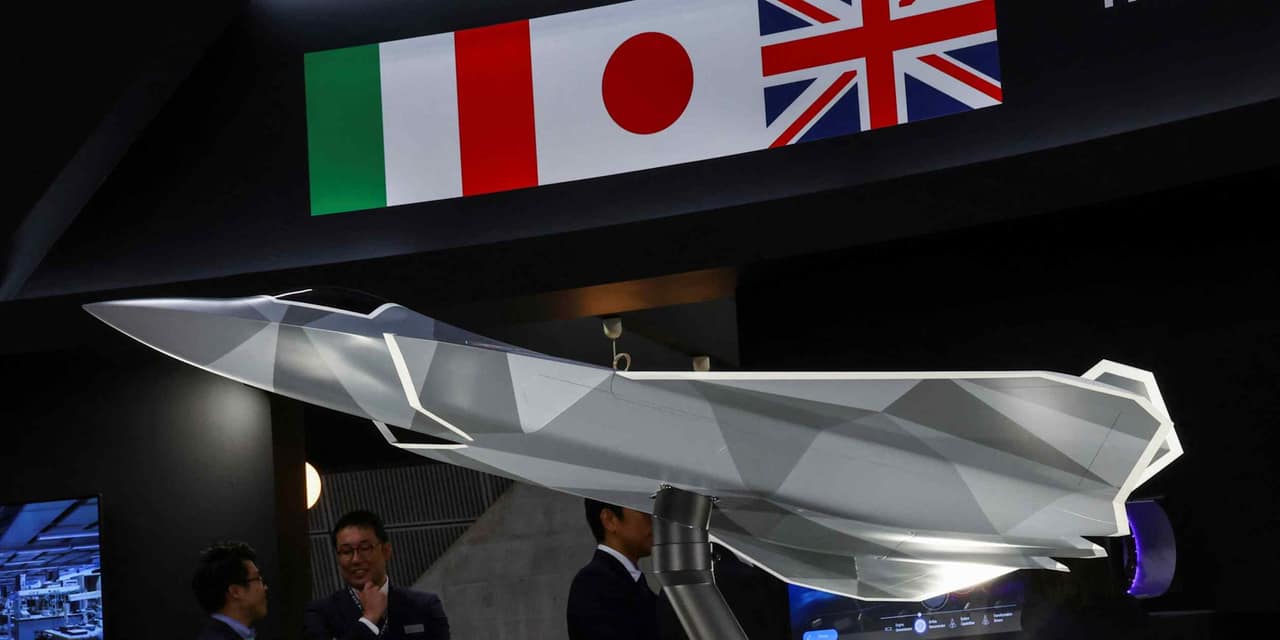
- The Global Combat Air Programme (GCAP) is a multinational initiative to develop a sixth-generation stealth fighter.
- The program aims to replace the Eurofighter Typhoon and Mitsubishi F-2 fighter jets.
- A joint venture, Edgewing, was established by BAE Systems, Leonardo, and Mitsubishi Heavy Industries to oversee the program.
- A demonstrator aircraft is anticipated to fly in 2027, with operational aircraft expected from 2035.
Japan, the U.K., and Italy are set to extend their contract for the joint development of a next-generation fighter jet through the end of 2027. This extension follows the UK government's release of a delayed defense spending plan, which had previously stalled a longer-term agreement.
The Global Combat Air Programme (GCAP) is a multinational initiative aimed at developing a sixth-generation stealth fighter, intended to outperform the U.S. F-35. The program seeks to replace the Eurofighter Typhoon in service with the Royal Air Force and Italian Air Force, and the Mitsubishi F-2 in the Japan Air Self-Defense Force.
Previously separate projects, the UK-led BAE Systems Tempest (developed with Italy) and Japan's Mitsubishi F-X, were merged into GCAP following an announcement in December 2022 and formalized by a treaty in December 2023. Approximately 9,000 people are involved in the program worldwide, with over 1,000 suppliers across the three nations.
In June 2025, BAE Systems, Leonardo, and a Japanese consortium led by Mitsubishi Heavy Industries launched a joint venture named Edgewing to oversee the program. Under the current timeline, a demonstrator aircraft is expected to fly in 2027, with production aircraft slated to enter service from 2035.
Japan's motivation for developing a new fighter stems from its vast air defense identification zone and the need to counter growing neighboring populations. The country's Ministry of Defense had previously identified the need for a highly information-based, intelligent fighter capable of instantaneous response, known as the i3 fighter, to replace its aging F-15J and F-2 fleets.