Key facts
- Israeli forces heavily shelled Nabatieh al-Fawqa in southern Lebanon.
- Artillery fire originated from Tel al-Nahas, near Kfar Kila.
Israeli forces launched heavy artillery attacks on Nabatieh al-Fawqa in southern Lebanon, with reports of drone strikes and ground incursions into border towns. The shelling occurred despite a ceasefire agreement and diplomatic efforts to end the Israeli occupation.
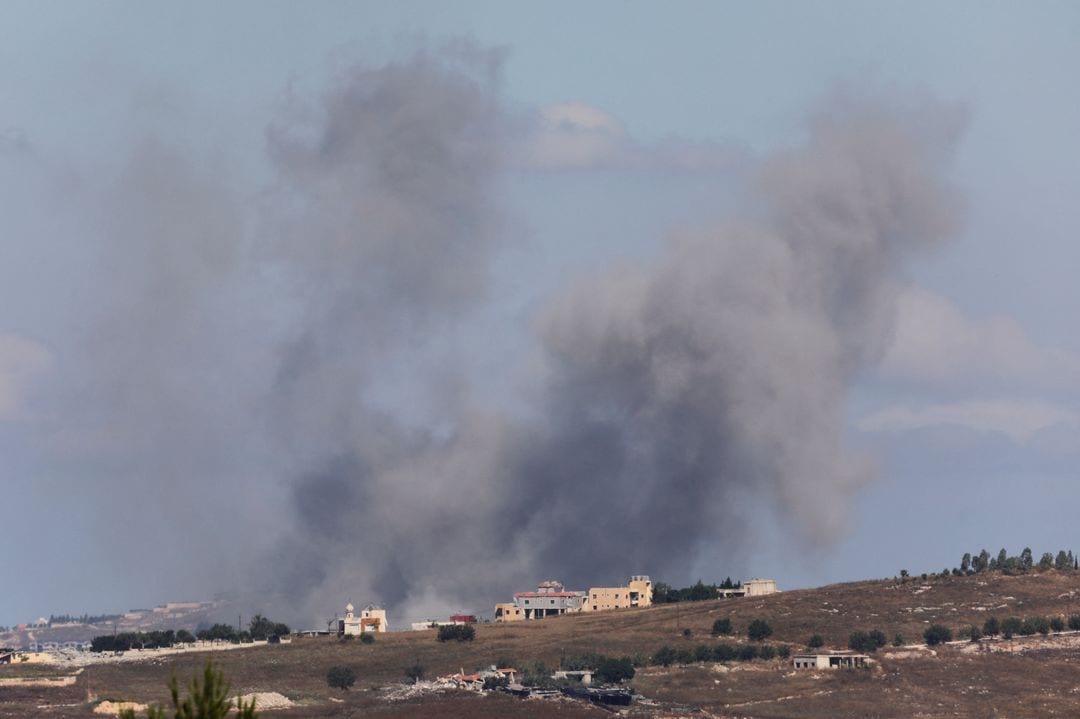
The continued Israeli shelling and incursions into southern Lebanon, despite a ceasefire agreement and ongoing diplomatic efforts, highlight persistent regional tensions and the fragile security situation along the border.
Israeli forces have launched heavy artillery attacks on Nabatieh al-Fawqa in southern Lebanon, according to the country's state-run National News Agency (NNA). The artillery fire originated from an Israeli military position in the Tel al-Nahas area, near the occupied Lebanese border village of Kfar Kila.
The NNA described the shelling as "intense and concentrated." These attacks occurred despite a ceasefire agreement between Israel and the Lebanese government and ongoing diplomatic efforts to end the Israeli occupation.
Further Israeli violations continued on Wednesday, coinciding with the second day of the Lebanese army's deployment in Zawtar al-Gharbiyeh under phase one of a framework formula agreement. Artillery fire intermittently targeted Ali al-Taher hill on the outskirts of Nabatieh al-Fawqa, and an Israeli drone carried out a strike on the town. Israeli ground forces also advanced to the outskirts of Burj al-Muluk, raiding a home, confiscating a passport, and interrogating an individual before withdrawing. Additionally, Israeli forces entered the border town of Sarbin amid heavy machine-gun fire, and carried out overnight explosions in Baraachit and Hadatha.
The Lebanese army stated that its units deployed in Zawtar al-Gharbiyeh as part of the agreement, which involves a gradual Israeli withdrawal in exchange for Lebanese army deployment. The army reported that Israeli forces opened fire near its units during the mission, endangering soldiers and obstructing the deployment.