Key facts
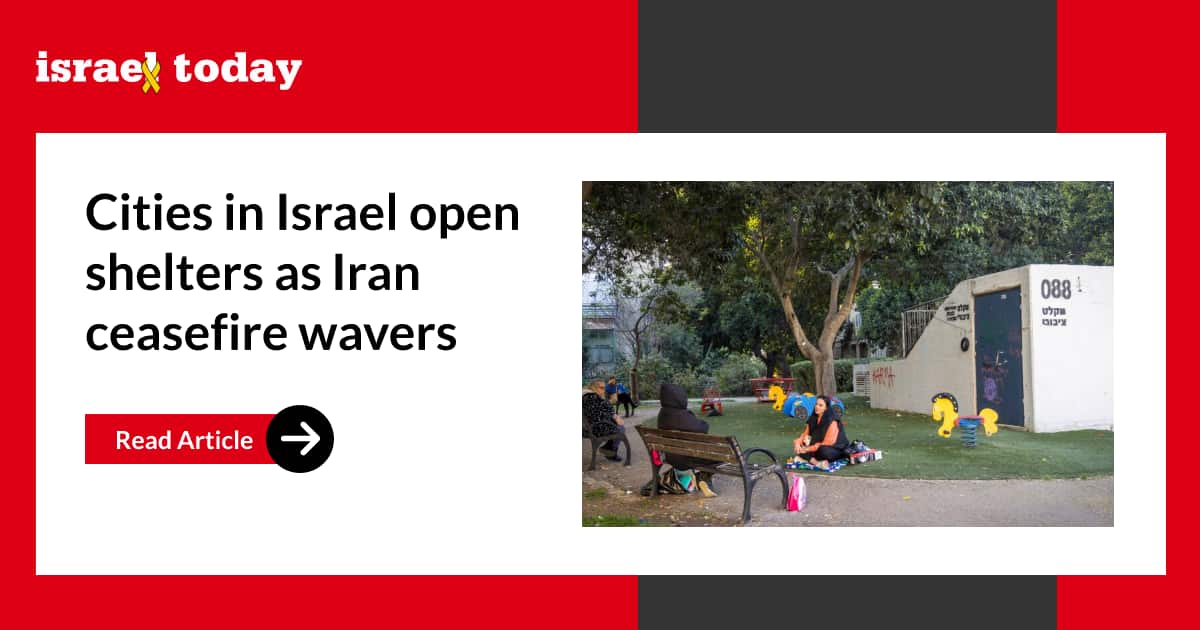
- Several Israeli cities have opened public shelters in preparation for potential Iranian escalations.
- Municipalities including Ramat Gan, Upper Galilee, Eilat, Beersheba, Ashdod, Rishon LeZion, and Haifa are taking preparedness measures.
- Some cities have raised alert levels and inspected existing shelters.
- A significant portion of residents in cities like Haifa and Rishon LeZion lack private protected spaces.
- The heightened alert follows Iranian attacks in the Strait of Hormuz and on the UAE and Oman, potentially threatening a ceasefire.
Multiple Israeli cities have announced the opening of public air raid shelters and are increasing preparedness levels amid rising tensions with Iran. Municipalities including Ramat Gan, Upper Galilee, Eilat, Beersheba, Ashdod, Rishon LeZion, and Haifa are taking these measures due to concerns that a recent ceasefire could collapse.
In Ashdod, Mayor Yehiel Lasri ordered officials to raise alert levels and strengthen preparedness across all municipal systems. Rishon LeZion Mayor Raz Kinstlich stated that while there is no change in policy, the city is on full alert and has inspected all shelters. He noted that approximately 50,000 residents lack private shelters, leading the city to open educational institutions with reinforced shelters for overnight use.
Haifa Mayor Yona Yahav also described the situation as tense, emphasizing that citizens have "iron discipline" but criticizing the government for not engaging with him. He highlighted that 35% of Haifa's population lacks private shelters and that the municipality is working to address this.
The current escalation follows a U.S.-led military operation to ensure commercial vessel passage through the Strait of Hormuz, which Iran responded to with attacks on military and commercial ships. Reports indicate Iran also attacked the United Arab Emirates and Oman for the first time since the ceasefire. In response, the U.S. military sank several Iranian vessels in the Strait of Hormuz. Prime Minister Benjamin Netanyahu has held high-level security consultations to prepare for a potential return to hostilities.