All NewsEducationTV
Equities & FundsCrypto & Digital AssetsAI & TechnologyBusiness & CorporateUS Politics & PolicyGeopolitics & Global RiskMacro, Rates & FXCommodities & EnergyEuropean Politics & MarketsAsia-PacificReal Estate & Property
Story archiveAll categories
← All Stories

Israel destroys West Bank wells, displacing Palestinian herders

Created at 3 Aug · 11:16 AM1 source↑ Market-relevant
IN SHORT

Israeli forces destroyed three water wells in Ras al-Ahmar, a Palestinian community in the Jordan Valley, exacerbating a water crisis and forcing residents to haul water from distant towns at higher costs. The destruction impacts families, livestock, and agriculture, with residents fearing it is a tactic to displace them.

✉Newsletter

PiQ Daily

Pick your topics. Get only what matters, on your cadence.

Key Numbers

3water wells destroyed
47Palestinian families affected
600people served by wells
7,500dunams of farmland irrigated
5,910Palestinians displaced by settler violence (Jan 2023-Apr 2026)

Who's Involved

Ali Bani Odeh
Resident of Ras al-Ahmar, farmer and livestock raiser
Abdullah Bisharat
Head of the Ras al-Ahmar village council
Obeida Bani Odeh
Son of Ali Bani Odeh, fears for family's future
Aref Daraghmeh
Human rights activist
Israel destroys West Bank wells, displacing Palestinian herders

↳ Why This Matters

The destruction of essential water infrastructure in the occupied West Bank exacerbates the humanitarian crisis for Palestinian communities, threatening their livelihoods, food security, and right to remain on their land. It highlights a pattern of actions by Israeli forces and settlers that activists describe as a deliberate strategy to displace Palestinians from strategic areas like the Jordan V

Key facts

  • Israeli forces destroyed three water wells in the Palestinian community of Ras al-Ahmar in the Jordan Valley.
  • The wells were a primary water source for over 47 families, approximately 600 people, and irrigated about 7,500 dunams of farmland.
  • Residents are now incurring higher costs to transport water from distant towns.
  • The destruction follows repeated cutting of pipelines by Israeli settlers in recent months.
  • Human rights activists state that water infrastructure destruction is part of a broader strategy to displace Palestinians from the Jordan Valley.

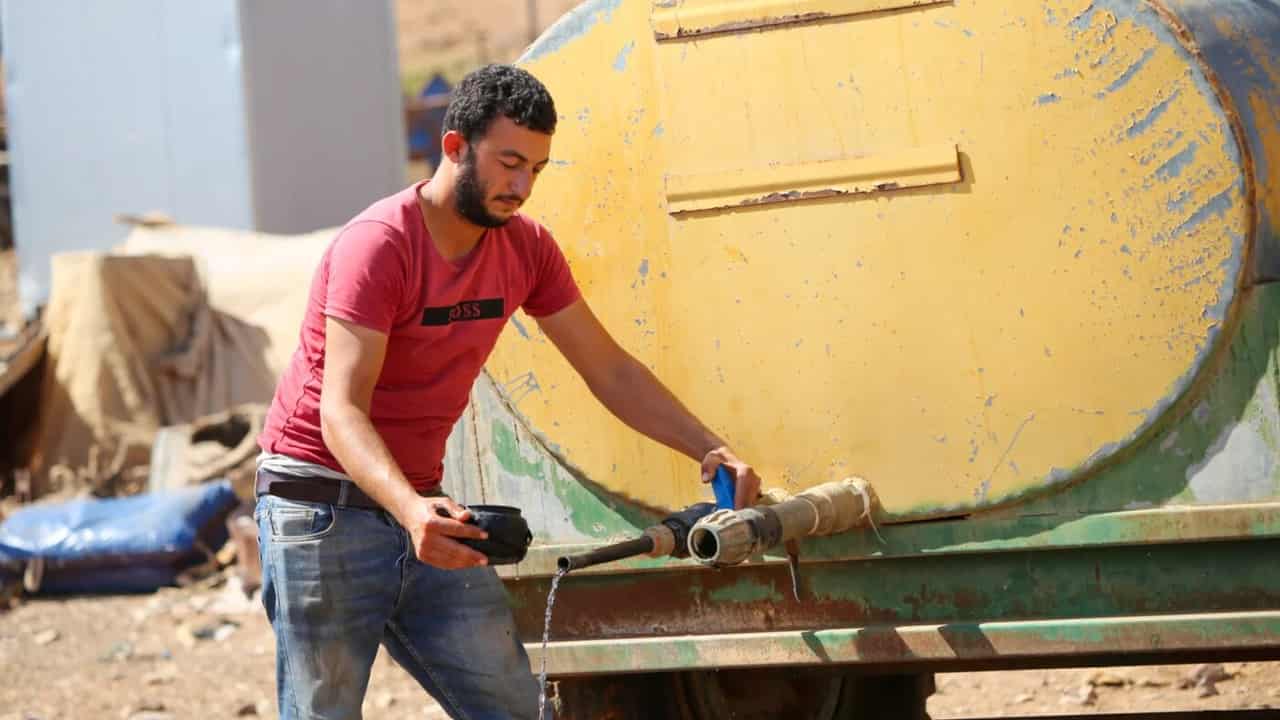
Israeli forces have destroyed three vital water wells in the Palestinian community of Ras al-Ahmar in the northern Jordan Valley, leaving residents struggling to secure water for their families, crops, and livestock. The wells, which supplied over 47 families (around 600 people) and irrigated approximately 7,500 dunams of farmland, were the community's primary water source. Residents now face significantly higher costs and logistical challenges in transporting water from distant towns, with movement restrictions and checkpoints frequently impeding delivery.

Residents attribute the destruction to an escalation of a months-long water crisis fueled by repeated attacks from Israeli settlers who have previously cut pipelines. They believe the destruction of the wells is a deliberate tactic to force them to leave the land, a sentiment echoed by human rights activists who describe the actions as part of a 'silent war' over natural resources in the Jordan Valley.

Aref Daraghmeh, a human rights activist, stated that the occupation controls many Palestinian water sources, leaving insufficient water for agriculture and sustaining life. He noted that restrictions on water access, coupled with movement limitations, are contributing to the decline of Palestinian agriculture and increasing pressure on communities to relocate, while settlement agriculture expands. Despite these challenges, residents like Ali Bani Odeh, who was displaced as a child, express a determination to remain on their ancestral land.

Frequently asked questions

Residents state Israeli forces destroyed the wells, which they believe is part of a broader strategy to displace Palestinians, following months of settler attacks on water pipelines.

The three destroyed wells supplied water to more than 47 Palestinian families, serving around 600 people.

Families are struggling to secure water for drinking, agriculture, and livestock, forcing them to incur higher costs for water transport and facing difficulties in bringing essential supplies.

Human rights activists describe a 'silent war' over water resources, where Palestinian access is restricted while settlement agriculture expands, contributing to the decline of Palestinian farming and herding livelihoods.

What Happens Next

01Residents will continue to seek alternative water sources and challenge movement restrictions.
02Human rights organizations will likely document and report on the ongoing water crisis and settler violence.

Get the newsletter.

Pick the topics you actually care about. We'll email when there's news worth your time, on the cadence you choose. Cancel any time from your account.

Cadence

How It Developed

Israeli forces destroyed three main water wells in the Palestinian community of Ras al-Ahmar.
Residents are now forced to transport water from distant towns at a higher cost.
The destroyed wells supplied over 47 Palestinian families, around 600 people, and irrigated approximately 7,500 dunams of farmland.
The destruction is seen as an escalation of a months-long water crisis caused by Israeli settler attacks.
Human rights activists describe the destruction of water infrastructure as a 'silent war' to control resources and displace Palestinians.

Sources

T1
'They want to make us leave': Israel destroys West Bank wells serving Palestinian herdersMiddle East Eye

Related Stories

Palestinian doctor alleges abuse, neglect in Israeli prison
2 Aug · 8:16 PM
Israeli finance minister calls for building settlements near Gaza
2 Aug · 1:41 PM
Israeli settlers attack Armenian church in Jerusalem
2 Aug · 8:41 PM
Gaza doctors' careers frozen by conflict, hindering future healthcare
2 Aug · 2:21 PM
Palestinian Americans trapped by settler violence in West Bank
3 Aug · 10:11 AM