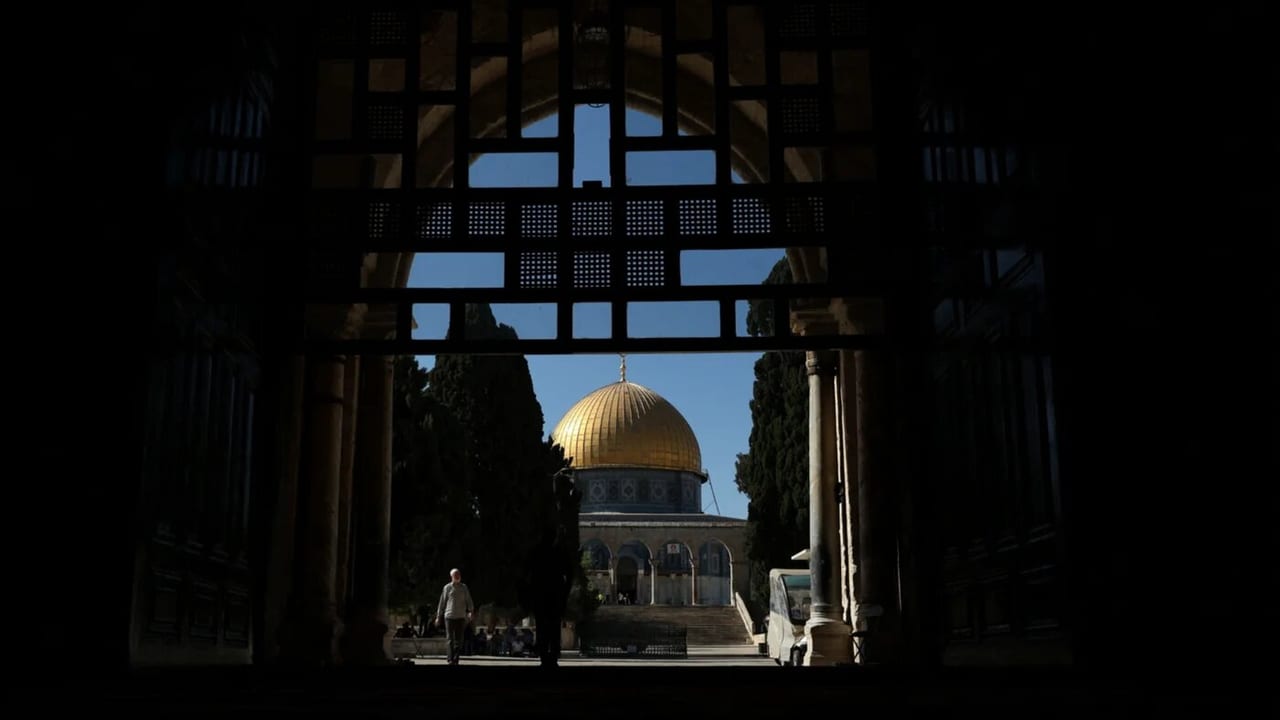
Key facts
- Israeli forces briefly closed the King Faisal Gate to Al-Aqsa Mosque for military drills.
- The drills occurred in the mosque's courtyards and lasted about 30 minutes.
- Palestinian officials condemned the closure as an attempt to curtail religious freedoms and further the "Judaisation" of the site.
- Israeli forces raided the Al-Aqsa Mosque complex 26 times in June.
- Over 4,200 Israeli settlers stormed the site in June under police protection.
Israeli forces briefly closed one of the gates to Al-Aqsa Mosque in occupied East Jerusalem on Tuesday, citing military exercises. The Palestinian Authority's Jerusalem Governorate stated the drills took place in the mosque's courtyards and lasted approximately 30 minutes.
While only the King Faisal Gate was shut, the governorate noted that Israeli forces implemented heightened security measures at other entrances, impeding worshippers' access. This closure follows a series of escalating Israeli restrictions at the Al-Aqsa Mosque complex. Earlier this year, Israel imposed a 40-day closure on the mosque during its conflict with Iran, citing security concerns.
Palestinian Muslims were previously barred from the site for Friday prayers, Ramadan night prayers, and the Eid al-Fitr holiday. Palestinian officials condemned the recent closure, characterizing it as an effort to restrict religious freedoms and advance the "Judaisation" of the site, rather than a genuine security response.
A report from the Palestinian Ministry of Awqaf and Religious Affairs indicated that Israeli forces raided the Al-Aqsa Mosque complex 26 times in June. During the same period, 4,212 Israeli settlers reportedly entered the site under heavy police escort.
For decades, the Al-Aqsa Mosque has operated under the "status quo" arrangement, maintaining its status as an exclusively Muslim place of worship administered by Jordan's Islamic Waqf. This agreement allows non-Muslim visits at designated times but reserves prayer rights for Muslims. Palestinians assert that since Israel's occupation of East Jerusalem in 1967, this status quo has been eroded by increased restrictions on Muslim worshippers and a growing Israeli presence. Recent actions, such as limiting maintenance work, revoking staff permits, and allowing Jewish prayer, are seen as further weakening the Waqf's authority. In May, reports suggested Israel and the United States were seeking to remove Jordan's custodianship, a claim denied by Washington.