Key facts
- Iran's Islamic Revolutionary Guard Corps (IRGC) claimed to have targeted a U.S. air base in Jordan with ballistic missiles.
- Jordan's armed forces intercepted and shot down four missiles that entered Jordanian airspace from Iranian territory.
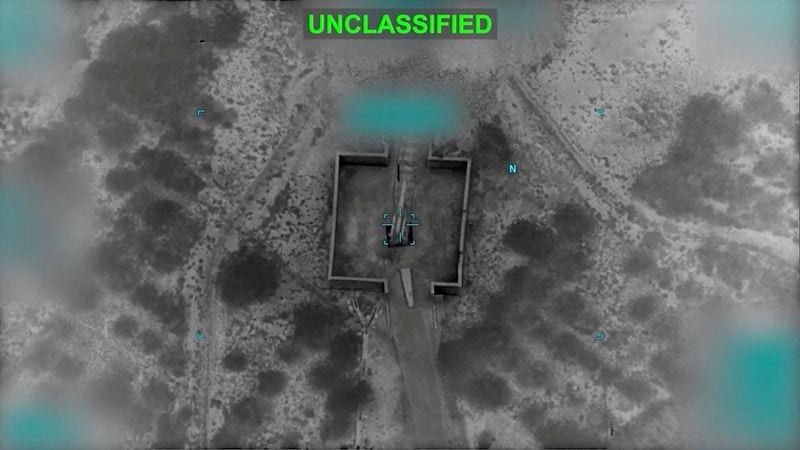
- U.S. forces completed a wave of strikes on Iran.
- The IRGC claimed to have disabled two supertankers in the Strait of Hormuz.
- Oil prices rose nearly 3% on Tuesday to their highest in four weeks.
Iran's Islamic Revolutionary Guard Corps (IRGC) announced on Tuesday that it targeted a U.S. air base in Jordan with ballistic missiles, stating the attack was in retaliation for U.S. strikes against Tehran. Jordan's armed forces confirmed they intercepted and shot down four missiles that entered Jordanian airspace from Iranian territory.
U.S. forces completed their latest wave of strikes on Iran, which began earlier in the day at the direction of President Donald Trump. These five-hour strikes marked the third consecutive night of attacks against Iran, following Trump's reinstatement of a blockade on Iranian shipping and a proposal to charge a 20% fee to guard the Strait of Hormuz.
Iranian media reported strikes on several cities, with four people wounded and rescue operations underway. Trump had previously stated that Iran would be hit 'very hard.' The recent hostilities follow Iran's announcement over the weekend that it was closing the Strait of Hormuz, impacting oil prices.
Trump declared on Truth Social that the U.S. would be known as 'THE GUARDIAN OF THE HORMUZ STRAIT' and would be reimbursed at a rate of 20% on all cargo shipped. Iran's Foreign Minister Abbas Araqchi responded on X that Tehran was the guardian of the strait and would remain so 'forever,' humorously noting that '20% is of course too much.' Before the conflict, approximately one-fifth of the world's oil and gas traffic passed through Hormuz daily, valued at over $1.2 billion. A 20% fee could generate around $240 million daily.
The U.N. shipping agency opposed Trump's proposal, stating it opposes any fees for straits used in international navigation and that there is no legal basis for mandatory tolls. Oil prices rose nearly 3% on Tuesday to a four-week high due to the U.S. blockade and heightened uncertainty about energy flows.
The UAE Ministry of Defense reported that Iranian cruise missiles struck two Emirati oil tankers in the Strait of Hormuz. The UK Maritime Trade Operations agency also reported a tanker hit by an unknown projectile northeast of Oman. The IRGC claimed to have hit and disabled two 'offending' supertankers for ignoring warnings and turning off navigation systems, though it did not name the vessels or confirm if they were the same tankers cited by the UAE. The IRGC accused the U.S. of 'inciting vessels to use an illegal route' and warned that cooperation with the 'aggressor enemy' would lead to damage, delays, and a global energy crisis.
The U.S. Navy-led Joint Maritime Information Center announced that a blockade of Iran would take effect at 2000 GMT on Tuesday, applying to all vessel traffic regardless of flag and covering the entire Iranian coastline. The measure would not impede neutral transit passage to non-Iranian destinations, and humanitarian shipments would be permitted after inspection. The U.S. and Israel attacked Iran on February 28, and Iran responded with strikes on Israel and Gulf states hosting U.S. bases.