Key facts
- Iran's General Staff vowed the 'complete defeat' of the US and Israel.
- Iran's air defense production capacity is largely undamaged, according to the IRGC.
- The Strait of Hormuz has seen reduced ship traffic and is claimed to be under Iranian control.
- The US and Israel have intensified strikes on Iranian military targets following the killing of Supreme Leader Ayatollah Ali Khamenei.
- Over 200 people have been killed in the conflict, including three US service members.
- President Trump has vowed vengeance for the US deaths.
Iran's military leadership has vowed the "complete defeat" of the United States and Israel, with the General Staff of Iran's Armed Forces stating that the legacy of "resistance" has been passed to a new generation. An official from the Islamic Revolutionary Guard Corps (IRGC) reported that over 85 percent of its air defense production capacity remains undamaged and that production rates for missiles and air defense systems are unaffected by the ongoing conflict.
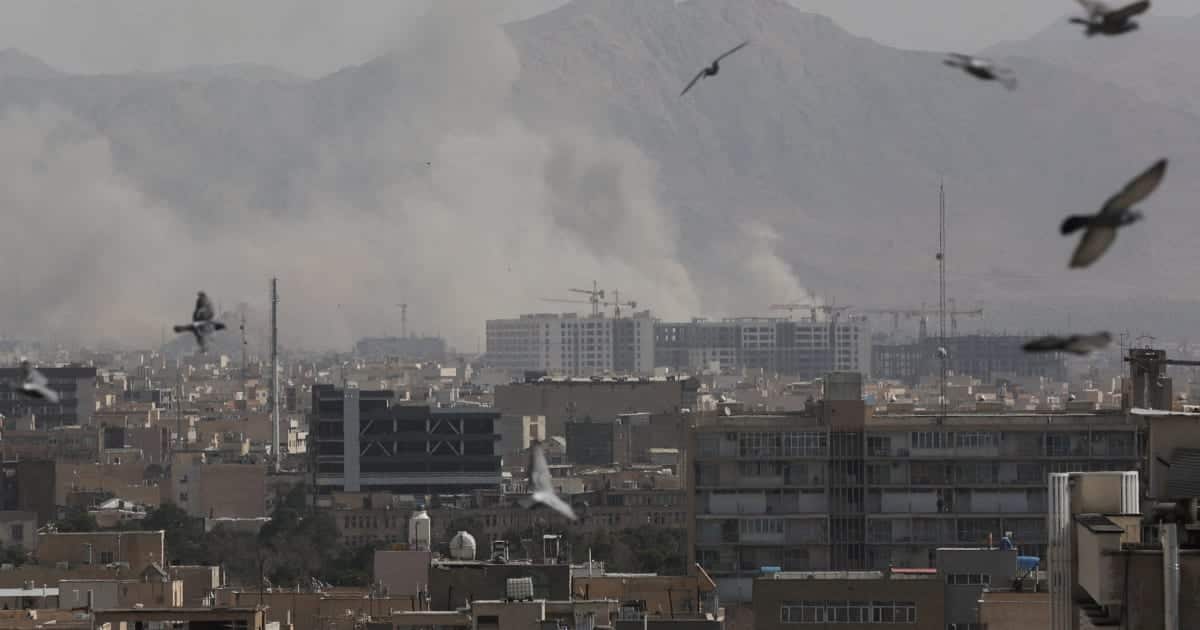
Simultaneously, the US and Israel have intensified their military campaign, pounding targets across Iran. These strikes, which have targeted ballistic missile sites and warships, follow the killing of Iran's Supreme Leader, Ayatollah Ali Khamenei, and other senior leaders. Blasts have been reported across the country, with plumes of smoke seen above Tehran. Iranian leaders claim over 200 people have been killed since the strikes began.
In a counteroffensive, Iran fired missiles at Israel and Gulf Arab states, resulting in the deaths of three US service members, the first known American casualties of the conflict. Israeli rescue services reported strikes hitting multiple locations, including Jerusalem and Beit Shemesh, where nine people were killed and 28 wounded. President Donald Trump vowed vengeance for the US deaths, stating there would likely be more casualties before the conflict ends. Israel has pledged "nonstop" strikes, with Brig. Gen. Effie Defrin reporting that 100 Israeli fighter jets simultaneously struck targets in Tehran, including buildings belonging to Iran's air force, missile command, and internal security force.
Earlier in August, Iran's Basij paramilitary chief asserted that the Strait of Hormuz was "under Iran’s control and management." This statement followed President Trump's claim of "total control" over the passage. Ship traffic through the Strait of Hormuz had reached a near three-month low, with Iran stating it would not reopen the passage until the United States met demands including lifting sanctions and releasing frozen assets. A US official had indicated that progress was being made on a deal with Oman to reopen the Strait, with the US expected to lift its blockade of Iranian ports once commercial shipping was fully restored. Mohsen Rezaei was appointed as Iran's new National Security Adviser, while President Trump described the US approach to Iran as "low-keying it" amidst mounting economic pressure.