All NewsEducationTV
Equities & FundsCrypto & Digital AssetsAI & TechnologyBusiness & CorporateUS Politics & PolicyGeopolitics & Global RiskMacro, Rates & FXCommodities & EnergyEuropean Politics & MarketsAsia-PacificReal Estate & Property
Story archiveAll categories
← All Stories

India's Submarine Program Faces Delays Amidst Pakistan's Naval Advancements

Created at 7 Aug · 8:11 AM1 source↑ Market-relevant
IN SHORT

India's submarine modernization program is experiencing critical delays, particularly with its indigenous Air Independent Propulsion (AIP) system, while Pakistan and China accelerate their underwater warfare capabilities. Pakistan is set to significantly enhance its fleet with Chinese-built submarines equipped with advanced AIP technology.

✉Newsletter

PiQ Daily

Pick your topics. Get only what matters, on your cadence.

Key Numbers

8 yearsdelay in India's indigenous AIP system
2017original deadline for India's AIP system
₹270 crorebudget for India's AIP system
two weeksexpected underwater endurance with AIP
mid-2026hope for AIP readiness for INS Khanderi
threeAgosta-90B submarines Pakistan operates with AIP
2008year Pakistan first fielded AIP-equipped submarines
eightYuan-class submarines Pakistan is receiving from China
$5 billionvalue of Pakistan's submarine acquisition deal with China
2015year Pakistan signed submarine acquisition agreement
18 daysunderwater endurance of Pakistan's Hangor-class submarines
2030year Pakistan is expected to operate eleven AIP-equipped submarines
16
conventional submarines India currently operates
sixScorpene-class submarines in India's fleet
sevenRussian Kilo-class submarines in India's fleet
fourGerman HDW submarines in India's fleet
three decadesage of most Russian and German submarines in India's fleet
teninitial strength of India's Kilo-class fleet
2013year INS Sindhurakshak was lost
threeoperational Indian SSBNs as of 2026
2027year INS Arisudan is set to join India's SSBN fleet
fourArihant-class boats India will complete
February 2024inauguration of India's facility at Mauritius’ Agalega Island

Who's Involved

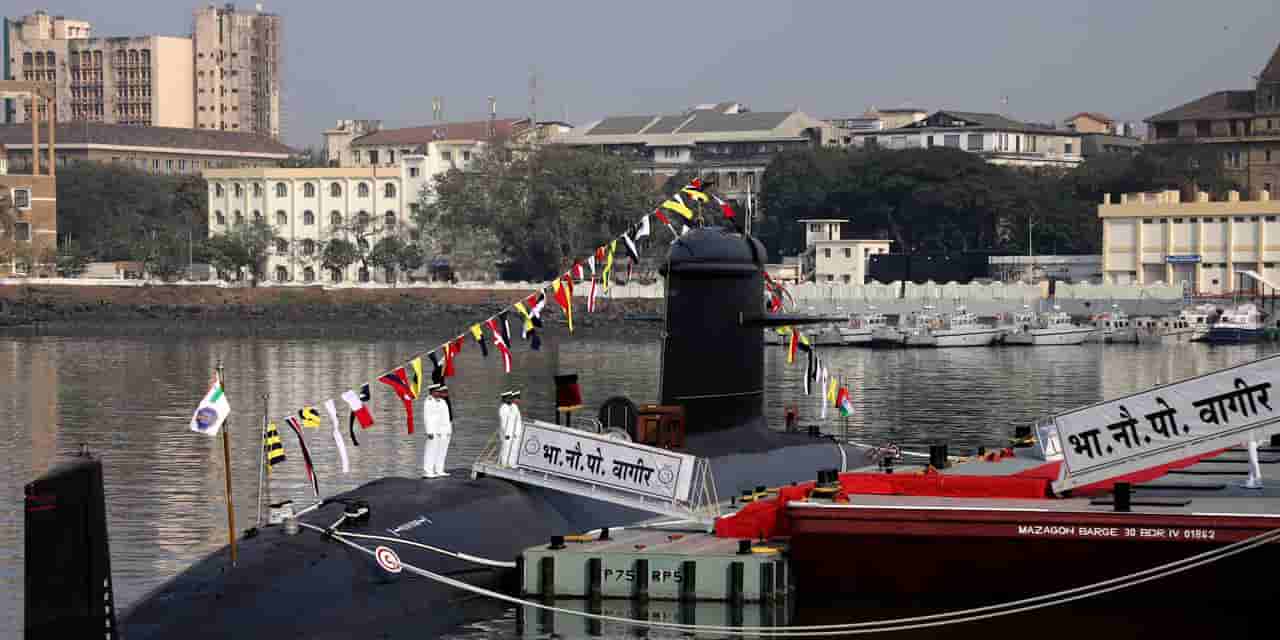
INS Vagir
Indian nuclear-armed submarine commissioned in Mumbai
Farhan Bokhari
Islamabad-based foreign correspondent covering Pakistan and the region
Defence Research and Development Organisation (DRDO)
Indian organization responsible for the delayed AIP system
Mazagon Dock Shipbuilders Limited (MDL)
Indian company signing agreement for AIP integration
Naval Group
French company signing agreement for AIP integration
Pakistan Navy
Operating Agosta-90B submarines and acquiring Yuan-class submarines
Indian Navy
Operating aging conventional submarines and developing SSBN fleet
INS Arihant
India's first operational nuclear-powered ballistic missile submarine
Arighaat
India's second operational nuclear-powered ballistic missile submarine
Aridhaman
India's third operational nuclear-powered ballistic missile submarine
INS Arisudan
India's fourth SSBN, set to join the fleet in 2027
Stockholm Institute of Peace and Research Institute (SIPRI)
Released a report on India's SSBN force
India's Submarine Program Faces Delays Amidst Pakistan's Naval Advancements

↳ Why This Matters

Delays in India's submarine modernization, particularly its AIP capability, while Pakistan rapidly expands its advanced submarine fleet, could significantly shift the regional military balance and escalate the arms race in the Indian Ocean.

Key facts

  • India's indigenous Air Independent Propulsion (AIP) system has been delayed by eight years.
  • Pakistan operates three Agosta-90B submarines with AIP and is acquiring eight advanced Yuan-class submarines from China.
  • By 2030, Pakistan is projected to have eleven AIP-equipped submarines.
  • India's conventional submarine fleet is aging, with many vessels over 30 years old.
  • India has three operational nuclear-powered ballistic missile submarines (SSBNs) and plans for more, potentially adopting a continuous at-sea deterrence posture.

India's submarine modernization program is facing significant delays, particularly with its indigenous Air Independent Propulsion (AIP) system, while regional adversaries like Pakistan and China are rapidly advancing their underwater warfare capabilities. The eight-year delay in India's AIP system, originally due in 2017, has become a symbol of broader challenges in its naval modernization efforts. This technological gap is concerning as Pakistan has already fielded AIP-equipped submarines and is set to significantly expand its fleet with advanced Chinese-built Yuan-class (Hangor-class) submarines, all featuring AIP technology. By 2030, Pakistan is expected to operate eleven AIP-equipped submarines, a substantial increase that could alter the underwater balance in South Asia.

Meanwhile, India's conventional submarine fleet is aging, with many vessels over three decades old and facing increasing maintenance challenges. The Indian Navy is also developing its nuclear-powered ballistic missile submarine (SSBN) program, with three operational SSBNs and a fourth expected by 2027. Developments suggest India is moving towards a continuous at-sea deterrence posture, supported by facilities like the one at Mauritius’ Agalega Island, which could allow for round-the-clock patrols. The delays in India's AIP system and the aging of its conventional fleet, contrasted with Pakistan's rapid naval advancements, raise concerns about the regional underwater deterrent equation.

Frequently asked questions

The AIP system is crucial for extending a submarine's underwater endurance, allowing it to remain submerged for longer periods without needing to surface for air.

Pakistan is expected to operate eleven AIP-equipped submarines by 2030, including its existing Agosta-90B and the new Chinese-built Hangor-class submarines.

India currently has three operational SSBNs and expects a fourth, INS Arisudan, to join the fleet in 2027. India is also planning for larger S5-class submarines.

What Happens Next

01Naval sources hope the AIP system will be ready for INS Khanderi's refit in mid-2026.
02Pakistan is expected to receive all eight Yuan-class submarines from China by 2030.
03India plans to move on to building S5-class submarines after completing the Arihant-class boats.

Get the newsletter.

Pick the topics you actually care about. We'll email when there's news worth your time, on the cadence you choose. Cancel any time from your account.

Cadence

How It Developed

India's indigenous Air Independent Propulsion (AIP) system has faced an eight-year delay since its 2017 deadline.
The AIP system was intended to extend the underwater endurance of India's Scorpene-class submarines.
Pakistan operates three Agosta-90B submarines with French MESMA AIP systems, acquired since 2008.
Pakistan is acquiring eight Yuan-class (Hangor-class) submarines from China, equipped with Stirling cycle AIP systems.
By 2030, Pakistan is expected to operate eleven AIP-equipped submarines.
India's conventional submarine fleet consists of 16 vessels, many of which are over three decades old.
India has commissioned three operational nuclear-powered ballistic missile submarines (SSBNs): INS Arihant, Arighaat, and Aridhaman.
A fourth SSBN, INS Arisudan, is expected to join the fleet in 2027.

Sources

T1
India's nuclear-armed submarine accelerates arms race with PakistanNikkei Asia
T2
India's Nuclear Submarine Program Races Against Time With Pakistan ...indiandefensenews.in
T2
India's Expanding SSBN Force and What It Means for Pakistanthediplomat.com

Related Stories

Houthi Missile Claim Spurs Shipping Drop in Hormuz, Bab el-Mandeb
6 Aug · 1:41 PM
Erdogan, Saudi, Pakistan leaders to sign defence deal amid Iran tensions
6 Aug · 7:16 PM
Iran lawmakers review bill to ban 'hostile' vessels from Hormuz
6 Aug · 4:51 PM
FTSE 100 stocks seen sliding amid new Strait of Hormuz tensions
7 Aug · 5:41 AM
India, China stress border peace for ties
7 Aug · 7:19 AM