Key facts
- Displaced families in Gaza are living in makeshift tents, facing extreme summer heat and humidity.
- The tents trap solar rays, creating suffocating conditions similar to a greenhouse.
- Insects like mosquitoes and flies are a major problem, disrupting sleep and contributing to health issues.
- Skin diseases, including scabies and fungal infections, are widespread, especially among children.
- Destruction of infrastructure and buildings has left people more exposed to the sun.
- Limited access to water and electricity exacerbates the suffering, with no means for cooling or proper hygiene.
Displaced families in Gaza are enduring severe hardship as the summer heat exacerbates already dire living conditions in makeshift tents and damaged homes. The intense heat, coupled with high humidity, makes shelters feel like greenhouses, forcing residents to seek relief outdoors where they face direct sun exposure.
Rajaa Jendiya, who previously described Gaza's winter as harsh, now finds her tent a trap for stifling heat. She noted the concentration of heat and humidity makes it feel suffocating, compelling her to leave the tent. Jendiya lost her husband in an incident described as a "flour massacre" during Israel's siege of northern Gaza. She is among hundreds of thousands displaced, living in shelters like a school where overflowing sewage and accumulating rubbish, worsened by the heat, attract insects and lead to widespread skin diseases among children, including scabies and fungal infections.
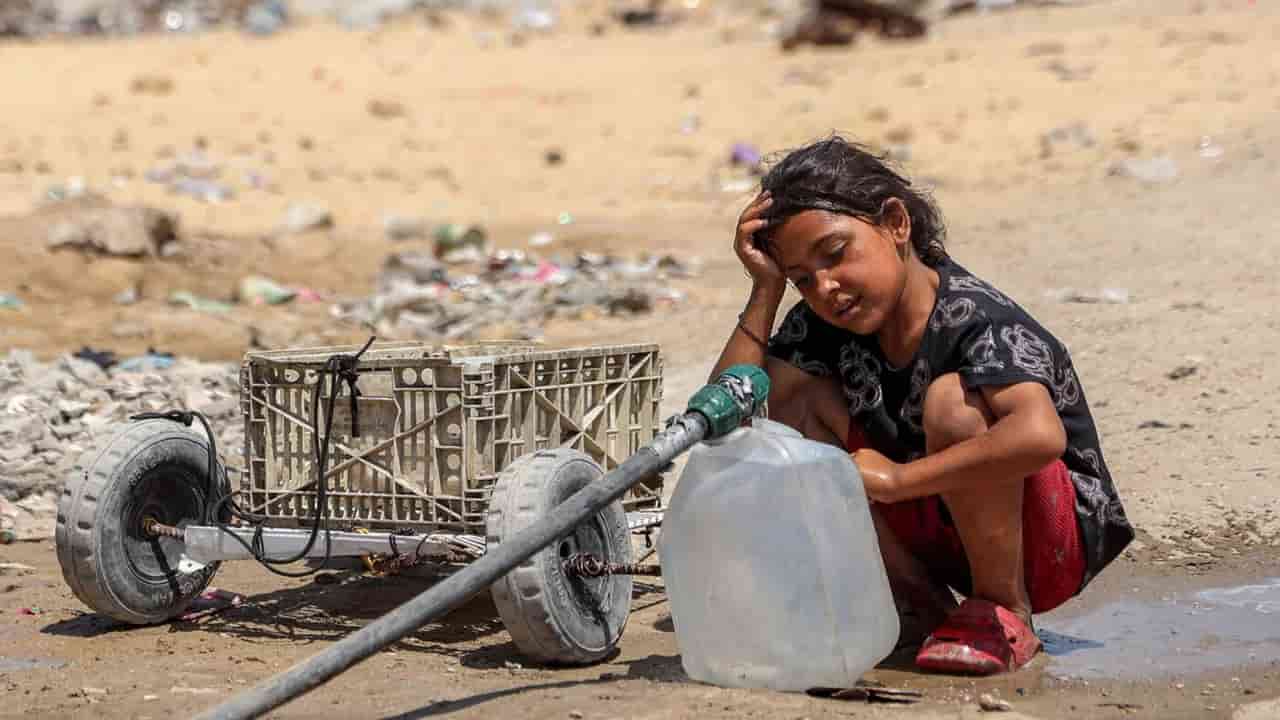
Mona al-Mallahi, another displaced woman, spends her days outside her tent to escape the unbearable heat within, but finds no shade from the sun. She highlights the lack of basic services, stating that over 80 percent of Gaza's water, sanitation, and hygiene infrastructure is damaged, making even basic washing impossible. Mallahi describes being drenched in sweat and needing to shower multiple times a day, which is not feasible due to water scarcity. Drinking water requires queuing for hours. She also notes the sun and heat are darkening her skin and causing new spots to appear. Mallahi lost her home and her son and grandchildren in an Israeli air strike.
Even those with damaged houses, like Emad al-Sirsawi, find little respite. While they have a roof, the lack of electricity prevents the use of air conditioners or fans. Private generators provide limited electricity at extremely high prices, usable only for essential lighting and charging devices. This lack of refrigeration causes food to spoil quickly, forcing daily cooking, often relying on firewood despite the heat. Al-Sirsawi concludes that no one in Gaza can find comfort, regardless of the season.
Israel's military offensive has destroyed over 81 percent of Gaza's buildings, flattening urban landscapes and removing trees, which increases the exposure of those in tents to the sun. Restrictions on the entry of shelter materials and relief supplies further deepen the crisis.