Key facts
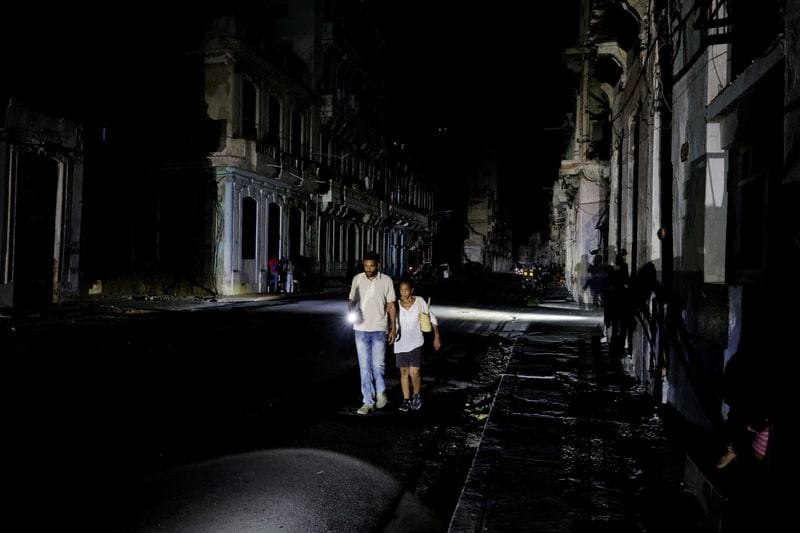
- Cuba's national electric grid collapsed late Sunday, plunging the island into darkness.
- The Union Electrica de Cuba is investigating the cause of the blackout.
- The outage follows three nationwide blackouts in July.
- A U.S.-imposed oil blockade has crippled the island's energy infrastructure.
- Officials are gradually restoring power to small clusters of circuits.
- Cuba has received minimal oil shipments in 2026, with Venezuela sending none.
Cuba's national electric grid collapsed late Sunday, leaving approximately 10 million people without power, according to the state-owned national electric utility, Union Electrica de Cuba. This marks the latest in a series of widespread outages that have become increasingly frequent, with three nationwide blackouts occurring in July alone.
The grid operator is investigating the cause of the collapse, which officials have suggested may stem from transmission issues rather than a major power plant failure. Power restoration efforts have begun with small clusters of circuits being brought back online.
The recurring blackouts are exacerbated by an aging energy infrastructure that has been severely impacted by a U.S.-imposed oil blockade. This blockade, initiated by U.S. President Donald Trump, has significantly reduced oil shipments to the island, which relies heavily on imports. Venezuela, previously Cuba's main oil supplier, has sent no fuel in 2026, and only two small oil vessels have arrived from other sources this year.
In response to the crisis, Cuba has increased its domestic crude and gas production, as well as solar generation. The Cuban government has also engaged in talks with the United States to de-escalate the situation and released 51 prisoners as a gesture of goodwill. President Trump has previously expressed a desire to "take Cuba" and urged the nation to "make a deal."