All NewsEducationTV
Equities & FundsCrypto & Digital AssetsAI & TechnologyBusiness & CorporateUS Politics & PolicyGeopolitics & Global RiskMacro, Rates & FXCommodities & EnergyEuropean Politics & MarketsAsia-PacificReal Estate & Property
Story archiveAll categories
← All Stories

Congo's Ebola Surveillance Teams Overstretched Amidst Outbreak

Created at 28 Jul · 7:10 AM1 source↑ Market-relevant
IN SHORT

Ebola surveillance teams in Bunia, Democratic Republic of Congo, face significant challenges including vehicle shortages, delayed test results, and patient refusal to be tested. These issues hinder efforts to track infections and contain the spread of the Bundibugyo strain of the virus.

✉Newsletter

PiQ Daily

Pick your topics. Get only what matters, on your cadence.

Key Numbers

4cars available for surveillance teams in Bunia
1 millionpeople in Bunia's surveillance area
23health districts in Bunia
3,200people infected by Ebola
1,405people killed by Ebola
two to four times largerestimated true scale of outbreak vs reported data
27field investigators covering Bunia
2018 to 2020period of Congo's last major Ebola epidemic
May 15declaration date of the latest outbreak

Who's Involved

Dr Moubarack Kano
Ebola surveillance team member in Bunia
Dr Rachel Ulingisayi
Oversees Bunia's surveillance teams
Samuel-Roger Kamba
Congolese Health Minister
Congo's Ebola Surveillance Teams Overstretched Amidst Outbreak

↳ Why This Matters

The overstretched and under-resourced state of Ebola surveillance teams in the Democratic Republic of Congo directly impacts the ability to control the deadly outbreak, potentially leading to further spread and loss of life. The challenges faced by these frontline workers highlight systemic issues in public health response and resource allocation during a critical health crisis.

Key facts

  • Ebola surveillance teams in Bunia, Democratic Republic of Congo, are struggling with a lack of resources, including insufficient vehicles.
  • Challenges include delayed test results, patients refusing testing, and health facilities not reporting suspected cases.
  • The specific strain of Ebola circulating, Bundibugyo, is difficult to detect early and has no vaccine or treatment.
  • The official death toll from the outbreak is 1,405, with 3,200 infections, but actual numbers may be significantly higher.
  • Health workers report payment issues, with some not having received wages since the outbreak began.

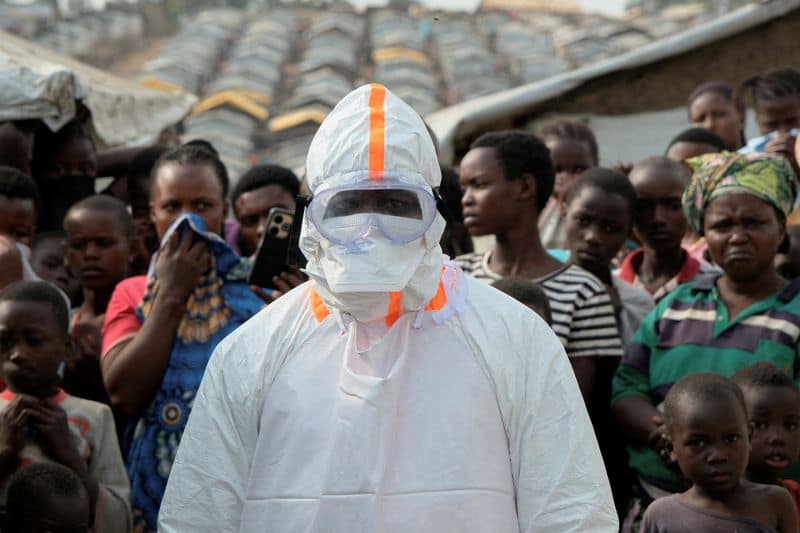
Ebola surveillance teams in Bunia, Democratic Republic of Congo, are facing significant logistical and operational challenges as they attempt to contain a surging outbreak. On a typical day, only four cars are available to transport these teams across the city, forcing some, like Dr. Moubarack Kano, to use their personal vehicles. These teams are tasked with tracking infections across an area with 1 million people spread across 23 health districts.

Frontline workers report that crucial information, such as test results, is often delayed, and some patients are refusing to be tested. This makes it difficult for surveillance teams to map the chains of transmission and identify individuals at risk. Dr. Kano noted that the disease is often discovered only after it has already spread, describing the team's efforts as 'just chasing' Ebola.

At one clinic, named 'Jesus is saviour,' records showed several patients diagnosed with typhoid fever, a condition with early symptoms similar to Ebola. The specific strain circulating in Congo, Bundibugyo, is difficult to detect due to its milder early signs and lacks a known vaccine or treatment. Nurses at some facilities were unaware of the Ebola alert system or its contact number.

Further complicating matters, some health facilities are hesitant to issue alerts. This reluctance stems from the risk of losing patients, who might be transferred to other facilities, leading to a loss of income. The cost of phone calls for reporting can also be a barrier for some workers. Even when alerts are raised, a shortage of staff can lead to critical delays in response, as illustrated by a case where a father reported his sick children, who later died before the team could intervene.

In one instance, a mother refused testing for her two children, who were exhibiting fever and pain, because she did not believe they had Ebola. A psychologist was dispatched to speak with the family. Dr. Kano, a veteran of previous Ebola epidemics, stated that the current response is hampered by poor planning, logistical bottlenecks, and the recruitment of inexperienced staff.

Health workers involved in the outbreak have also reported not being paid since the latest epidemic was declared on May 15. While authorities have acknowledged operational difficulties and are working to address payment issues, the challenges on the ground persist. The outbreak has officially infected 3,200 people and caused 1,405 deaths, though the World Health Organization suggests the true figures could be two to four times higher.

Frequently asked questions

The strain spreading in Congo is the Bundibugyo species, which has no known vaccine or treatment and can be difficult to detect in its early stages.

The teams face vehicle shortages, delayed test results, patient refusal to be tested, and reluctance from some health facilities to report suspected cases.

According to government figures, the outbreak has infected 3,200 people and killed 1,405. The World Health Organization estimates the true scale could be two to four times larger.

They risk losing patients to other facilities, which represents a loss of income. The cost of making alert calls can also be a barrier.

What Happens Next

01Congolese Health Minister Samuel-Roger Kamba stated the government is working to address payment problems for health workers.

Get the newsletter.

Pick the topics you actually care about. We'll email when there's news worth your time, on the cadence you choose. Cancel any time from your account.

Cadence

How It Developed

Surveillance teams in Bunia, DRC, face vehicle shortages, with only four cars available for a city of 1 million people.
Frontline workers report delayed test results and patient refusal to be tested, complicating efforts to track infection chains.
Some health facilities are reluctant to report suspected cases due to fear of losing patients and associated revenue.
The Bundibugyo Ebola strain, prevalent in Congo, lacks a known vaccine or treatment and has milder early symptoms.
The outbreak has infected 3,200 people and killed 1,405, though the World Health Organization estimates the true scale could be two to four times larger.
Health workers report not being paid since the outbreak was declared on May 15.
Authorities acknowledge operational difficulties and are working to address payment problems.

Sources

T1
A day in the life of Congo's overstretched Ebola surveillance teamsReuters

Related Stories

Ebola cases in Congo near record of country’s worst outbreak
28 Jul · 10:12 AM
China's Ebola aid bolsters its image as a reliable African partner
27 Jul · 9:35 PM
Ecuador police battle gangs, corruption on drugs war front line
28 Jul · 5:11 AM
Palestinian mother loses baby after Israeli army ambulance delay
28 Jul · 9:56 AM
Israel Expands 'Yellow Line' Military Zone, Forcing Gazans From Homes
28 Jul · 9:05 AM