HomeEverythingEducation
Equities & FundsCrypto & Digital AssetsAI & TechnologyBusiness & CorporateUS Politics & PolicyGeopolitics & Global RiskMacro, Rates & FXCommodities & EnergyEuropean Politics & MarketsAsia-PacificReal Estate & Property
Story archiveAll categories
← All Stories

China escalates maritime pressure on Japan, Philippines over Taiwan waters

Created at 10 Jul · 4:46 PM1 source↑ Market-relevant
IN SHORT

China has launched a special maritime law-enforcement operation east of Taiwan, issuing a legal warning against Japan and the Philippines regarding their planned maritime border talks. Beijing claims jurisdiction over the waters due to its assertion that Taiwan is part of China.

✉Newsletter

PiQ Daily

Pick your topics. Get only what matters, on your cadence.

Key Numbers

July 2date of legal opinion release
May 3date of South China Sea vessel encounter

Who's Involved

China
conducting maritime law-enforcement operations and issuing legal warnings
Japan
initiating maritime talks with the Philippines and facing Chinese objections
Philippines
initiating maritime talks with Japan and facing Chinese objections
Taiwan
rejecting China's maritime claims and welcoming international law
Sanae Takaichi
Japanese Prime Minister who agreed to maritime talks with the Philippines
Ferdinand Marcos Jr.
Philippine President who agreed to maritime talks with Japan
Chinese Ministry of Natural Resources
issued legal opinion on Japan-Philippines maritime talks
China Institute for Marine Affairs
released legal opinion under the Ministry of Natural Resources
China escalates maritime pressure on Japan, Philippines over Taiwan waters

↳ Why This Matters

China's actions signal a heightened risk of conflict in the Indo-Pacific, potentially disrupting vital shipping lanes and impacting regional stability. The dispute underscores the geopolitical significance of Taiwan and the growing strategic alignment between Japan and the Philippines in countering Beijing's maritime ambitions.

Key facts

  • China has initiated a special maritime law-enforcement operation east of Taiwan.
  • Beijing has issued a legal warning against Japan and the Philippines concerning their upcoming maritime border talks.
  • China claims jurisdiction over the waters east of Taiwan, asserting that Taiwan and its subordinate islands belong to China.
  • The Japan-Philippines maritime talks are presented by Beijing as "illegal and invalid" and an "internationally wrongful act."
  • China's operation follows the agreement between Tokyo and Manila to clarify overlapping maritime claims in their exclusive economic zones.
  • Taiwan rejects China's claims and advocates for peaceful dialogue and international law to resolve maritime boundaries.

China has escalated its maritime assertiveness by launching a special law-enforcement operation east of Taiwan and issuing a legal warning to Japan and the Philippines regarding their planned maritime border talks. Beijing's actions are framed as a response to the bilateral delimitation talks between Tokyo and Manila concerning their exclusive economic zones, which China deems "illegal and invalid."

China's position is rooted in its claim that Taiwan is part of China, and therefore, any maritime rights east of the island fall under its jurisdiction. This assertion is rejected by Taiwan, which advocates for resolving maritime boundaries through international law and peaceful dialogue. The waters east and southeast of Taiwan are strategically significant, forming a key corridor linking various seas and lying near the first island chain, crucial for China's naval power projection and for regional states' sea-lane security.

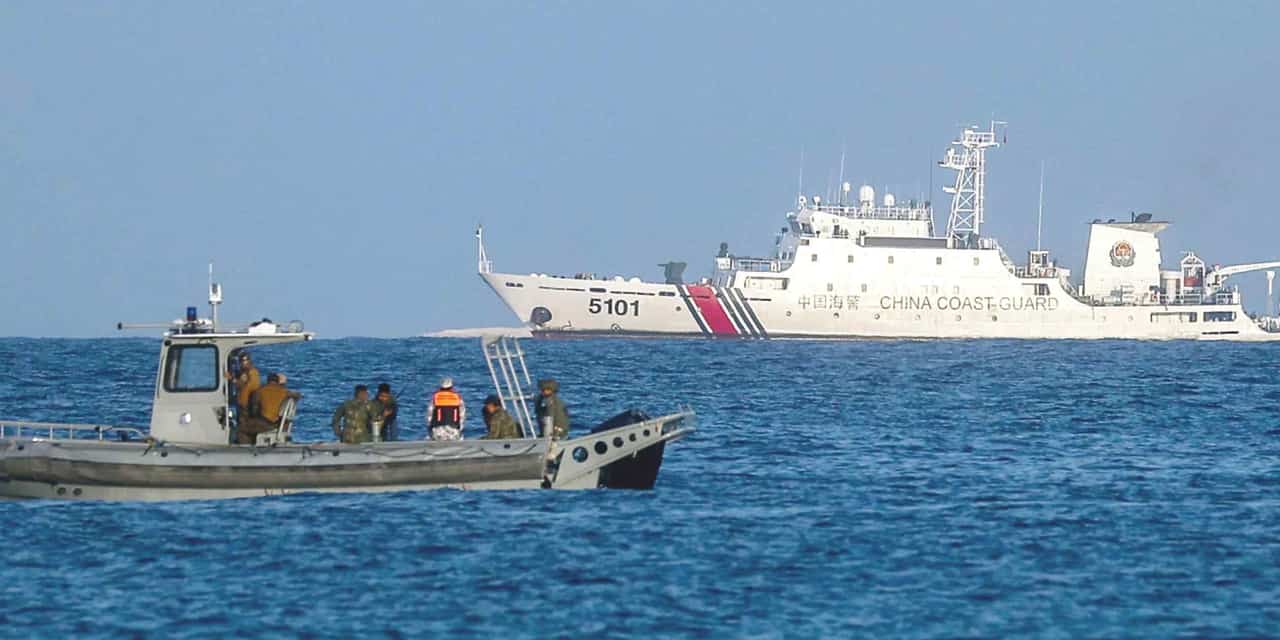
The dispute highlights China's broader strategy of using coastguard vessels, maritime militia, and survey ships to assert its claims incrementally. This approach aims to test regional responses and gradually normalize its jurisdictional assertions. Recent activities include Chinese coastguard and research vessel presence near Taiwan-controlled Pratas Islands and drills by the Chinese aircraft carrier Liaoning east of the Philippines.

Japan and the Philippines have been deepening their security cooperation, with their leaders suggesting they would be drawn into any conflict over Taiwan, remarks that have irked Beijing. China's legal opinion, released by its Ministry of Natural Resources, stated that the Japan-Philippines talks "in essence ignored the fact that Taiwan and its subordinate islands belong to China," infringing upon China's territorial sovereignty and violating the UN Convention on the Law of the Sea.

Frequently asked questions

China's operation is a response to planned maritime border talks between Japan and the Philippines, which Beijing considers illegal and an infringement on its claimed jurisdiction over waters connected to Taiwan.

China claims that Taiwan and its subordinate islands are part of China, and therefore, the exclusive economic zone and continental shelf in the region fall under its territorial sovereignty.

They present the talks as a bilateral legal process conducted under international rules to clarify overlapping maritime claims within their exclusive economic zones.

These waters are a sensitive maritime corridor linking key seas and are near the first island chain, crucial for China's naval power projection and regional sea-lane security.

What Happens Next

01Japan and the Philippines are expected to proceed with their maritime delimitation talks.
02China may continue to increase its maritime presence and assertiveness in the disputed waters.
03Further diplomatic exchanges and potential responses from the United States and other regional actors are anticipated.

Get the newsletter.

Pick the topics you actually care about. We'll email when there's news worth your time, on the cadence you choose. Cancel any time from your account.

Cadence

How It Developed

China has intensified its maritime activities in the South China Sea, targeting the Philippines and Japan.
Beijing views Manila and Tokyo as potential obstacles to its reunification goals with Taiwan.
Japan and the Philippines agreed to begin maritime delimitation talks concerning their exclusive economic zones.
China's Ministry of Natural Resources declared the planned Japan-Philippines talks an "internationally wrongful act."
China issued a legal opinion stating the talks are unlawful without consultation with Beijing.
China claims exclusive economic zone and continental shelf rights in the region, asserting Taiwan's territory belongs to China.
Taiwan rejects China's claim and supports using international law to settle maritime boundaries.
China has deployed coast guard and survey ships to patrol and map the seabed east of Taiwan.

Sources

T1
China steps up maritime push against Philippines, Japan, with eye on TaiwanNikkei Asia
T2
China's push east of Taiwan tests Japan-Philippines deterrence - Nikkei Asiaasia.nikkei.com
T2
China ramps up warning to Japan, Philippines over maritime talks | The Straits Timesstraitstimes.com
T2
China Opens New Maritime Pressure Point East of Taiwan - Defence Mattersdefencematters.eu

Related Stories

Philippines taps space tech for South China Sea surveillance
10 Jul · 12:05 AM
Philippine fishermen driven from disputed waters despite 2016 ruling
9 Jul · 11:40 PM
Taiwan radar system tracked PLA ballistic missile launch
10 Jul · 1:05 AM
Typhoon Bavi Threatens East Asia After Killing 15 in Philippines
10 Jul · 11:06 AM
Two Chinese naval pilots killed during PLA frontline training
10 Jul · 10:05 AM