Key facts
- Beit Beirut museum is hosting 'Hkeeli Ya Jnoub', an exhibition by artists from southern Lebanon.
- The exhibition aims to preserve stories and memories amidst ongoing conflict and destruction in southern Lebanon.
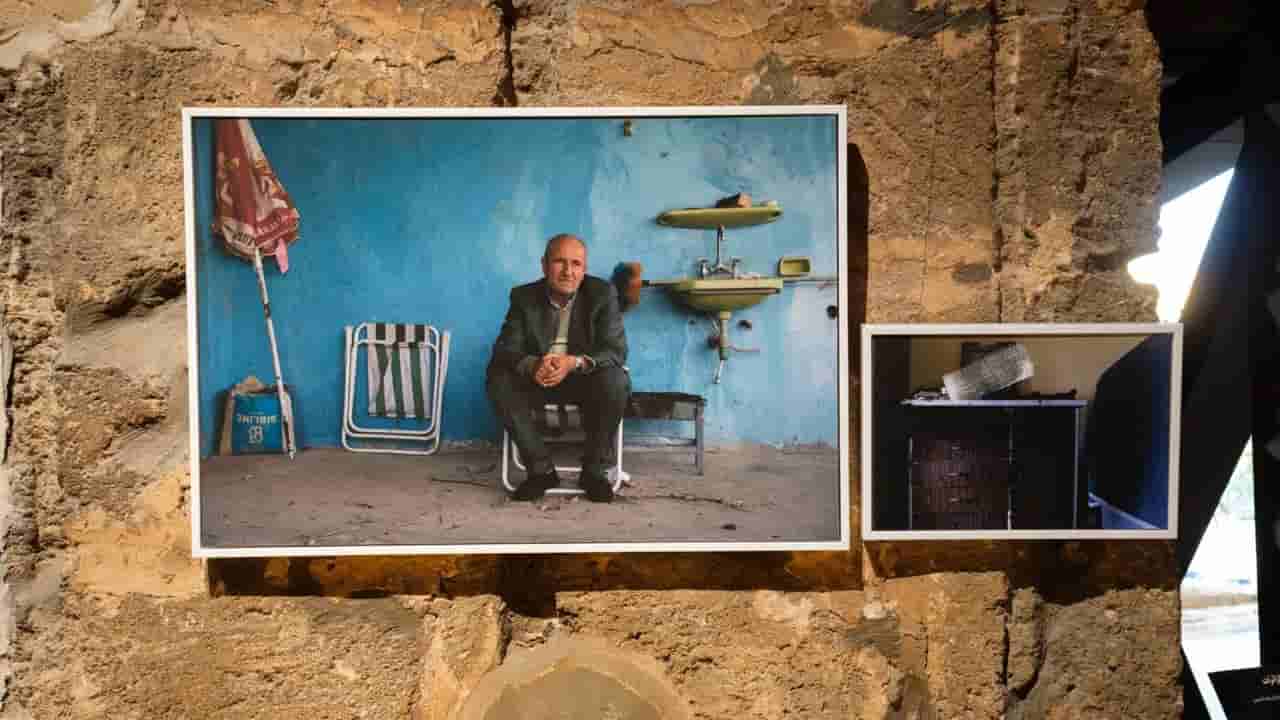
- Artist Sama Beydoun's photographic series captures her village, embracing imperfections and 'emptiness' as part of the narrative.
- Rawan Mazeh's work documents the experiences of former detainees of the Israeli-run Khiam prison.
- Farrah Berrou's film 'Buffer Zone' uses personal footage to explore returning to a devastated border town.
Beit Beirut, a museum in Lebanon that stands as a testament to the country's civil war, is now hosting 'Hkeeli Ya Jnoub,' an exhibition by artists from southern Lebanon. The initiative, initially conceived as 'Hkeeli' ('tell me') in April 2025 to commemorate the civil war, has pivoted to focus on the stories of southern Lebanon amidst the ongoing Israeli bombardment and widespread destruction.
Photographer Sama Beydoun, from Bint Jbeil, shared her series of photographs taken with an expired film camera, resulting in unique lime-green tones. She views these images, including those of her grandfather and village, as experiments that evolved into a way of celebrating what remains. Beydoun stated, 'Photography refused' when a film roll came back empty, but she found peace in surrendering to what is left and interacting with the medium as a co-author.
Documentary photographer Rawan Mazeh is exhibiting work that centers on the violence and its aftermath, including the story of Hassan Saeed and Abda Malkani, an elderly couple detained in the Khiam prison. Mazeh's display features photographs of Muhammad Saeed, his family home, and letters exchanged between him and his mother, Abda, which were censored by Israeli authorities. Mazeh emphasizes that 'Photography becomes a way of resisting erasure, holding on to memory, and creating an archive for the future,' stressing the importance of telling one's own stories.
Filmmaker Farrah Berrou's film, 'Buffer Zone,' utilizes phone-shot videos to document her journey back to Kfarkela, a border town devastated by Israeli bombardment. The film focuses on her personal experience and perspective.