HomeEverythingEducationTV
Equities & FundsCrypto & Digital AssetsAI & TechnologyBusiness & CorporateUS Politics & PolicyGeopolitics & Global RiskMacro, Rates & FXCommodities & EnergyEuropean Politics & MarketsAsia-PacificReal Estate & Property
Story archiveAll categories
← All Stories

Arctic faces worrying future amid record heat and ice loss

Created at 20 Jul · 11:51 PM1 source↑ Market-relevant
IN SHORT

The Arctic is experiencing unprecedented warming, with record-low sea ice levels and extreme temperatures. Scientists warn this rapid decline, driven by fossil fuel burning, has global consequences for weather systems and sea levels.

✉Newsletter

PiQ Daily

Pick your topics. Get only what matters, on your cadence.

Key Numbers

36°FArctic temperature spike above normal
20°CArctic temperature spike above normal
3Consecutive months of record low Arctic sea ice
20Years of rapid Arctic decline
4Times faster Arctic is warming than global average
2050Year Arctic predicted to be ice-free in summer
18Years with lowest sea ice levels on record
19Years with lowest September minimum ice extents
95%Decline in oldest, thickest Arctic sea ice since 1980s
129 billion tonsGreenland Ice Sheet ice loss in 2025

Who's Involved

Twila Moon
Deputy lead scientist at the National Snow and Ice Data Center
Mika Rantanen
Researcher at the Finnish Meteorological Institute
Dirk Notz
Head of sea ice at the University of Hamburg
National Oceanic and Atmospheric Administration
Published annual health check of the Arctic region
National Snow and Ice Data Center
Provided data on sea ice and Arctic landscape changes
Finnish Meteorological Institute
Provided analysis on extreme Arctic warming events
University of Hamburg
Co-authored report on ice-free Arctic summers
Arctic faces worrying future amid record heat and ice loss

↳ Why This Matters

The Arctic's rapid warming and sea ice loss are critical indicators of global climate change, with far-reaching consequences including accelerated global warming, sea level rise, and more extreme weather patterns worldwide.

Key facts

  • Arctic temperatures have spiked significantly above normal, with February sea ice reaching record lows.
  • The region has experienced a year of concerning signs including intense wildfires and thawing permafrost.
  • The Arctic is warming approximately four times faster than the global average.
  • Scientists predict the Arctic will be ice-free in summer by 2050.
  • The oldest and thickest Arctic sea ice has declined by over 95% since the 1980s.
  • Recent years have seen record-breaking warm air temperatures and significant ice loss from glaciers and the Greenland Ice Sheet.

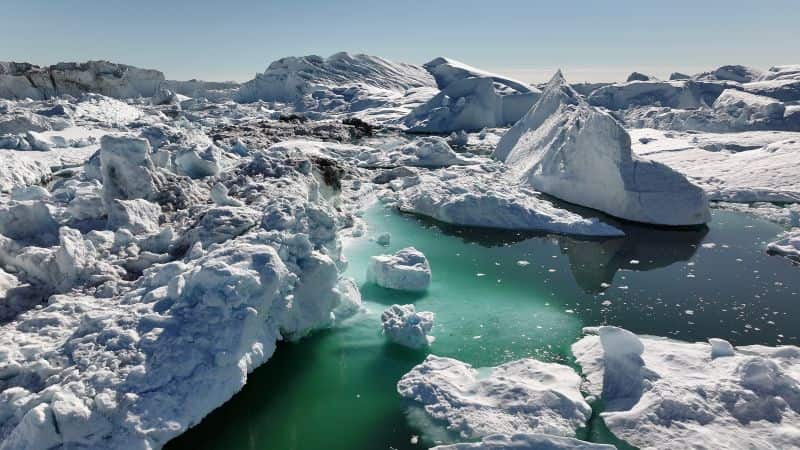
The Arctic is facing a critical period of rapid warming and environmental change, marked by record-breaking temperatures and declining sea ice. Scientists are deeply concerned about the future of the region, with recent data indicating a "new regime" of consistently extreme conditions.

Last month saw temperatures in parts of the Arctic spike 36 degrees Fahrenheit (20 Celsius) above normal, contributing to sea ice reaching its lowest level ever recorded for February. This follows a year characterized by intense wildfires and thawing permafrost releasing greenhouse gases. The Arctic has been warming at more than double the global rate since 2006, with the last 10 years being the warmest on record.

Scientists warn that the loss of sea ice, which acts as a global thermostat, has profound consequences. As the ice shrinks, more solar energy is absorbed by the ocean, accelerating global warming, increasing sea level rise, and driving more extreme weather events. The region's decline is seen as an early warning system for climate change.

Projections indicate that the Arctic could be ice-free in the summer by 2050, even if global fossil fuel emissions cease. Some studies suggest the first ice-free day could occur before the end of this decade. The oldest and thickest Arctic sea ice has diminished by over 95% since the 1980s, now largely confined to areas north of Greenland and the Canadian Archipelago.

Beyond sea ice, the Arctic landscape is undergoing significant transformations. Permafrost is thawing pervasively, releasing carbon dioxide and methane. Glaciers in Arctic Scandinavia and Svalbard have experienced their largest annual net ice loss on record, and the Greenland Ice Sheet continues its long-term trend of net ice loss, losing an estimated 129 billion tons in 2025.

Frequently asked questions

The Arctic is warming approximately four times faster than the global average, primarily due to the continued burning of fossil fuels and the resulting increase in greenhouse gas emissions.

The loss of Arctic sea ice accelerates global warming by reducing the Earth's ability to reflect sunlight, contributes to sea level rise, and influences weather systems worldwide, potentially driving more extreme weather events.

Scientists predict the Arctic will be ice-free in the summer by 2050, with some studies suggesting this could happen even sooner, potentially before the end of this decade.

Permafrost is soil, rock, and sediment held together by ice. Its thawing releases planet-heating gases like carbon dioxide and methane into the atmosphere, further contributing to global warming.

What Happens Next

01Arctic sea ice is expected to reach its annual minimum at the end of summer in September.
02Scientists will continue to monitor sea ice extent and Arctic temperatures for further record-breaking events.

Get the newsletter.

Pick the topics you actually care about. We'll email when there's news worth your time, on the cadence you choose. Cancel any time from your account.

Cadence

How It Developed

Temperatures in parts of the Arctic spiked 36 degrees Fahrenheit above normal last month.
Arctic sea ice reached its lowest level ever recorded for February, marking the third consecutive month of record lows.
The region experienced intense wildfires and thawing permafrost pumping out planet-heating pollution in the past year.
Arctic sea ice has been in rapid decline for two decades, with the last 18 years seeing the lowest levels on record.
Scientists predict the Arctic will be ice-free in the summer by 2050, even if climate pollution stops.
Surface air temperatures across the Arctic from October 2024 through September 2025 were the warmest recorded since 1900.
Autumn 2024 and winter 2025 were the warmest and second warmest on record for the Arctic, respectively.
The oldest, thickest Arctic sea ice (> 4 years) has declined by more than 95% since the 1980s.

Sources

T1
Why last two years are worrying for future of ArcticSky News · Tech
T2
2025 Headlines and Overview - NOAA Arcticarctic.noaa.gov
T2
Report Card 2024 - NOAA Arcticarctic.noaa.gov
T2
The Arctic is in trouble. The consequences will be felt around ... - CNNcnn.com

Related Stories

UNESCO officials urge global action to protect heritage from climate change and conflict
20 Jul · 7:26 AM
UNRWA warns of $100M shortfall, calls for urgent international aid
20 Jul · 4:41 PM
China May Be Building Larger Support Ship for Future Aircraft Carrier
20 Jul · 1:06 PM
Taiwan to test mobile internet slowdown during civil defence drills
21 Jul · 12:09 AM
US claims China operates 3 spy sites in Cuba monitoring American military activity
20 Jul · 8:41 PM