Key facts
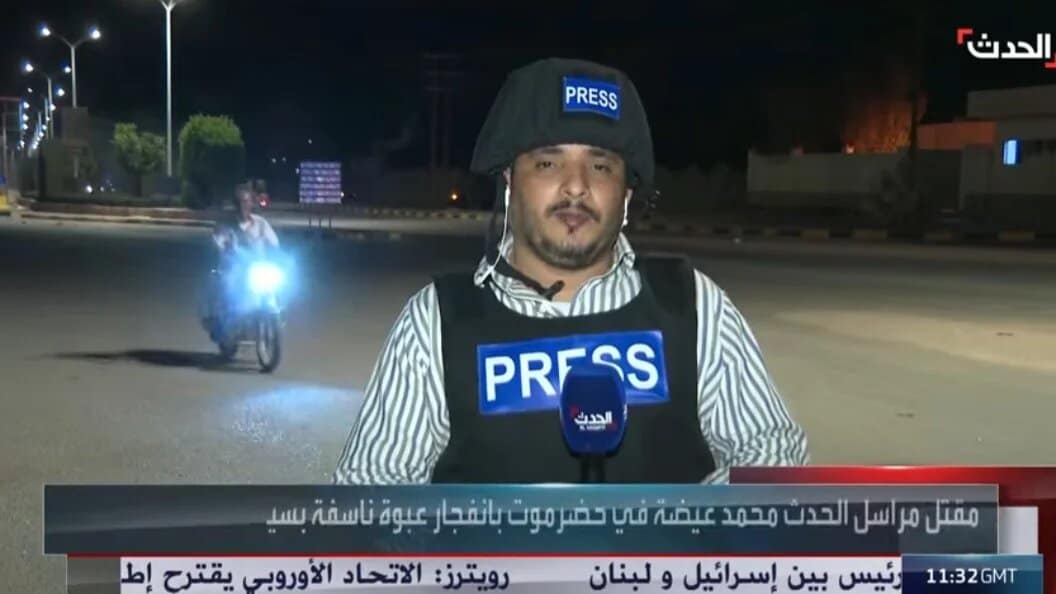
- Al-Arabiya correspondent Mohammed Aydah was killed by an IED planted in his car in Mukalla, Yemen on June 24.
- Aydah was warned about threats to his life about a month before the attack.
- His reporting on the UAE-backed Southern Transitional Council (STC) and its conduct had made him enemies.
- The STC spokesperson blamed Al-Qaeda in the Arabian Peninsula (AQAP) and other armed groups for the assassination.
- Analysts note a rise in targeted political assassinations in southern Yemen since late 2025/early 2026.
- Saudi Arabia recently signed a $150 million agreement to supply petroleum derivatives to Yemen.
Al-Arabiya and Al Hadath correspondent Mohammed Aydah was killed on the evening of June 24 when an improvised explosive device detonated under his car as he started it outside his family's home in Mukalla, the capital of Yemen's Hadramaut governorate. The 40-year-old journalist, who had been covering political, security, and development stories across eastern Yemen since 2019, died instantly. Local security authorities had warned Aydah approximately one month prior that his life was under threat. His reporting on demonstrations by the UAE-backed Southern Transitional Council (STC) and documentation of its conduct had reportedly made him enemies. No group has yet claimed responsibility for the attack. The Presidential Leadership Council (PLC), backed by Saudi Arabia, condemned the assassination, and the governor of Hadramaut ordered an investigation. A spokesperson for the STC quickly blamed Al-Qaeda in the Arabian Peninsula (AQAP) and other armed groups, an accusation widely questioned due to AQAP's typical modus operandi. Analysts suggest both the STC and the Houthis had reasons to resent Aydah's coverage, with some noting that targeted political assassinations in southern Yemen have increased markedly since the STC's contested dissolution in late 2025/early 2026. Previous investigations have linked the UAE-backed group to earlier assassinations in Aden. The assassination occurs at an uncomfortable time for Saudi Arabia's approach to Yemen, as Riyadh recently signed a $150 million agreement to supply petroleum derivatives to the country.