Key facts
- Artificial intelligence is advancing faster than global regulatory frameworks.
- There is an urgent need for harmonized global rules for AI.
- AI poses particular risks to children.
- AI has the potential to exacerbate existing inequalities.
- AI has the potential to create new inequalities.
- Effective AI governance mechanisms are needed urgently.
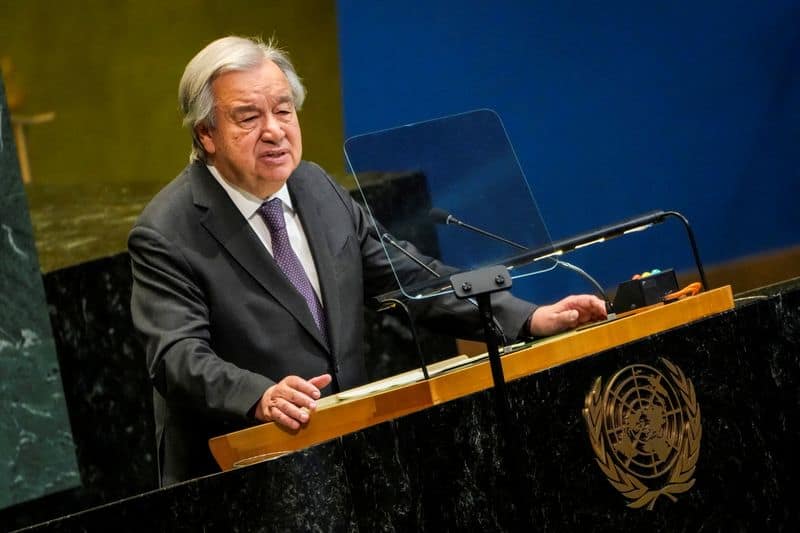
United Nations Secretary-General António Guterres has issued a stark warning regarding the rapid advancement of artificial intelligence, stating that its development is outpacing the ability of global regulatory frameworks to keep pace. Guterres emphasized the urgent necessity for harmonized international rules to effectively manage and mitigate the significant risks associated with AI technologies. He specifically highlighted the potential dangers AI poses to children, underscoring the need for robust protections. The Secretary-General's remarks point to a growing concern that AI could deepen existing societal inequalities and create entirely new disparities if not governed proactively. He called for a concerted global effort to establish comprehensive governance mechanisms before the technology's transformative effects become unmanageable and potentially irreversible. The call for regulation comes as AI continues to integrate into various aspects of life, from communication and commerce to critical infrastructure and defense, raising complex ethical and societal questions.