Key facts
- Ukraine's parliament passed some bills necessary for EU and IMF funding on June 9.
- Legislation requiring taxes on digital platform income and a bill on judicial integrity declarations were approved.
- A bill on EU railway safety standards was also passed.
- Parliament failed to pass other demanded bills, including those on financial aid rules, small business bankruptcy, and fighting organized crime.
- Experts criticized the judicial integrity bill for potentially allowing judges to evade accountability.
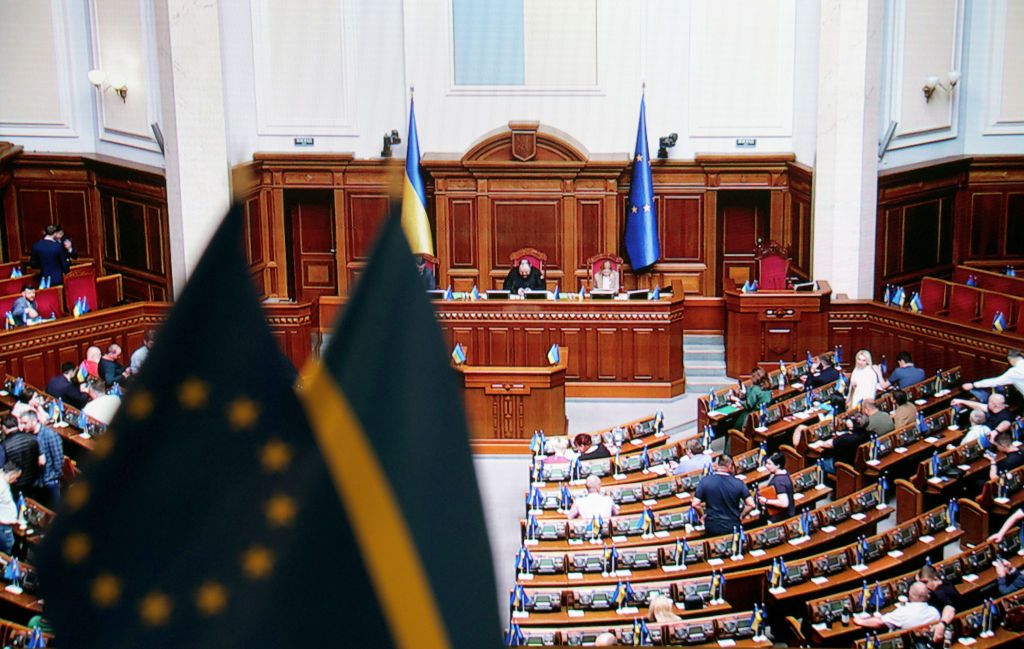
The Ukrainian parliament made partial progress on legislative reforms crucial for securing financial aid from the European Union and the International Monetary Fund. On June 9, lawmakers approved several bills, including one mandating taxes on income from digital platforms and another aimed at enhancing judicial integrity through the checking of declarations.
However, the Verkhovna Rada fell short of votes for other key legislation. These included bills designed to tighten rules for government financial assistance, simplify bankruptcy procedures for small businesses, and establish a regulator to combat organized crime. Additionally, a bill to align Ukrainian biocide laws with EU standards was not passed.
Experts have voiced strong criticism of the judicial integrity bill, with the watchdog DEJURE labeling it an "imitation" of progress. They argue the current form of the bill could allow judges to evade accountability for false statements in their declarations and that the proposed six-month deadline for checks is insufficient. Denys Maslov, head of parliament's legal policy committee, defended the bill, stating it aligns with legal certainty principles and accurately reflects parliamentary content.
Analysts attribute the parliament's recent struggles to a weakening influence of the President's Office over the legislature and a lack of effective communication between parliamentary bodies and the Cabinet of Prime Minister Yulia Svyrydenko. Despite these challenges, parliament has previously passed an IMF-mandated bill to extend a military tax and a World Bank-tied public procurement law.