Key facts
- Polish Prime Minister Donald Tusk announced Poland's army will soon be the largest in Europe.
- Warsaw has significantly increased its military personnel since Russia's 2022 invasion of Ukraine.
- Poland's armed forces currently number 220,000 soldiers, with plans to reach 300,000 active personnel.
- Tusk identified Russia as the primary threat to Poland and NATO.
- Support for Ukraine is considered essential for Poland's security.
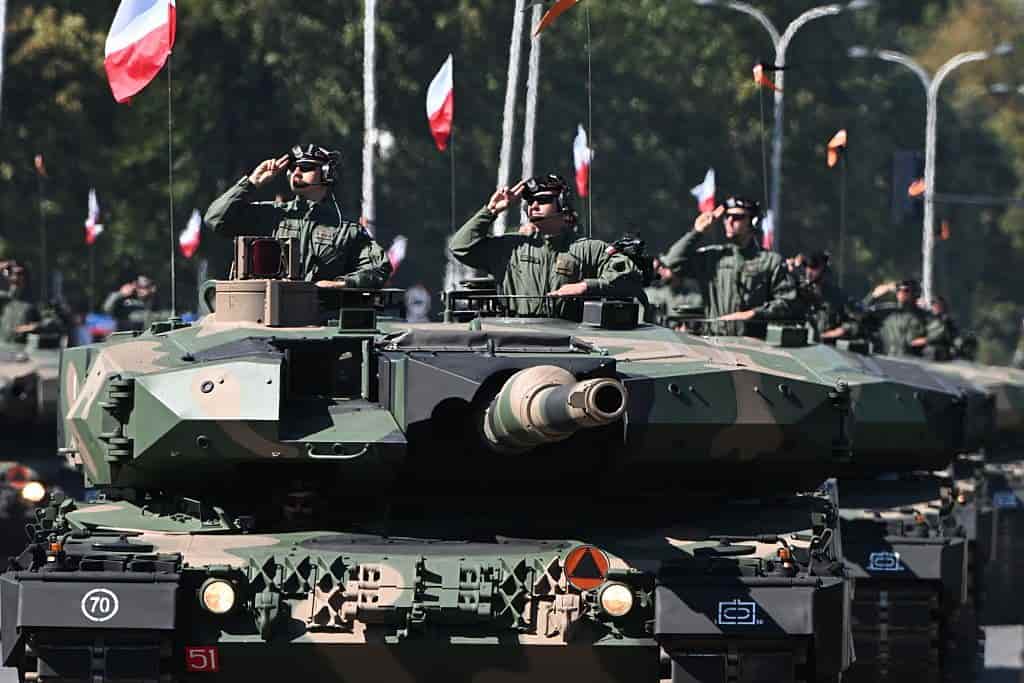
Polish Prime Minister Donald Tusk declared that the nation's armed forces are on track to become the largest in Europe. Speaking during Poland's Army Day celebrations on August 15, Tusk highlighted the country's rapid military buildup, spurred by Russia's full-scale invasion of Ukraine in 2022.
Warsaw showcased its expanding military might with a large-scale parade in Warsaw and a naval parade in Gdynia, featuring 300 armored vehicles and approximately 2,000 soldiers. Tusk stated that Poland is building a modern and numerous force that will influence the region and earn global appreciation, particularly from allies.
Poland has more than doubled its military personnel between 2014 and 2025, growing from around 100,000 to a projected 216,000, making it the third-largest military in NATO after the U.S. and Turkey. The current number of soldiers stands at 220,000, with ambitions to reach 300,000 active-duty personnel and an additional 200,000 in reserves.
Tusk emphasized the critical role of Poland's military strength in ensuring security along NATO's eastern flank. He identified Russia as the paramount threat, countering narratives from some nationalist factions that focus on Europe or Germany as primary adversaries. Tusk referenced recent incidents, including a Russian missile crash in Poland on July 30 and previous airspace violations, underscoring the proximity of the conflict.
The Prime Minister also addressed Polish-Ukrainian relations, acknowledging diplomatic tensions but stressing that supporting Ukraine against Russia is fundamentally a matter of Poland's own security. He argued that this support benefits Poland directly, irrespective of bilateral debates.