Key facts
- German Chancellor Friedrich Merz is under increased pressure following a cabinet reshuffle.
- The reshuffle has caused internal dissent within Merz's conservative CDU/CSU bloc.
- Merz's party is trailing the far-right Alternative for Germany (AfD) in national polls.
- The AfD is expected to perform strongly in upcoming state elections in September.
- A poll shows only 15% of respondents are satisfied with Merz's performance.
- The AfD has overtaken conservatives in perceived competence to solve Germany's problems.
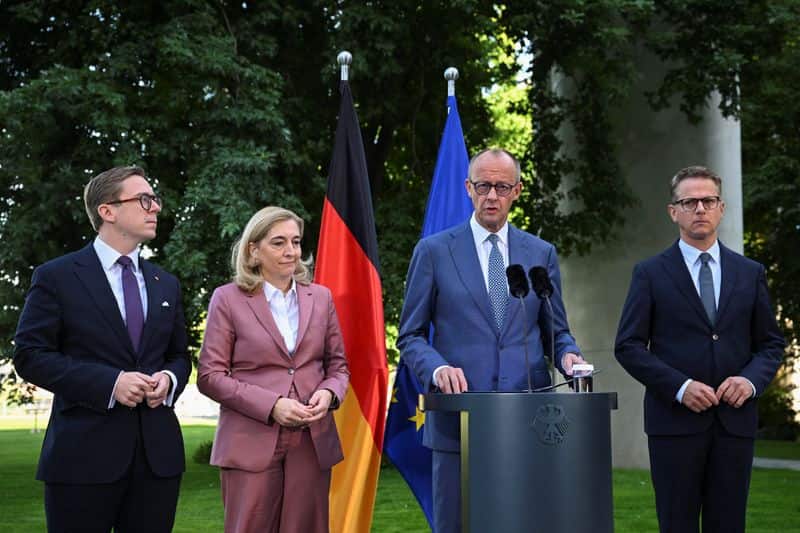
Pressure is mounting on German Chancellor Friedrich Merz following a cabinet reshuffle that has generated significant internal dissent and raised questions about his government's competence. The conservative CDU/CSU bloc is currently trailing the far-right Alternative for Germany (AfD) in national polls, with the AfD also leading in perceptions of competence to solve the country's problems.
The reshuffle was triggered by the resignation of party heavyweight Jens Spahn over a decision regarding surrogacy. Merz appointed Thorsten Frei as his new parliamentary faction chief, a move that will be voted on by conservative lawmakers. However, other changes, such as the sacking of Transport Minister Patrick Schnieder, have led to backlash from within the party, with some lawmakers expressing a lack of trust.
Merz's personal popularity is at a low, with a recent poll indicating only 15% of respondents are satisfied with his performance. The AfD, which has gained traction with a hard line on migration, is poised to potentially gain power at the state level in upcoming elections in Saxony-Anhalt and Mecklenburg-Vorpommern in September. The party's co-chief, Tino Chrupalla, has criticized Merz's handling of the reshuffle, particularly regarding the dismissal of Tino Sorge, a junior health minister.