All NewsEducationTV
Equities & FundsCrypto & Digital AssetsAI & TechnologyBusiness & CorporateUS Politics & PolicyGeopolitics & Global RiskMacro, Rates & FXCommodities & EnergyEuropean Politics & MarketsAsia-PacificReal Estate & Property
Story archiveAll categories
← All Stories

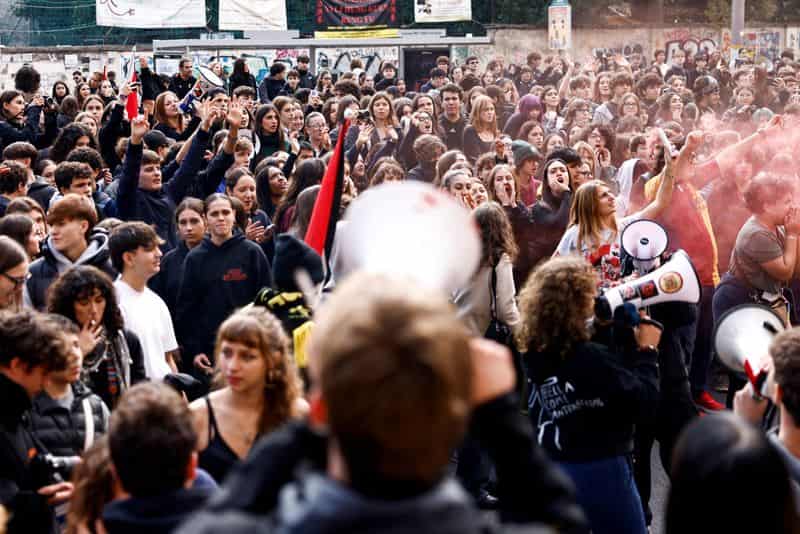
Italy's Meloni Faces Youth Disaffection Ahead of 2027 Election

Created at 13 Aug · 5:04 AM1 source↑ Market-relevant
IN SHORT

Italian Prime Minister Giorgia Meloni's government is losing support among young voters, with polls showing less than 30% of under-35s backing her coalition. Analysts attribute this to a lack of economic reforms and a focus on law-and-order measures, potentially impacting the upcoming 2027 national election.

✉Newsletter

PiQ Daily

Pick your topics. Get only what matters, on your cadence.

Key Numbers

2022year Meloni's government took office
2027year of the next national election
30%coalition support among under-35s
50%opposition support among under-35s
18-34age range of young voters
15%FDI support among 18-29 year old men
4.2%FDI support among 18-29 year old women
18%5-Star support among women under 30
5.1%5-Star support among men under 30
25%government approval rating among under-35s
35%government approval rating among overall population
7%National Future party support among youth
50%rise in juvenile prison population
14-17age range for new criminal responsibility rules
67%turnout among under-35s in March referendum
60%under-35s rejecting justice reform
59%overall turnout in March referendum
54%overall rejection of justice reform

Who's Involved

Giorgia Meloni
Italian Prime Minister
Matteo Salvini
Leader of the League party
Antonio Tajani
Foreign Minister and leader of Forza Italia
Lorenzo Pregliasco
Head of Youtrend polling agency
Lorenzo De Sio
Political science professor at Luiss University
Roberto Vannacci
Former army general and leader of National Future party
Italy's Meloni Faces Youth Disaffection Ahead of 2027 Election

↳ Why This Matters

The growing disaffection of young voters poses a significant challenge for Prime Minister Meloni's government, potentially impacting the outcome of the 2027 national election and shaping the future political landscape of Italy.

Key facts

  • Italian Prime Minister Giorgia Meloni's government is increasingly unpopular among young voters, according to opinion polls.
  • Meloni's coalition has less than 30% support among voters aged 18-34, while the opposition bloc has nearly 50%.
  • Analysts cite a lack of economic reforms and a focus on law-and-order measures as reasons for youth disaffection.
  • Italy has the lowest youth employment rate in the Eurozone and invests less in education compared to other EU members.
  • A recent bill proposes holding minors aged 14-17 fully criminally responsible for crimes.
  • Young voters played a decisive role in rejecting a justice system reform in a March referendum.

Italian Prime Minister Giorgia Meloni's government is facing declining popularity among young voters, a trend that could significantly impact the upcoming national election in 2027. Opinion polls indicate that Meloni's rightist coalition, which includes the Brothers of Italy Party, the League, and Forza Italia, commands less than 30% of the vote among those aged 18 to 34. In contrast, the center-left opposition bloc, led by the Democratic Party, the 5-Star Movement, and the Left-Green Alliance, holds nearly 50% of this demographic's support.

Analysts suggest that the government's perceived inertia on economic reforms, coupled with a focus on law-and-order measures, has alienated younger Italians. This demographic often faces the lowest employment rates in the Eurozone and receives less investment in education compared to peers in other European countries. The government's approval rating among voters under 35 stands at 25%, compared to 35% for the general population.

Meloni's coalition also faces competition from the far-right opposition party National Future, which is polling around 7% among young people, particularly those drawn to its anti-immigrant stance. The government's security agenda has led to measures targeting rave parties, light cannabis, protests, and juvenile crime, resulting in a 50% increase in the juvenile prison population. A proposed bill would hold minors aged 14 to 17 fully criminally responsible.

Historically, young Italians have shown lower voter turnout, often abstaining rather than voting against the government. However, this trend shifted during a March referendum on justice system reform championed by Meloni. A significant majority of young voters participated and rejected the reform, highlighting their potential to influence electoral outcomes when mobilized.

Frequently asked questions

Analysts point to the government's inertia on economic reforms and its focus on law-and-order measures, which often disproportionately affect young people.

Italy has the lowest employment rate among 15- to 24-year-olds in the 21-nation euro zone.

Young voters turned out in higher numbers than usual and significantly rejected the justice system reform championed by Meloni, demonstrating their potential electoral influence.

The center-left opposition bloc, dominated by the Democratic Party, the 5-Star Movement, and the Left-Green Alliance, holds a significant lead among young voters. The far-right National Future party also has some traction.

What Happens Next

01The next national election is scheduled for 2027.
02Further opinion polls will likely track youth sentiment towards the government.

Get the newsletter.

Pick the topics you actually care about. We'll email when there's news worth your time, on the cadence you choose. Cancel any time from your account.

Cadence

How It Developed

Opinion polls indicate a growing unpopularity of Giorgia Meloni's government among young voters.
Analysts suggest Meloni's government has not prioritized economic opportunities for youth.
Law-and-order measures are seen as disproportionately affecting young people.
Young voters are reportedly leaning towards the center-left opposition.
Meloni's coalition commands less than 30% support among under-35s, compared to nearly 50% for the opposition.
Italy has the lowest youth employment rate in the Eurozone and invests less in education.
A far-right opposition party, National Future, is polling about 7% among youth.
Government security measures have targeted rave parties, light cannabis, protests, and juvenile crime.

Sources

T1
Italy's Meloni has a youth problem as election approachesReuters

Related Stories

Jailed Istanbul Mayor Imamoglu Joins New Opposition Party
13 Aug · 5:50 AM
Takaichi's food tax cut faces LDP pushback over funding
12 Aug · 7:41 PM
Poll: 67% of Poles favor deporting unemployed Ukrainian men
12 Aug · 9:56 AM
UK firms face up to £2.9bn annual cost from Labour's zero-hour contract reforms
12 Aug · 2:41 PM
Estonia rejects UK proposal to rent prison cells
12 Aug · 4:06 PM