Key facts
- Hungary has turned off decorative lighting on major landmarks in Budapest, including the parliament building, Buda Castle, and Chain Bridge.
Hungary has switched off decorative lighting on key landmarks in Budapest, including the parliament building and Buda Castle, to conserve energy amid a severe heatwave and drought. Similar measures are being implemented in Romania to manage power supply.
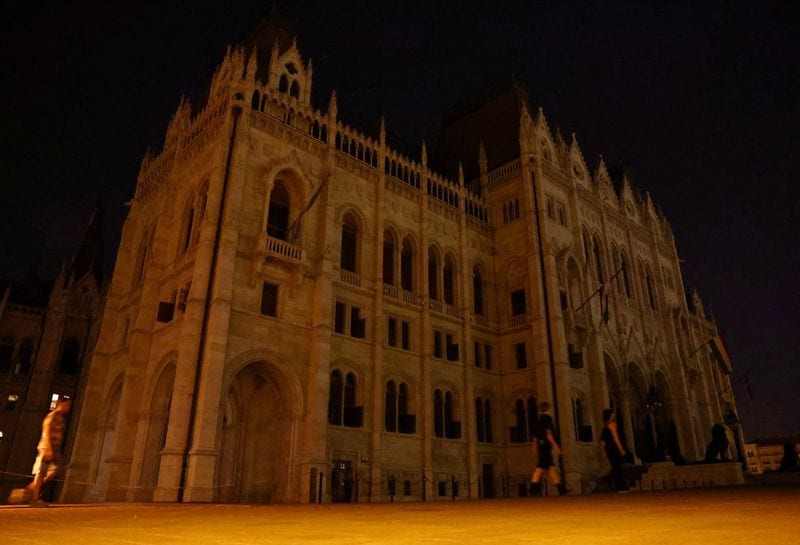
The energy-saving measures highlight the severe impact of the heatwave and drought on critical infrastructure, forcing governments to make difficult choices between preserving cultural heritage and ensuring essential power supply. This situation underscores the growing challenges posed by climate change to energy security and daily life.
Hungary has switched off decorative lighting on its most famous landmarks, including the parliament building, Buda Castle, and Chain Bridge, as the country grapples with an energy crisis exacerbated by a severe heatwave and drought. The measures aim to conserve electricity and ease pressure on the national grid.
Similar actions are being taken in neighboring Romania, where capital city Bucharest has dimmed street lighting and turned off lights at historical buildings and museums. These efforts are part of broader attempts to manage power supply during a period of extreme weather.
The heatwave has led to record-low water levels on the Danube River, forcing Hungary to largely shut down its sole nuclear plant, which relies on river water for cooling. This has stretched the country's power supply capacity to its limits.
Temperatures in Hungary have soared, reaching between 40 and 42 degrees Celsius (104 to 108 degrees Fahrenheit). While some tourists expressed disappointment at the darkened landmarks, many residents supported the decision, acknowledging the need for power conservation.
Interestingly, the reduced light pollution from the dimmed landmarks is expected to benefit Budapest's swarming mayflies, a protected species. Experts noted that artificial lights can be dangerous for the insects, drawing them away from their reproductive activities.