Seoul shares plunge over 5% on tech sell-off, rising yields | PiQ Markets
2 storiesEquities & FundsDow Jones Industrial AverageNasdaq Composite & Nasdaq 100KOSPI (South Korea)
Seoul shares plunge over 5% on tech sell-off, rising yields
window 24h
IN SHORT
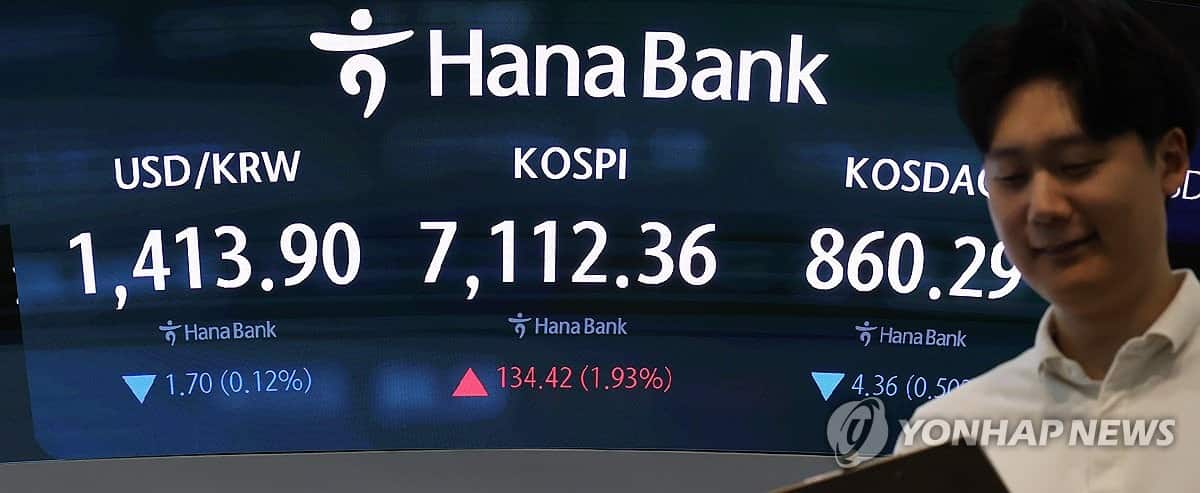
South Korea's main stock index, the KOSPI, plunged over 5% on Wednesday, driven by a sell-off in technology stocks and rising bond yields. The benchmark index fell 378.03 points to 6,491.8. In response to the sharp decline, the Korea Exchange (KRX) activated a sell-side sidecar for the KOSPI, temporarily suspending program trading for five minutes. This measure was triggered by a more than 5% drop in the KOSPI 200 Futures Index, aimed at curbing excessive market volatility.
Key Numbers
5%Seoul shares plunge
378.03 pointsKOSPI fall
6,491.8KOSPI index level
five minutesprogram trading suspension duration
5%KOSPI 200 Futures Index drop trigger
Who's Involved
KOSPI
South Korea's benchmark stock market index
KRX
South Korea's bourse operator
KOSPI 200 Futures Index
Futures index that triggered market intervention
1 / 2
Key facts
Seoul shares plunged over 5% on Wednesday.
Investors sold off technology stocks.
Rising bond yields contributed to the market decline.
Geopolitical tensions also played a role in the sell-off.
The benchmark KOSPI fell 378.03 points.
The KOSPI reached 6,491.8.
The Korea Exchange (KRX) activated a sell-side sidecar for the KOSPI.
Program trading was suspended for five minutes.
The sidecar activation was triggered by a 5% or more drop in the KOSPI 200 Futures Index.
South Korea's stock market experienced a significant downturn on Wednesday, with the benchmark KOSPI index tumbling over 5%. The sharp decline, which extended earlier losses, was attributed to a broad sell-off in technology stocks, exacerbated by rising bond yields and ongoing geopolitical tensions. By late Wednesday morning, the KOSPI had fallen 378.03 points, reaching 6,491.8.
In reaction to the steep fall, the Korea Exchange (KRX), the nation's bourse operator, activated a sell-side sidecar for the KOSPI index. This mechanism involves a temporary suspension of program trading for five minutes. The activation was triggered when the KOSPI 200 Futures Index dropped by 5% or more, a threshold designed to mitigate excessive market volatility during rapid downturns.
The market's performance reflects broader investor concerns about economic stability, influenced by macroeconomic factors such as increasing yields on government bonds and persistent geopolitical uncertainties. The technology sector, often sensitive to interest rate changes and global economic outlooks, was particularly hard-hit, leading the overall market decline.
↳ Why This Matters
South Korea's stock market experienced a significant downturn on Wednesday, with the benchmark KOSPI index tumbling over 5%. The sharp decline, which extended earlier losses, was attributed to a broad sell-off in technology stocks, exacerbated by rising bond yields and ongoing geopolitical tensions. By late Wednesday morning, the KOSPI had fallen 378.03 points, reaching 6,491.8.
Frequently asked questions
Seoul shares fell sharply due to a sell-off in technology stocks, rising U.S. bond yields, and ongoing geopolitical tensions in the Middle East.
A sell-side sidecar is a trading suspension mechanism activated by the Korea Exchange (KRX) when the KOSPI 200 Futures Index falls 5 percent or more for at least one minute.
Market bellwether Samsung Electronics and chipmaking rival SK hynix saw significant declines, along with top automaker Hyundai Motor.
What Happens Next
01Monitor U.S. Treasury yield movements.
02Observe geopolitical developments in the Middle East.
03Track performance of major South Korean technology companies.