Key facts
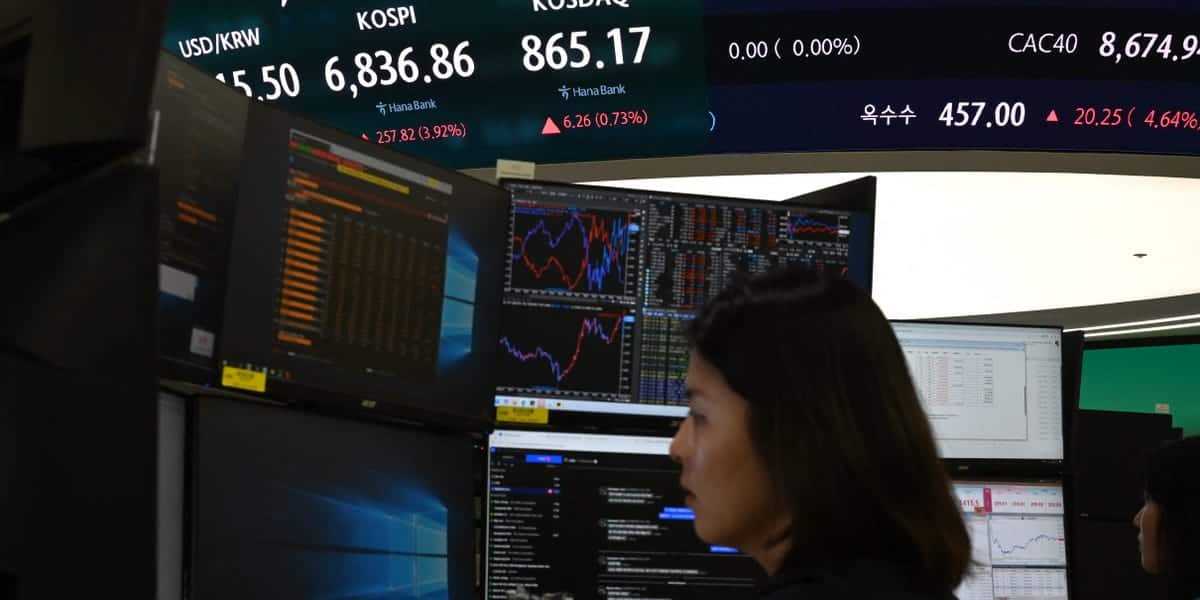
- South Korea's benchmark Kospi index entered a technical bull market on Thursday.
- The index is up 22% from its July 30 low, recovering from a 40% plunge.
- Heavyweights Samsung Electronics and SK Hynix drove both the recent selloff and the current rebound.
- Analysts attribute the recent volatility to investor positioning and fund flows rather than fundamental deterioration.
- Macquarie Capital forecasts a year-end Kospi target of 8,000, implying 17% upside.
South Korea's benchmark Kospi index has entered a technical bull market, recovering sharply just two weeks after a significant selloff. On Thursday, the index closed 4% higher, marking a 22% gain from its July 30 closing low. This rebound follows a steep 40% plunge from the index's June 22 peak to its July 30 trough, a decline amplified by heavy losses in index heavyweights Samsung Electronics and SK Hynix.
On Thursday, both Samsung Electronics and SK Hynix saw significant gains, closing 5% and 6% higher, respectively, as optimism surrounding AI-driven memory demand boosted chip stocks. Analysts at Macquarie Capital suggested that July's substantial losses, during which the Kospi fell 22%, were more influenced by investor positioning and fund flows than by a fundamental deterioration in the market. They noted that foreign and institutional selling had stabilized since late July, with margin financing levels remaining reasonable.
Macquarie analysts anticipate that Samsung and SK Hynix will spearhead the near-term market rebound, supported by robust demand for memory chips driven by artificial intelligence applications. They highlighted a severe memory crunch, with no immediate signs of supply constraints easing within the next three years, and described AI inference-driven demand as exceptionally high. Macquarie has set a year-end target of 8,000 for the Kospi, indicating an expected upside of approximately 17% from its current level of 6,813.34.