Key facts
- South Korea's Kospi index is a critical indicator for the global AI trade.
- The Kospi's volatility is increasingly influencing Wall Street and other global markets.
- Samsung Electronics and SK Hynix, key chipmakers, are driving the market's movements.
- The correlation between the Kospi and the Nasdaq 100 has reached 0.95.
- Leveraged bets by retail investors on single-stock ETFs have amplified market swings.
- South Korean regulators have halted new leveraged single-stock ETF approvals to curb speculation.
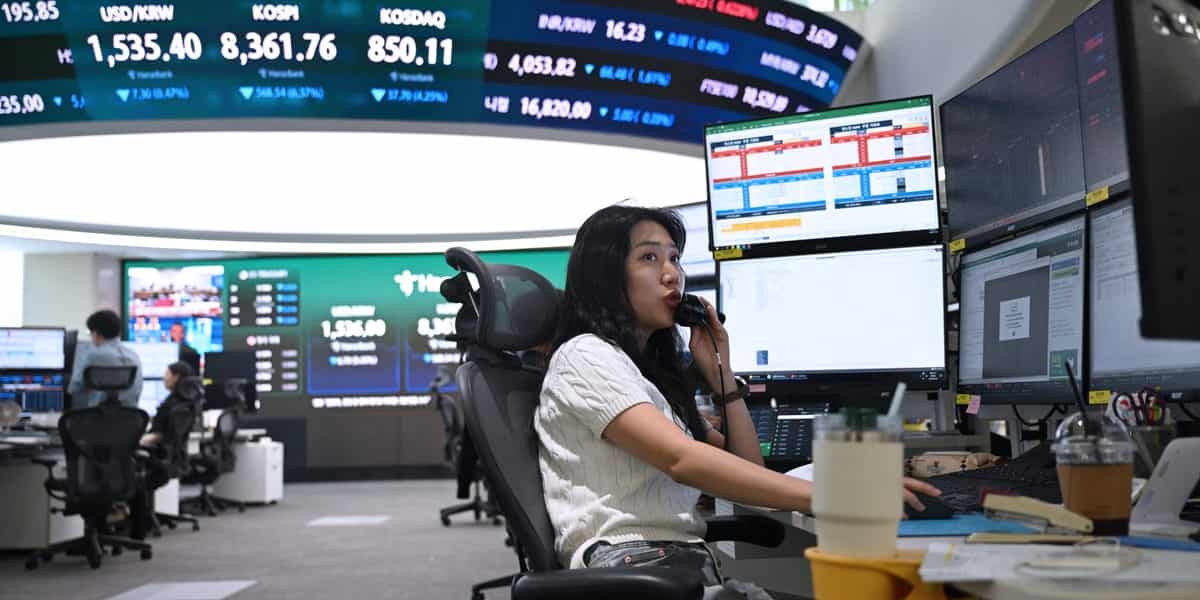
South Korea's stock market, particularly its benchmark Kospi index, has become a critical barometer for the global artificial intelligence trade. Sharp fluctuations in the Kospi, driven by major chipmakers like Samsung Electronics and SK Hynix, are increasingly reverberating through Wall Street and other international technology markets. Analysts note an astounding correlation of 0.95 between the Kospi and the Nasdaq 100 index, suggesting a near lockstep movement as investors use South Korea as a proxy for AI-related investments.
The market's volatility is attributed to the crucial role of memory chips in the AI supply chain, booming chipmaker profits, a high concentration of semiconductor stocks, and increasing leverage. Retail investors have further amplified these swings by investing heavily in leveraged single-stock ETFs, particularly those tied to Samsung and SK Hynix. This has led to dramatic gains and losses, triggering the Kospi's circuit breaker seven times this year.
In response to the extreme volatility, South Korean regulators have paused approvals for new leveraged single-stock ETFs to curb speculative trading. This boom-and-bust pattern is seen as typical for major investment themes like AI, where powerful secular trends can overshoot in both directions, especially when leverage is involved. Despite a recent 18% drawdown over the past month, the Kospi remains significantly higher over the past year.