Key facts
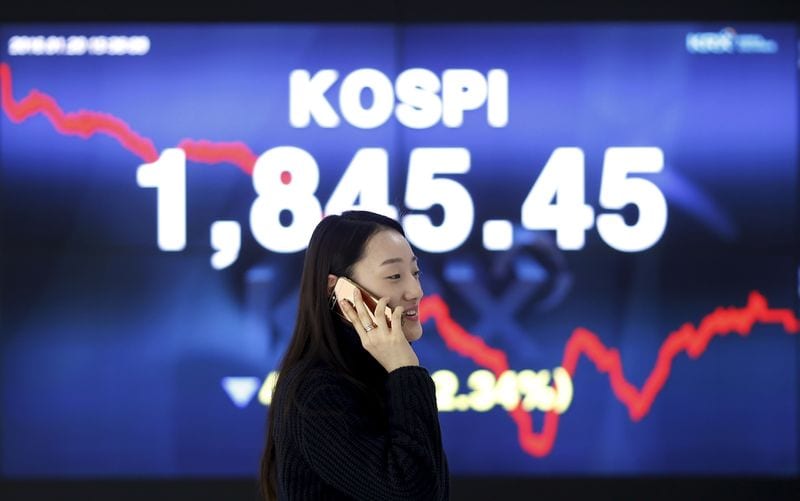
- The KOSPI index has entered a bear market, falling over 25% from its record high.
- Despite the recent decline, the KOSPI remains up approximately 60% year-to-date.
- The market's volatility is largely driven by AI-fueled gains in semiconductor giants Samsung Electronics and SK Hynix.
- SK Hynix shares experienced extreme volatility, with a 14% drop on Monday and a leveraged ETF falling over 30%.
- Retail investors, often using margin debt, are now the primary drivers of the KOSPI.
- Foreign investors have withdrawn a record amount from South Korean equities this year.
South Korea's KOSPI index has entered a bear market, shedding approximately 25% of its value since late June, despite remaining the world's best-performing major equity market this year with a roughly 60% gain. The dramatic reversal follows a period of explosive growth driven by AI-fueled surges, particularly in semiconductor giants Samsung Electronics and SK Hynix.
The market's volatility is amplified by the significant concentration of these two stocks, which together account for over half of the KOSPI's capitalization. This has led to extreme price swings, exemplified by SK Hynix's 14% drop on Monday and a leveraged ETF tracking its shares plunging over 30% in Hong Kong.
Investor sentiment has been further impacted by renewed Middle East tensions and uncertainty in AI sectors. Individual investors, many utilizing margin debt, have become the primary drivers of the market, while foreign investors have withdrawn a record nearly $110 billion this year to rebalance portfolios.
Regulators are closely monitoring the situation, with South Korea's Financial Supervisory Service and the Bank of Korea watching single-stock leveraged products for potential market distortion and increased volatility. Analysts note that while forecast profits for Samsung and SK Hynix have risen, the reliance on borrowed money and concentrated exposure presents a volatile investment landscape.