Key facts
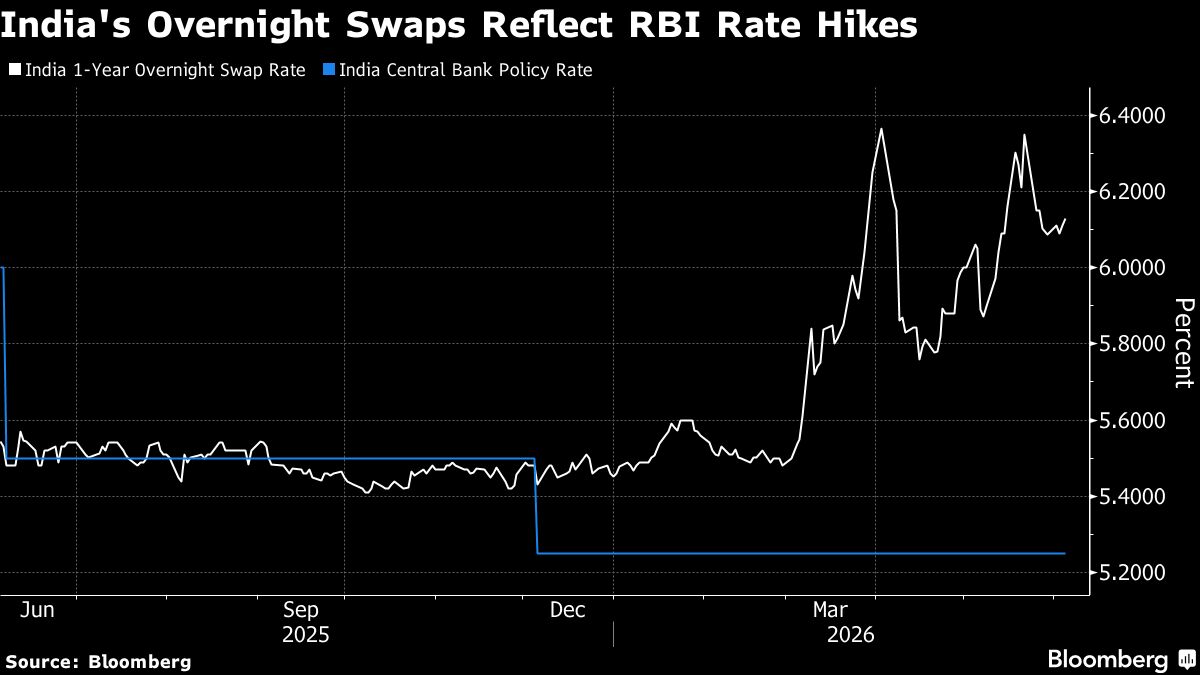
- RBI kept its policy repo rate unchanged at 5.25%.
- The decision aims to assess the impact of rising global energy costs on inflation and growth.
- Nearly 80% of polled economists expected the RBI to hold rates.
- The rupee has weakened by nearly 5% since late February.
- Retail inflation is projected to remain within the central bank's 2-6% tolerance band.
- GDP growth is expected at 6.6% for the current financial year.
The Reserve Bank of India (RBI) decided to keep its policy repo rate steady at 5.25% on Friday. This decision was made to observe the effects of escalating global energy prices on inflation and economic growth, rather than immediately intervening to support the depreciating rupee. The move aligns with the expectations of nearly 80% of economists surveyed by Reuters. The rupee has weakened by nearly 5% since late February, driven by a surge in crude prices and significant foreign fund outflows, leading some analysts to suggest higher rates. However, India's retail inflation is projected to remain within the central bank's 2-6% tolerance band for the current fiscal year, providing the RBI with flexibility to maintain current interest rates. Economic growth indicators, including industrial output and purchasing managers' index, show consistent momentum. The RBI's rate panel noted that the global environment has deteriorated, and while inflation is expected to rise, underlying pressures remain benign, though second-round effects warrant vigilance. Average retail inflation for the year is now projected at 5.1% compared with 4.6% earlier, and core inflation is expected at 4.7%, up from 4.4%. GDP growth in the current financial year is now expected at 6.6%, below the 6.9% forecast in April, while in the year ended March 31, 2026, India's economy is expected to have grown 7.6%. India's Reverse REPO Rate remains unchanged at 3.35%.