Key facts
- Philip Morris International reduced its annual profit forecast for the third time this year.
- The company cited increased competition in the nicotine pouch market and negative currency swings.
Philip Morris International lowered its annual profit forecast for the third time this year, citing increased competition in nicotine pouches and unfavorable currency movements. The company now expects full-year adjusted earnings per share between $8.26 and $8.41.
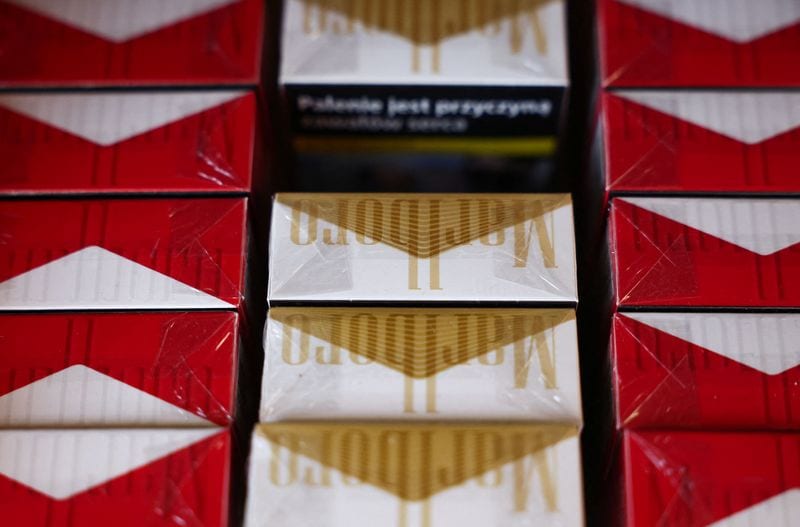
The reduced profit forecast signals potential headwinds for Philip Morris International due to intense competition in the growing nicotine pouch market and currency pressures, impacting investor sentiment and the company's diversification strategy.
Philip Morris International announced on Wednesday that it has lowered its annual profit forecast for the third time this year, attributing the revision to heightened competition within the tobacco product market and adverse currency fluctuations. The company's shares saw a 1% decline in premarket trading following the announcement.
Philip Morris International is seeking to invest in its Zyn nicotine pouches, especially after receiving recent regulatory approval. While U.S. regulators have adopted a more favorable stance towards nicotine pouches, including allowing certain Zyn products to be marketed as less harmful than cigarettes, increased competition and pricing pressures are raising concerns about the company's ability to maintain its leading market position.
The company now anticipates full-year adjusted earnings per share to range from $8.26 to $8.41, a decrease from its prior forecast of $8.31 to $8.46. Philip Morris has been making substantial investments to diversify its portfolio beyond traditional cigarettes. However, it faces significant competition in the rapidly expanding nicotine pouch category from products like British American Tobacco's Velo.
In an effort to defend its market share, the company introduced Zyn Ultra, a higher-strength moist pouch variant, in June. This product was priced below PMI's flagship Zyn offerings on a per-pouch basis. Despite these challenges, Philip Morris International's second-quarter revenue experienced a 10.4% increase, reaching $11.19 billion, which exceeded the analysts' estimate of $10.63 billion.