Key facts
- Memory and semiconductor stocks, crucial for AI infrastructure, have lost momentum.
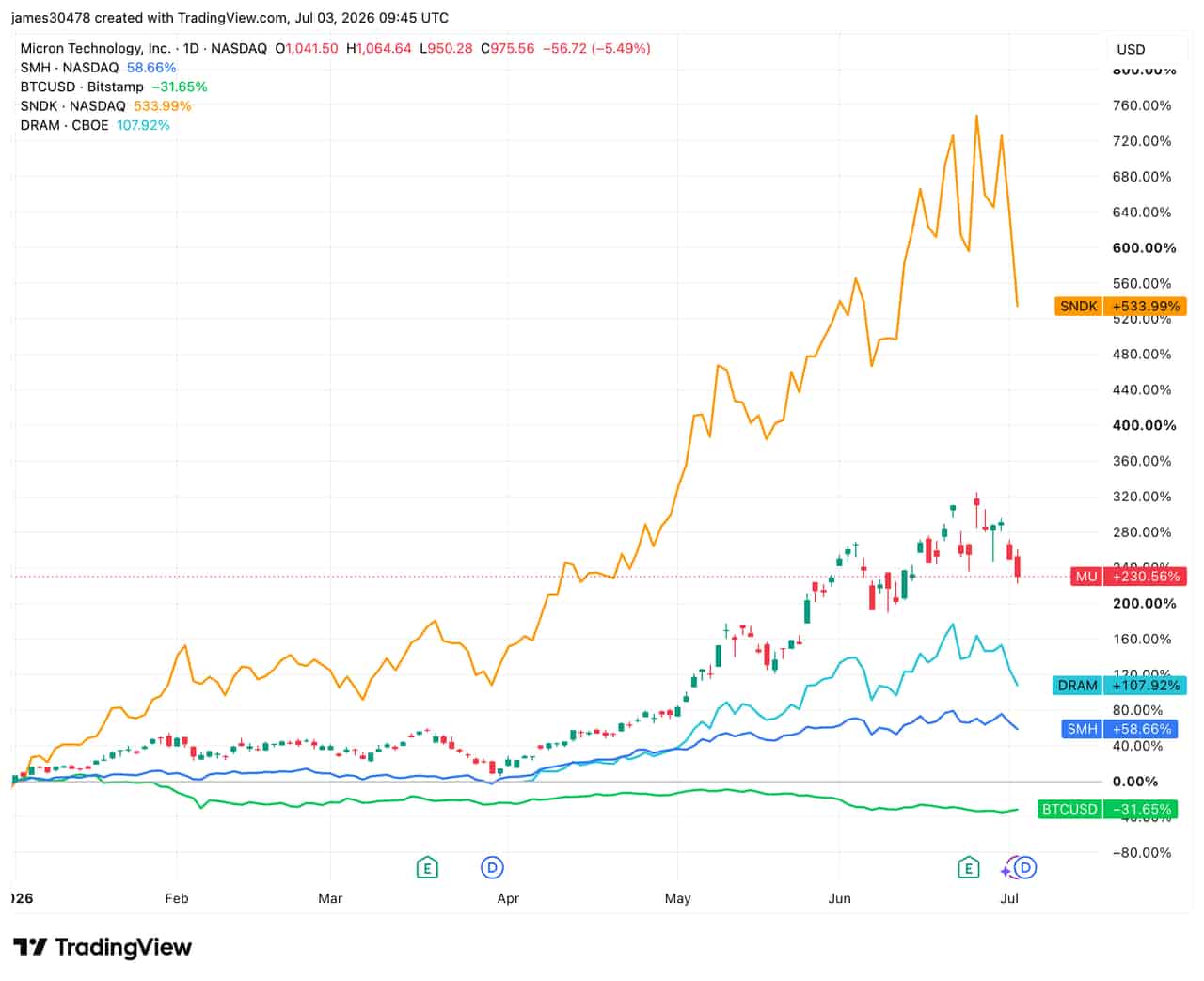
- The Roundhill Memory ETF (DRAM) is down 25% from its June peak.
- The VanEck Semiconductor ETF (SMH) has fallen 12% from its June peak.
- Bitcoin has rebounded to trade above $61,000 after a recent dip.
- Meta Platforms' reported plan to sell excess GPU capacity has impacted AI-related stocks.
- Sandisk shares are up over 530% and Micron Technology shares are up over 230% in 2026.
Memory and semiconductor stocks, which have been the primary beneficiaries of the artificial intelligence boom this year, are showing signs of losing momentum. The Roundhill Memory ETF (DRAM) has fallen 25% from its June 22 record high, and the VanEck Semiconductor ETF (SMH) is down approximately 12% from its peak. This pullback follows a period where these sectors significantly outperformed, driven by demand for AI infrastructure. Companies like Sandisk, which designs NAND flash memory, have seen their shares surge over 530% in 2026, while Micron Technology, a major producer of DRAM and HBM chips, has climbed more than 230%. The shift in investor sentiment may be signaled by bitcoin's rebound. The cryptocurrency, which had dipped below $58,000 on July 1, is now trading above $61,000. The selling pressure in AI-related stocks intensified after a report that Meta Platforms is creating a business unit, Meta Compute, to sell its excess GPU computing capacity. This news has affected companies that lease GPU infrastructure to AI developers, with stocks like IREN, Cipher Digital, and TerraWulf falling at least 20% from their all-time highs. While it is too early to confirm a sustained rotation, the recent decline in semiconductor leaders alongside bitcoin's recovery suggests investors may be rebalancing risk back towards digital assets.