Key facts
- Asian shares fell on Thursday, led by a sell-off in chipmakers.
- Taiwan Semiconductor Manufacturing Co. (TSMC) reported record quarterly profits.
- U.S. inflation data showed a surprising slowdown, reducing expectations of an imminent Federal Reserve rate hike.
- Oil prices declined as Middle East hostilities intensified.
- South Korea's KOSPI index dropped significantly due to weakness in Samsung and SK Hynix.
- China's Hang Seng Index was an exception, posting a gain.
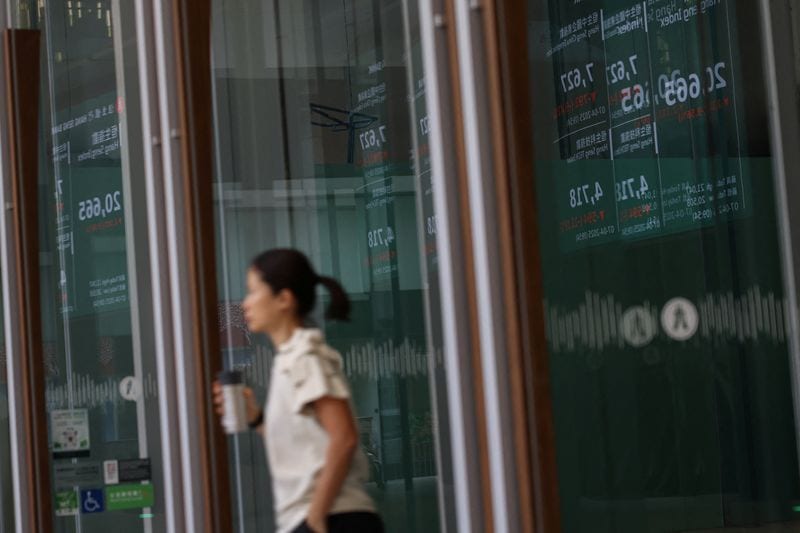
Asian shares declined on Thursday as a significant sell-off in chipmakers overshadowed strong earnings from Taiwan Semiconductor Manufacturing Co. (TSMC). The broader MSCI index of Asia-Pacific shares outside Japan fell 1%, with South Korea's KOSPI index slumping 6.2% due to weakness in Samsung and SK Hynix. Japan's Nikkei also dropped 3%, though China's Hang Seng Index bucked the trend with a 1.8% gain.
TSMC, the world's largest contract manufacturer of advanced AI chips, reported a record 77% jump in second-quarter profit, significantly exceeding market forecasts. However, this was not enough to counter the broader decline in semiconductor stocks across Asia. Equity trader Brian Heavey noted an aggressive pullback in memory and hardware stocks, suggesting no single negative catalyst but a high bar for earnings.
Overnight, shares of ASML, a key supplier of chip manufacturing equipment, finished lower despite raising its sales forecasts and pledging a capacity boost. Wall Street had seen investors rotate out of semiconductors into other sectors after strong bank earnings, but Asia's heavier exposure to chip stocks made it more vulnerable to the sell-off.
In contrast, U.S. inflation data, including surprisingly soft Producer Price Index (PPI) figures for June, bolstered bond markets. This data lessened the perceived risk of an imminent interest rate hike from the U.S. Federal Reserve, with market pricing for a hike this month falling to 10% from 43% earlier. Two-year Treasury yields edged up 2 basis points to 4.1514%, and ten-year yields rose 1 bp to 4.5594%.
Oil prices turned lower, with Brent crude futures down 0.5% to $84.5 a barrel, as U.S. strikes on Iran intensified Middle East hostilities. Despite the dip, Brent crude was still up 11% for the week. The dollar index remained steady at 100.52, while the yen hovered near a 40-year low against the dollar. Sterling hit two-month highs against the dollar at $1.3532 on expectations of a fiscally conservative finance minister appointment in the UK.