Key facts
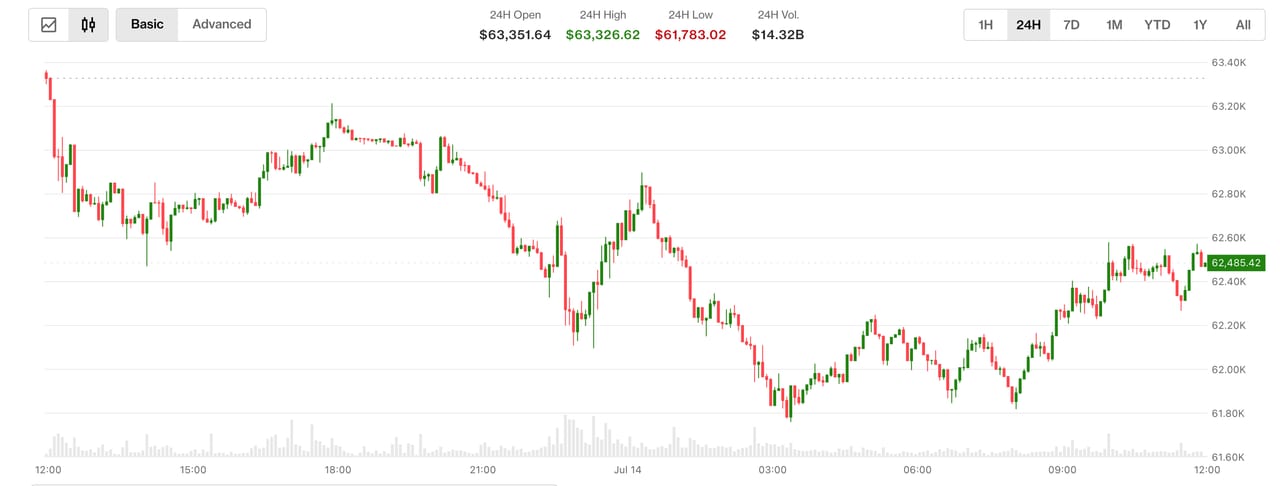
- Bitcoin has fallen over 2% in 24 hours, trading around $62,380.
- Ether, XRP, and other cryptocurrencies are also experiencing similar losses.
- Money markets are pricing in a 50% chance of a Federal Reserve rate hike in July.
- The two-year U.S. Treasury yield reached its highest point since early last year.
- Oil prices have risen sharply, with WTI crude futures nearing $80 a barrel.
- The upcoming consumer-price index report and Fed Chair Kevin Warsh's testimony are key focus points.
Major cryptocurrencies have experienced a decline of 2% or more in the past 24 hours, driven by increased expectations of a Federal Reserve interest rate hike in July. This sentiment shift is occurring ahead of crucial U.S. inflation data and testimony from Fed Chair Kevin Warsh.
Bitcoin (BTC) has fallen by over 2% to approximately $62,380, with Ether (ETH), XRP (XRP), and other tokens also showing similar losses. Money markets now indicate a roughly 50% probability of a Fed rate increase this month, a significant jump from previous expectations, following remarks by Fed Governor Christopher Waller suggesting the need for higher rates to control price pressures.
The repricing in rate expectations has impacted fixed-income markets, pushing the two-year U.S. Treasury yield to 4.29%, its highest level since early last year. This sensitivity is attributed to shifts in near-term policy expectations.
The renewed hawkish stance is partly fueled by escalating U.S.-Iran tensions and a surge in oil prices. President Donald Trump's decision to reinstate a blockade on Iranian vessels and demand reimbursement fees on cargo passing through the Strait of Hormuz has contributed to West Texas Intermediate crude futures rising to nearly $80 a barrel from $67 at the start of the month, raising inflation concerns.
Investors are now closely watching the upcoming consumer-price index (CPI) report from the Labor Department for June, with economists forecasting a headline annual rate below 4%. The report is expected to show the first declines in both headline and core inflation since January. However, these figures might be viewed as lagging indicators given the recent oil price surge. Persistent inflation could further amplify concerns about the Fed's future policy path.
Attention will then shift to Fed Chair Kevin Warsh's congressional testimony. Analysts at ING suggest that Warsh could emphasize the stability of inflation expectations or maintain a steady rate, potentially reversing any hike if delivered, with a prospect for more cuts than hikes.