Key facts
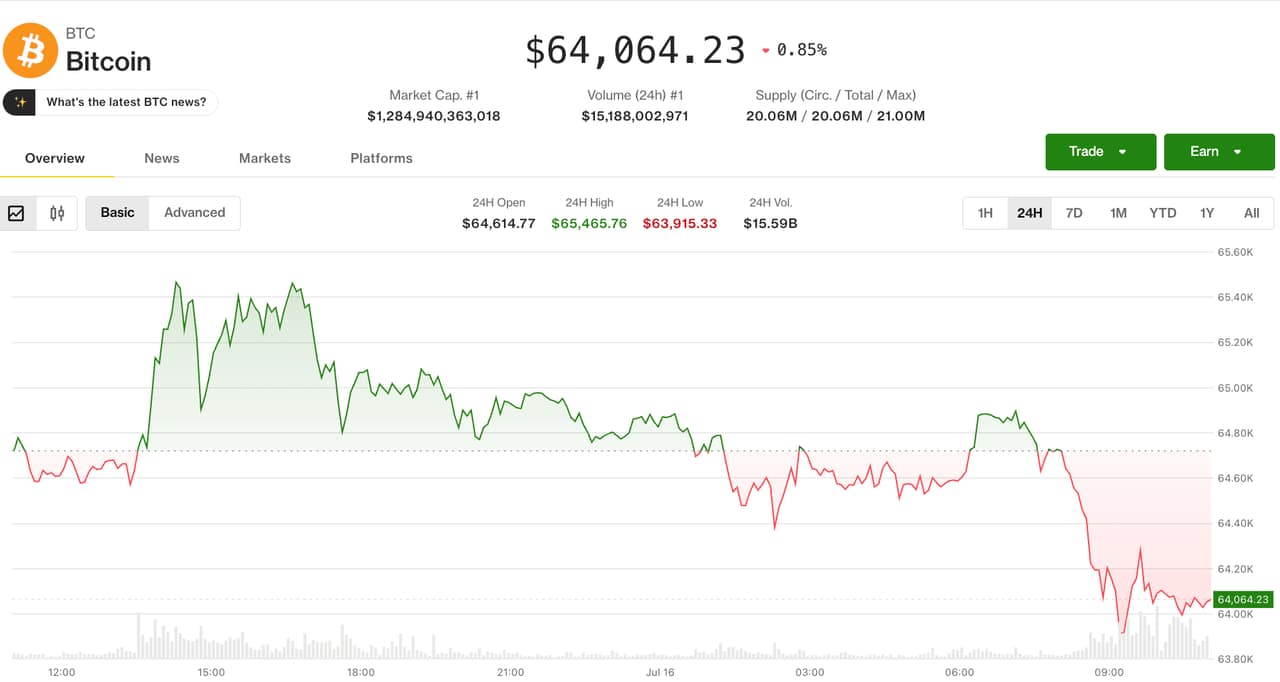
- Bitcoin fell to $64,000 after reaching a monthly high of $65,500.
- Geopolitical tensions, including Iranian strikes on U.S. military bases, contributed to the price decline.
- Most altcoins experienced declines, with negative cumulative volume deltas suggesting bearish sentiment.
- Ether's open interest decreased, indicating a potential unwinding of bullish plays.
- XRP futures open interest rose alongside a price decline, signaling increased bearish exposure.
- The AI token MORPHO was a notable exception, rising 3.5%.
Bitcoin experienced a pullback to $64,000 on Thursday, following a monthly high of $65,500 reached on Wednesday. This decline was attributed to profit-taking by traders and escalating geopolitical tensions in the Middle East, specifically Iranian strikes on U.S. military bases in Gulf states.
The broader cryptocurrency market mirrored this downward trend, with most altcoins showing negative cumulative volume deltas, indicating that bears were leading price action through market-order selling. Ether (ETH) saw a 1.7% loss since midnight UTC, slightly underperforming Bitcoin's 1.1% decline. This underperformance in ETH appears to stem from the unwinding of bullish positions rather than aggressive new short selling, as evidenced by a slight decrease in open interest.
In derivatives markets, XRP futures open interest climbed to a 10-day high of 2.21 billion XRP, coinciding with a 0.6% drop in its spot price. This combination typically signals growing bearish exposure, although positive funding rates for XRP contradict this interpretation. The 24-hour cumulative volume delta for XRP is negative, suggesting short plays executed via market orders.
Other notable movements include the AI token MORPHO, which defied the bearish trend by rising 3.5% to test resistance at $2.20. Conversely, memecoins on Robinhood's new blockchain, such as CASHCAT, saw their market capitalization retreat significantly from a peak of $220 million to $91 million, despite maintaining substantial daily trading volume.
U.S. equities also showed weakness, with futures on the tech-heavy Nasdaq 100 index retreating by 0.25%, extending a month-long downtrend. Bitcoin's 30-day implied volatility index increased by 2% to 38%, a level historically associated with renewed market turbulence.